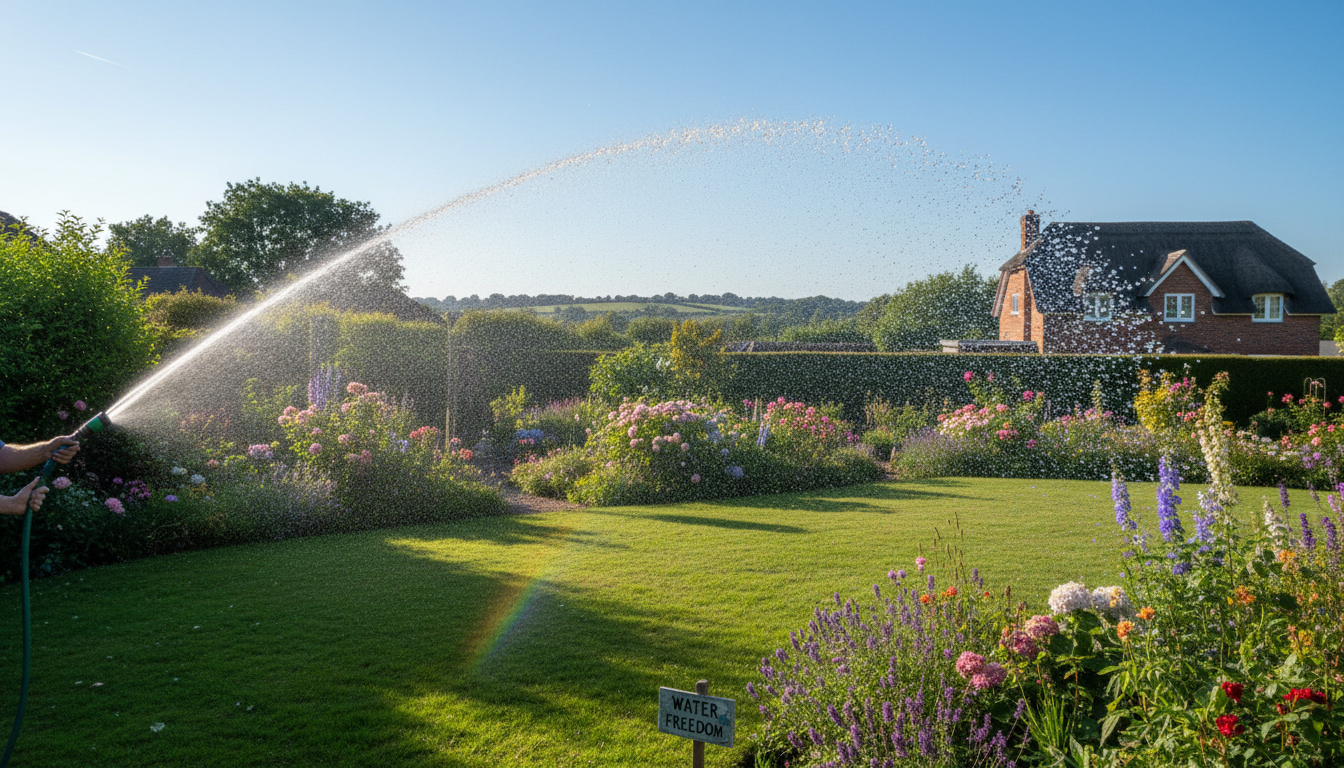
South East Water has lifted its Temporary Use Ban after seven months of restrictions that affected more than one million households across Kent and Sussex. The measure, which prohibited hosepipe use for gardening and cleaning, ended on at 09:00 following sustained winter rainfall that replenished depleted reservoirs and groundwater sources.
The restriction period began on , triggered by the First Day of Spring – Exact Date and Time for 2025 marking the start of the driest spring since the Victorian era, compounded by summer heatwaves and record demand levels. While customers may now use hosepipes freely, the company continues monitoring supplies and urges continued conservation.
No further bans are planned for summer 2026, though the utility maintains contingency measures should drought conditions return. The episode highlighted ongoing infrastructure challenges, including leakage issues, alongside a £2.1 billion investment programme designed to bolster regional resilience.
Is There Currently a South East Water Hosepipe Ban?
Inactive (Lifted 5 February 2026)
1.3 million
Key Insights
- The Temporary Use Ban lasted 202 days across Kent and Sussex.
- Trigger conditions included the driest spring in over a century and demand peaking at 680 million litres daily.
- Extra restrictions applied specifically to Sussex customers from mid-October 2025.
- Despite potential £1,000 penalties, no prosecutions were initiated during the enforcement period.
- A Drought Order managed River Ouse flows from December 2025.
- £39 million is being invested in a new Aylesford treatment works to add 20 million litres daily capacity.
- Reservoir and groundwater levels have returned to normal ranges.
| Fact | Details |
|---|---|
| Authority | South East Water |
| Legal Instrument | Temporary Use Ban (TUB) |
| Effective Duration | 18 July 2025 to 5 February 2026 |
| Geographic Scope | Kent and Sussex supply areas |
| Households Affected | Over 1 million |
| Peak Demand (June 2025) | 680 million litres/day |
| Average Summer Demand | 575 million litres/day |
| Maximum Penalty | £1,000 fine |
| Drought Order | Granted 3 December 2025 (River Ouse) |
| Resilience Investment | £2.1 billion over five years |
What Are the Rules and Restrictions?
During the active restriction period, South East Water prohibited specific non-essential uses of hosepipes and sprinklers. The regulations formed part of a statutory Temporary Use Ban designed to reduce consumption during critical supply shortages.
Which Activities Were Prohibited?
Customers could not use hosepipes for watering gardens, washing private vehicles, cleaning windows or patios, or filling swimming and paddling pools. These curbs targeted discretionary consumption that could be deferred or replaced with water-efficient alternatives.
Who Qualified for Exemptions?
Certain registered users maintained limited access. Those on the Priority Services Register, including individuals facing mobility or health challenges that made adaptation difficult, were exempt from specific provisions. Additional exemption categories were detailed on the utility’s official portals.
What Enforcement Actions Applied?
Although regulations permitted fines up to £1,000 for each offence, South East Water investigated reported breaches without issuing any prosecutions during the restriction period.
Business customers operated under similar constraints regarding non-essential external use, though specific sectoral variations were not publicly detailed. Ofwat, the economic regulator, maintains oversight of such enforcement frameworks.
Which Areas Are Affected?
Geographic Coverage
The restriction applied company-wide across the Kent and Sussex supply regions. These areas encompassed over one million households during the drought period.
Determining Eligibility
While no specific postcode checker was published during the restriction period, customers were advised to verify eligibility directly through the company’s website for precise boundary details.
The Environment Agency classifies regional drought status based on hydrological indicators including rainfall, river flows, and groundwater levels.
What Can Customers Do Instead?
Water-Saving Alternatives
Although the ban has lifted, South East Water continues promoting wise water use. Simple behavioural changes—such as using watering cans rather than sprinklers, collecting rainwater, and washing cars with buckets—reduce strain on reserves. For households monitoring resource use in other contexts, see How to Check If Eggs Are Good – Reliable Tests and Storage Tips for efficiency-minded household management.
Business Impact and Adaptation
Commercial operations faced equivalent curbs on non-essential outdoor usage. Many enterprises adapted by deferring cleaning schedules and implementing temporary recycling measures.
Despite the ban lifting, infrastructure losses remain an ongoing issue for the region, with the company acknowledging persistent leakage challenges alongside its resilience investments.
When Did the South East Water Hosepipe Ban Start and End?
- Spring 2025: The driest spring since the Victorian era occurs, depleting natural reserves. Source
- June 2025: Customer demand peaks at 680 million litres per day amid heatwaves.
- 18 July 2025: Temporary Use Ban commences in Kent and Sussex. Source
- 17 October 2025: Additional restrictions apply specifically to Sussex customers.
- 3 December 2025: Drought Order granted for River Ouse management, superseding the September Drought Permit. Source
- 5 February 2026: Ban lifted with immediate effect as reservoir and groundwater levels normalise.
- Spring 2026 (Planned): New Aylesford treatment works becomes operational, adding 20 million litres daily capacity.
What Is Confirmed About Future Restrictions?
| Established Information | Uncertain Elements |
|---|---|
| Ban lifted definitively on 5 February 2026 at 09:00 | Precise trigger thresholds for future Temporary Use Bans |
| No hosepipe ban planned for summer 2026 | Specific rainfall volumes required to maintain current supply levels |
| Reservoir and groundwater returned to normal status | Probability of recurring Victorian-era drought conditions |
| £2.1 billion five-year resilience investment committed | Exact timelines for leakage reduction targets |
| Aylesford works operational date set for spring 2026 | Specific climate forecast accuracy beyond seasonal norms |
What Triggered the Emergency Measures?
The restriction framework emerged from an exceptional hydrological sequence beginning in early 2025. Weather records indicated the driest spring period for over a century, predating modern record-keeping systems. This anomaly combined with subsequent summer heatwaves to create unprecedented demand pressures while natural recharge mechanisms failed.
System strain manifested visibly in June 2025 when daily consumption reached 680 million litres, significantly exceeding typical seasonal patterns. Concurrently, Ardingly Reservoir levels necessitated flow management interventions under a December Drought Order to maintain River Ouse ecological integrity.
Infrastructure limitations compounded natural scarcity. While South East Water has committed £2.1 billion to network improvements—including the Aylesford facility scheduled for spring 2026 activation—ongoing leakage volumes remain a contested operational challenge.
Official Statements and Regulatory Context
The Temporary Use Ban was lifted with immediate effect as reservoir and groundwater levels returned to normal following winter rainfall.
— South East Water Official Update, 5 February 2026
We set the date for hosepipe restrictions recognising the challenges customers would face, while ensuring we protected essential supplies.
— Consumer Council for Water (CCW)
The driest spring since the Victorian era has combined with leaks and heatwaves to force South East Water to impose restrictions.
— The Telegraph, 11 July 2025
Current Status of Water Use in Kent and Sussex
All Temporary Use Ban restrictions have expired, permitting unrestricted hosepipe use for the 1.3 million customers previously affected. South East Water continues hydrological monitoring while deploying expanded treatment capacity, with no immediate plans for renewed curbs despite continued infrastructure investment needs.
Frequently Asked Questions
What is a hosepipe ban?
A hosepipe ban, legally termed a Temporary Use Ban, restricts using hosepipes to water gardens, wash vehicles, fill pools, or clean external surfaces. It activates during drought to preserve drinking water supplies.
Are there fines for breaking the hosepipe ban?
Breach regulations permit fines up to £1,000. However, South East Water investigated all reports without issuing prosecutions during the 2025-2026 restriction period.
How does the South East Water hosepipe ban affect businesses?
Businesses faced similar restrictions on non-essential outdoor water use. Specific exemptions varied by sector, with enforcement focusing on education rather than prosecution.
Can I wash my car with a hosepipe now?
Yes. Since the ban lifted on 5 February 2026, customers may use hosepipes for car washing and other previously restricted activities.
What is the Priority Services Register?
This register assists vulnerable customers facing mobility, health, or communication difficulties. Registered members received exemptions from certain restrictions due to adaptation challenges.
Will there be another hosepipe ban in 2026?
South East Water has confirmed no ban is planned for summer 2026. Continued monitoring will determine if future restrictions become necessary based on rainfall and demand.
How can I check reservoir levels?
The company provides updates on reservoir and groundwater status at southeastwater.co.uk. Historical data is available through the Environment Agency’s hydrology service.
What should I do if I spot a leak?
Report visible leaks immediately via South East Water’s website or emergency line. The company maintains that leakage reduction remains a priority within its £2.1 billion investment programme.

Daniel Mercer is Urban Affairs Editor at DailyCity.co.uk, covering councils, City Hall, planning, transport and infrastructure across London and major UK cities.