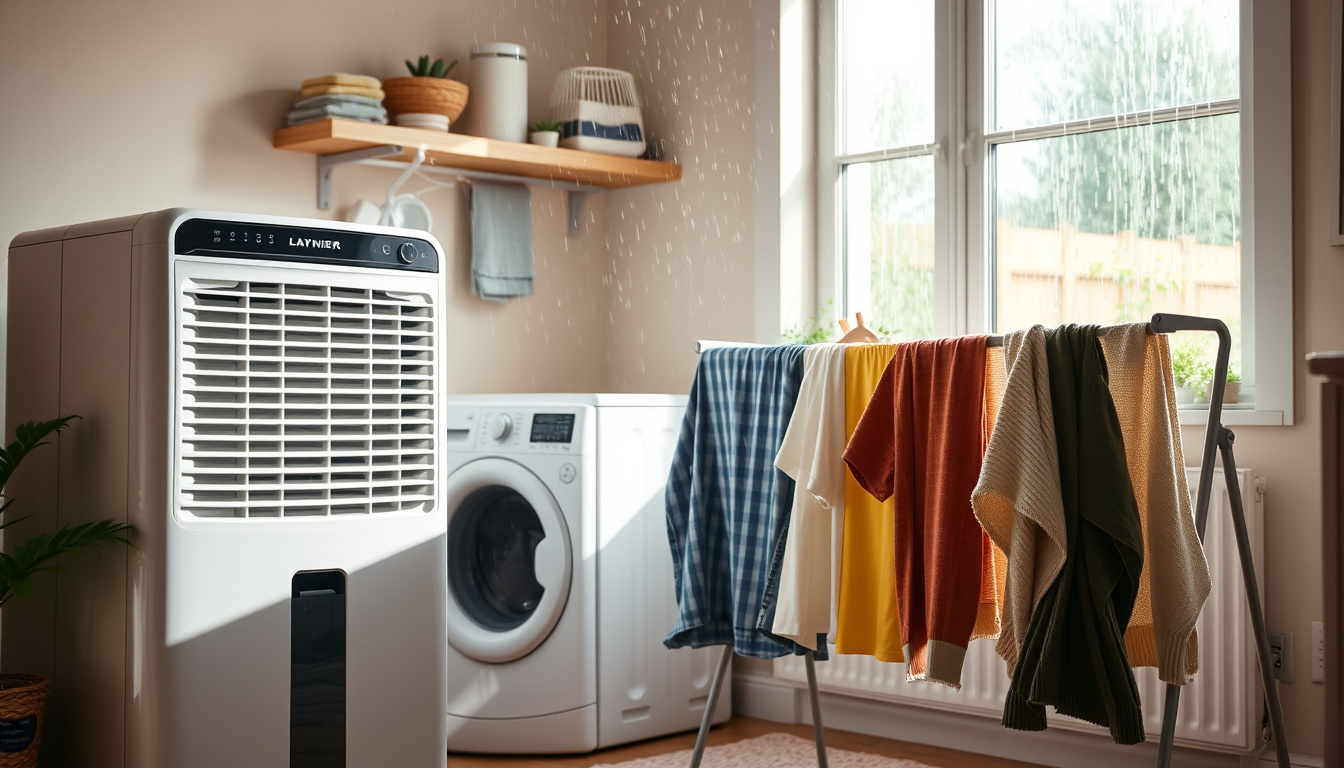
Damp British weather makes indoor clothes drying a challenge for many households. A dehumidifier can transform a wet laundry pile into dry clothes within hours, reducing moisture in the air and preventing the musty smell that often accompanies air-drying. The question many UK households face is which model offers the best balance of performance, running costs, and price for their specific needs.
Reviews from Good Housekeeping UK, TechRadar, and aggregated user feedback consistently point to a handful of models that outperform the competition for laundry drying. Whether you need something under £100, a compact unit for a small flat, or a high-capacity machine for larger loads, understanding the differences between compressor and desiccant technology helps narrow the choice considerably.
What is the best dehumidifier for drying clothes?
The Meaco Arete One 20L emerges as the most frequently recommended model across multiple authoritative UK sources. Reviewers praise its efficient compressor technology, which extracts up to 20 litres of moisture per day while running at approximately 195 watts—roughly 5p per hour in energy costs. Its dedicated laundry mode circulates air at higher speeds, drying a full load in around four to five hours.
The 12-litre variant of the same series offers a more compact alternative without sacrificing the core features that make the Arete line popular. Users consistently highlight the quiet operation and smart app control, which allows scheduling for off-peak electricity hours. The integrated air purification function adds further value for households concerned with indoor air quality.
Overview of Top Models
| Model | Type | Extraction Rate | Price Range | Best For |
|---|---|---|---|---|
| Meaco Arete One 20L | Compressor | 20L/day | ~£230 | Overall UK homes |
| ProBreeze 12L | Compressor | 12L/day | ~£100 | Budget under £100 |
| Meaco Arete One 12L | Compressor | 12L/day | ~£180 | Small rooms |
| Meaco DD8L Zambezi | Desiccant | 8L/day | ~£160 | Cold rooms, garages |
Key Insights from UK Reviews
- Desiccant models dry laundry two to four times faster than compressor units due to heated air output
- The Meaco Arete series dominates user recommendations across forums and professional reviews
- Budget options under £120 exist with solid performance, including Blyss and ProBreeze models
- Small rooms typically require 10 to 16 litre capacity units for effective laundry drying
- The ProBreeze 12L and Meaco Arete One 20L receive the most consistent praise for clothes drying
- Laundry-specific modes significantly improve drying speed compared to standard settings
- Room temperature critically affects which technology performs better
Detailed Comparison: Drying Speed and Running Costs
When drying a full load of clothes, desiccant models like the Meaco DD8L Zambezi complete the task in approximately three and a half hours thanks to warm air output. Compressor models such as the Meaco Arete One 20L take four to five hours but consume less energy per load—around 28p compared to 32-54p for desiccant units.
The trade-off becomes clearer when considering room temperature. Desiccants maintain consistent performance in rooms below 15°C, even dropping to around 1°C, while compressors efficiency decreases significantly in cold conditions. For most UK living rooms and kitchens that sit above 15°C, compressor models offer better long-term value despite slightly longer drying times.
Using a dehumidifier on a dedicated laundry mode for one full load costs approximately 28p with a compressor model versus 32-54p with a desiccant. Over a year of regular drying, this difference compounds significantly for budget-conscious households.
What is the best budget dehumidifier for drying clothes under £100?
The ProBreeze 12L consistently appears as the standout recommendation for households with a strict budget. At approximately £100, it delivers 12 litres of daily extraction capacity with straightforward controls and a timer function. While it lacks the sophisticated app integration and whisper-quiet operation of premium models, users report reliable performance for drying laundry in rooms up to 20 square metres.
Reviewers note that the ProBreeze handles typical laundry loads effectively, though drying takes slightly longer than the dedicated laundry modes on higher-end units. The trade-off between price and performance proves favourable for first-time buyers or those unwilling to invest in premium features.
How Budget Models Compare
Several alternatives hover just above and below the £100 threshold. The Blyss 16L, available through Currys, offers higher extraction capacity but with more basic controls. The Duux Bora Smart receives praise for its airflow design but carries a higher price point that places it outside strict budget territory.
For those willing to stretch slightly beyond £100, the ProBreeze 10L desiccant model provides faster drying through heated air, making it better suited for colder spaces like garages or basements where the compressor’s efficiency drops.
Strictly under £100, the ProBreeze 12L represents the strongest option. Spending slightly more unlocks desiccant technology, which dries laundry faster but at higher energy cost per cycle.
What is the best dehumidifier for drying clothes in a small room?
The Meaco Arete One 12L targets small room performance specifically. Its compact chassis fits neatly in flats and compact living spaces while delivering 12 litres extraction daily. The integrated air purifier function addresses dual concerns in smaller homes where air quality and moisture control both matter.
Users highlight the near-silent operation as a critical advantage in smaller spaces where noise disturbance matters more. The laundry mode engages automatically, and the unit’s efficiency above 10°C makes it suitable for most heated indoor spaces typical of UK homes.
Matching Capacity to Room Size
Room size directly influences the required extraction capacity. For spaces up to 20 square metres—common in UK flats—a 10 to 12 litre unit handles both general moisture control and laundry drying effectively. Larger small rooms approaching 30 square metres benefit from the 20 litre models, which extract faster without requiring significantly more energy per litre removed.
Running a unit oversized for a small room wastes energy, while an undersized model struggles to reduce humidity adequately during damp British winters. The fabric stores near me guide offers additional context for those setting up functional laundry spaces in compact homes.
What are the best UK dehumidifiers for drying clothes, including 20L options?
The UK market offers several 20-litre-capacity models suited for laundry drying, with the Meaco Arete One 20L leading in professional test scores. The Good Housekeeping Institute awarded this model 92 out of 100, citing its balanced performance across extraction speed, noise levels, and running costs.
The ProBreeze 20L represents a more affordable 20-litre alternative, achieving similar drying times of under five hours for a full laundry load. Currys stocks both brands alongside their own Blyss budget line, providing accessible purchase options across the UK.
Technology Choice: Compressor versus Desiccant
The fundamental choice between compressor and desiccant technology shapes the entire drying experience. Compressor units like the Meaco Arete and ProBreeze models work by cooling air to extract moisture, making them most efficient between 10°C and 25°C. Desiccant units like the Meaco DD8L Zambezi and ProBreeze 10L use absorbent material and heating, performing better in colder conditions but consuming more electricity per cycle. If you’re struggling with damp British weather and indoor clothes drying, this guide to the best models explains how a dehumidifier can transform a wet laundry pile into dry clothes within hours: deur repareren zonder verwijderen
For UK homes with central heating, compressor models generally offer better value. For unheated spaces like garages, converted barns, or poorly insulated rooms, desiccant technology provides consistent performance regardless of ambient temperature.
Compressor dehumidifiers lose significant efficiency below 10°C. If your drying space remains cold during winter months, consider a desiccant model despite its higher running costs per cycle.
Established Facts and Areas of Uncertainty
The following summarises what sources consistently confirm versus what remains less certain based on available reviews and aggregated user feedback.
| Established Information | Less Certain Information |
|---|---|
| Meaco Arete One 20L ranks highest in professional UK tests | Long-term reliability figures beyond warranty periods |
| ProBreeze 12L offers strongest value under £100 | Precise energy savings compared to tumble drying |
| Desiccant models dry faster in cold rooms | Real-world extraction rates vary significantly by humidity |
| Laundry modes reduce drying time considerably | User satisfaction rates specific to laundry-only use |
Why UK Climate Matters for Dehumidifier Selection
Britain’s persistently high relative humidity creates conditions where moisture-sensitive fabrics struggle to dry naturally, particularly during autumn and winter. Indoor drying without assistance often leaves clothes damp for days, creating conditions for dust mites and mould growth in wardrobes and on walls.
A dehumidifier addresses this directly by removing moisture from the air, allowing evaporation to occur faster. The closed environment of a bathroom or utility room with a dehumidifier running creates optimal conditions for drying—something British households have increasingly recognised as both practical and cost-effective compared to running tumble dryers.
Those managing their own laundry equipment may find value in the step-by-step guide to cleaning a washing machine, which helps maintain the appliance that produces the damp loads in the first place.
What Reviewers and Sources Say
Professional reviews consistently emphasise the practical differences between models that specifications alone cannot convey. TechRadar’s testing protocol evaluates real-world laundry drying alongside noise and energy consumption, providing the most comprehensive basis for comparison among trusted UK sources.
Aggregated forum feedback from users who have owned these machines for extended periods supplements professional reviews. Communities on Reddit and Mumsnet discuss real-world experiences, with the consensus leaning heavily toward Meaco for those prioritising quiet operation and long-term reliability, while acknowledging ProBreeze as excellent value for budget-conscious buyers who accept minor compromises in noise and efficiency.
Reviewers consistently note that the laundry mode transforms indoor drying from a multi-day chore into an overnight or same-day task, making dehumidifiers increasingly essential appliances in British homes.
Summary and Recommendations
Choosing the right dehumidifier for drying clothes depends on room temperature, available budget, and how quickly you need loads to dry. For most UK households with heated living spaces, the Meaco Arete One 20L delivers the best overall balance of speed, quiet operation, and running costs. Budget shoppers find excellent value in the ProBreeze 12L, which handles typical laundry loads without premium features at around £100. Those with cold utility rooms or garages benefit most from desiccant models despite higher per-cycle energy costs.
Frequently Asked Questions
What is the best dehumidifier for drying clothes in the UK?
The Meaco Arete One 20L ranks as the best overall for UK homes, praised for its quiet operation, efficient laundry mode, and 20L daily extraction rate. It dries a full load in approximately 4-5 hours while consuming around 5p per hour.
What is the best budget dehumidifier for drying clothes under £100?
The ProBreeze 12L stands out as the best budget option at approximately £100. It offers solid 12L daily extraction, a timer function, and effective laundry drying without premium features. It represents the strongest value for money under £100.
Which dehumidifier is best for a small room?
The Meaco Arete One 12L excels in small rooms up to 20m². Its compact design, 12L extraction capacity, integrated air purifier, and whisper-quiet operation make it ideal for flats and compact living spaces.
What is the best 20L dehumidifier for drying clothes?
The Meaco Arete One 20L is the standout 20L option, achieving 92/100 scores in testing. It combines high extraction capacity with smart app control, making it suitable for larger small rooms and delivering laundry drying in 4-5 hours.
Should I choose a compressor or desiccant dehumidifier for laundry?
Choose a desiccant model like the Meaco DD8L Zambezi if your room stays below 15°C, as warm air accelerates drying. Choose a compressor model like the Meaco Arete One if your room is warmer and you prioritise lower running costs.
How much does it cost to run a dehumidifier for laundry?
Compressor models cost approximately 28p per full laundry load, while desiccant models range from 32-54p per cycle. Running times vary from 3.5 hours for desiccants to 4-5 hours for compressors.

Henry Morgan is Senior Reporter at DailyCity.co.uk, covering breaking news and general city stories across the UK.