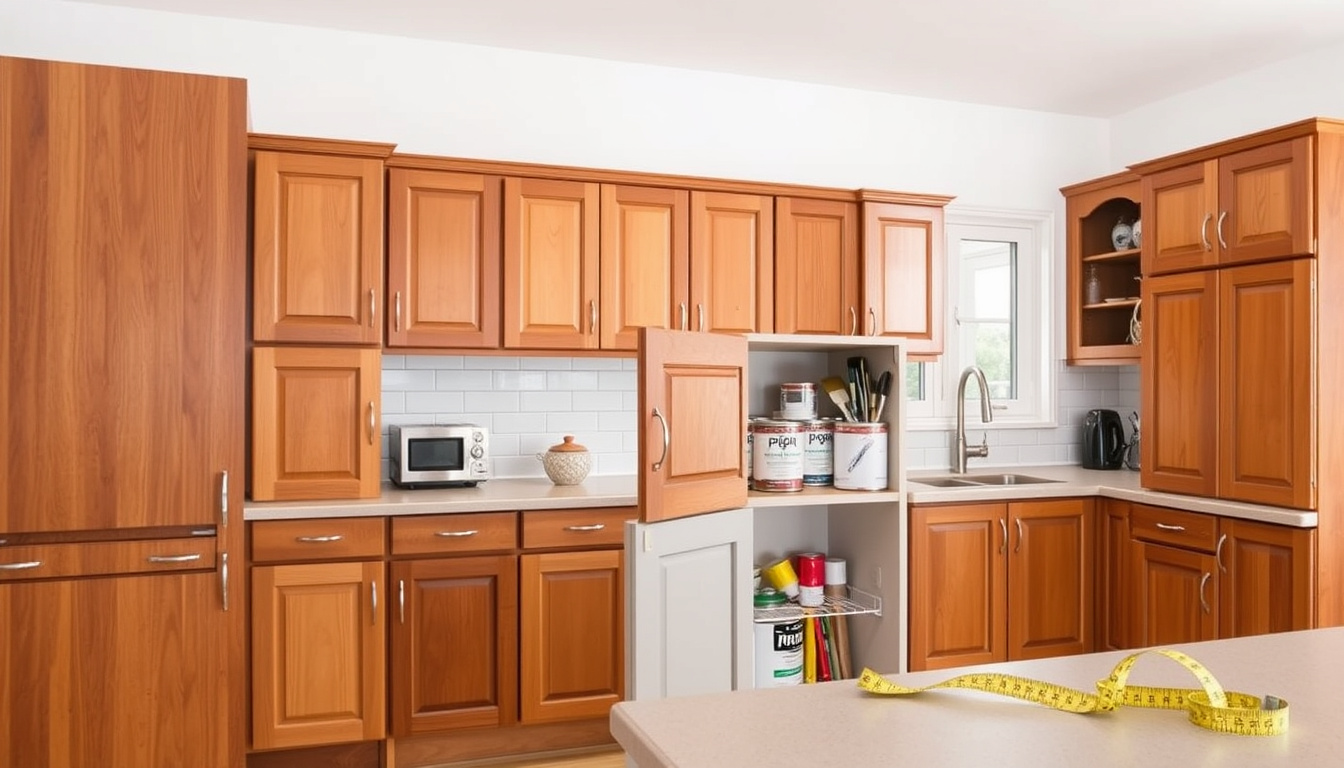
Kitchen cupboards are among the most important decisions in any kitchen project, whether you are building from scratch, refreshing an existing layout, or simply replacing a few tired doors. The UK market offers a wide range of options, from freestanding larder units to fully fitted wall-to-wall cabinets, and the choice often comes down to budget, space, and how much DIY work you are prepared to take on. This guide covers the types, sizes, brands, and practical steps – including painting and replacement doors – to help you make an informed decision.
Understanding the basic categories – base units, wall units, tall units – and knowing which retailers supply them will save time and money. IKEA, B&Q, and Howdens are the most prominent names in the UK, while specialist suppliers such as Cotswold Company cater to those seeking freestanding furniture. The guide also addresses the most common DIY queries, including painting techniques and storage optimisation, so you can tackle your kitchen cupboards with confidence.
All facts in this article are drawn from established UK kitchen retailers, trade suppliers, and independent guides. Where exact figures vary between sources – for example, cabinet heights versus finished heights – that variance is noted so you can measure and plan accurately.
What Types of Kitchen Cupboards Are Available?
Freestanding, fitted, wall, base, and tall cupboards – find the style that suits your kitchen.
IKEA, B&Q, Howdens, and Cotswold Company compared for cost, quality, and availability.
Standard dimensions and how to measure your space for ready-made or custom units.
Best paints, techniques, and steps to refresh your cupboards without replacing them.
- Freestanding cupboards offer flexibility and are easier to install, but fitted units maximise storage and create a seamless look.
- The most searched brand is IKEA due to affordability and modularity, but Howdens supplies higher-quality UK-manufactured options for trade customers.
- Painting kitchen cupboards is the most popular DIY renovation, with chalk and eggshell paints being top choices for durability.
- Standard widths for base units include 600 mm, 800 mm, and 1000 mm, making planning straightforward for most layouts.
- Replacing only the doors is a cost-effective refresh when the carcasses are still sound; accurate measurement is critical.
- A mix of drawers, pull-outs, and narrow base units often provides better usable storage than a row of deep cupboards alone.
Snapshot of Standard UK Kitchen Cupboard Dimensions
| Dimension | Standard Wall Unit | Standard Base Unit | Tall Unit |
|---|---|---|---|
| Width | 60 cm, 80 cm, 100 cm | 60 cm, 80 cm, 100 cm | 40 cm, 60 cm |
| Height | 70 cm – 80 cm | 85 cm – 90 cm (including legs) | 180 cm – 220 cm |
| Depth | 30 cm – 35 cm | 55 cm – 60 cm | 55 cm – 60 cm |
| Typical Price (per unit) | £30 – £150 | £50 – £250 | £80 – £400 |
Which Brands and Retailers Sell Kitchen Cupboards?
IKEA
IKEA’s SEKTION system is a modular, flat-pack range that offers cabinet widths from 30 cm up to 120 cm. The UK site lists dedicated kitchen cabinets with a 25-year limited warranty. IKEA base cabinet widths are available in modular increments such as 12, 15, 18, 21, 24, 30, 36, 38, and 47 inches, which makes mixing and matching around awkward spaces easier.
B&Q
B&Q provides a broad range of kitchen cabinet units for DIY projects. Their online category includes pre-assembled and flat-pack options, covering base units, wall units, and tall cupboards. B&Q also sells replacement doors and components, making it a convenient one-stop shop for partial renovations.
Howdens
Howdens is a trade-focused supplier of fitted kitchen cabinets. Their range is typically installed wall-to-wall with coordinated plinths and doors, and they are known for higher-quality UK-manufactured carcasses. Howdens does not sell freestanding or flat-pack units directly to consumers through their trade depots.
If you need a single freestanding cupboard, consider specialists like Cotswold Company or Kitchen Warehouse. For a full fitted kitchen, Howdens and IKEA offer the widest choice of consistent sizes. B&Q sits between both categories with flexible ordering and stock availability.
Other Retailers
Cotswold Company sells premium freestanding kitchen cupboards, including pantry and larder units, in shaker and solid wood styles. Kitchen Warehouse offers complete kitchen units with modular configurations. Each has its own sizing and price range, so checking online catalogues before visiting a showroom is recommended.
How Do I Choose the Right Kitchen Cupboard Sizes and Units?
Understanding Standard Dimensions
Base unit bodies are typically 720 mm high, but the finished height reaches about 870–900 mm once legs, plinth, and worktop are added. Depths range from 560 mm to 600 mm. Wall units are much shallower – 300–350 mm deep – to preserve working clearance above the worktop. Common wall unit heights are 575 mm, 720 mm, or 900 mm depending on style and supplier.
Measuring Your Space
Measure the full width of your kitchen run, then subtract gaps for end panels and appliances. Use the standard widths (150, 300, 400, 500, 600, 800, 900, 1000 mm) to plan your layout. A 600 mm base unit is the most versatile, commonly used for drawer packs, cupboard storage, and many appliances. For a deeper dive into all the dimensions and planning steps, refer to our Kitchen Units Buying Guide.
Cost and Replacement Doors
Replacement doors are a cost-effective update: a single door can cost £10–£60 depending on material and size. Expect £200–£600 for a typical 10-door kitchen. UK replacement-door suppliers build around standard carcass dimensions such as 720 mm base-unit height, making it possible to upgrade without a full rip-out. Accurate measurement of hinge side, overlay, and door style is essential.
Different suppliers may describe the same cabinet differently – one source quotes the body height only, another includes the plinth and worktop. Always confirm the unit’s body dimensions separately from its finished height to avoid ordering the wrong size.
How to Paint Kitchen Cupboards – Best Practice and Best Paint
Painting kitchen cupboards is one of the most popular DIY renovations because it is far cheaper than replacing the entire kitchen. The key requirement is proper preparation: cleaning, degreasing, lightly sanding, priming, and then using a durable cabinet-grade paint or finish. The exact method depends on whether the doors are wood, veneer, MDF, or laminate.
Best Paint Choices
Chalk paint (e.g., Annie Sloan) gives a matte finish and requires no sanding, making it a favourite for quick updates. For maximum durability, eggshell or satin finishes from brands like Farrow & Ball or Valspar are suitable. Adhesion is the biggest durability issue, so surface preparation matters more than the paint brand itself.
Practical Steps
Remove doors, hinges, and handles. Wash all surfaces with a degreaser, then sand lightly with fine-grit paper. Apply a primer suited to your cabinet material, followed by two thin coats of paint. Allow each coat to dry fully before reassembling. For laminate doors, a specialist primer is often required.
If your cupboards are in good condition and you want a quick refresh, consider replacing the doors and painting the frames only. This avoids having to paint the entire cabinet while still achieving a cohesive look.
How to Organise Kitchen Cupboards for Maximum Storage
Efficient cupboard organisation starts with unit selection. Use 600 mm base units for the most versatile storage, as this width is common for drawer packs, cupboards, and many appliances. Narrow units (300–500 mm) work well for pull-out spice storage, bottle racks, or filler spaces. Wider units (800–1000 mm) suit double-door cupboards, sink bases, or larger appliances.
Wall units above the worktop keep everyday items within reach without using floor space. Tall pantry or larder units (about 1960–2300 mm high) are ideal for dry food, baking trays, cleaning equipment, and bulk storage. In small kitchens, a combination of drawers, pull-outs, and narrow base units often provides better usable storage than deep cupboards alone, because items are easier to access.
Kitchen Cupboard Replacement Timeline – Typical DIY Project
- Week 1: Measure and plan. Order units or doors.
- Week 2: Clear cupboards, remove old units.
- Week 3: Install new base units and worktops (if needed).
- Week 4: Fit wall cupboards, adjust doors, finish painting if applicable.
- Week 5: Final styling and organisation.
Clarity: What Is Known and What Remains Uncertain
| Established Information | Information That Remains Unclear |
|---|---|
| Standard kitchen cupboard widths are 60 cm, 80 cm, and 100 cm. | Exact availability of specific colours and styles depends on retailer stock. |
| IKEA offers the SEKTION cabinet system with multiple sizes. | DIY painting durability varies by brand and surface preparation. |
| B&Q sells both pre-assembled and flat-pack cupboards. | Prices fluctuate by region and promotions. |
How to Choose the Best Kitchen Cupboard for Your Home
The decision between freestanding and fitted cupboards often depends on your kitchen layout, budget, and DIY confidence. Freestanding cupboards (like those from Cotswold Co.) are easier to move and require no installation expertise, but they may waste space. Fitted units (IKEA, Howdens, B&Q) provide a seamless look and maximise storage, but they require accurate measurements and, often, professional fitting. For those on a budget, painting existing cupboards is the most cost-effective refresh, costing under £100 in paint and supplies versus £500 or more for new units.
Credible Sources and Trusted Advice
“SEKTION gives you the flexibility to design a kitchen that fits your space and style. All cabinets come with a 25-year limited warranty.”
IKEA UK
“Always check your wall type (solid brick vs. plasterboard) before hanging wall cupboards. Use appropriate fixings.”
B&Q How-to Guide (excerpt)
Summary: Key Takeaways for Your Kitchen Cupboard Journey
Whether you are buying new, replacing doors, or painting existing units, success starts with accurate measurements and a clear understanding of the UK’s standard cupboard sizes. IKEA, B&Q, and Howdens each serve different needs, while freestanding options from Cotswold Company suit those looking for furniture-like flexibility. For a deeper dive into all the dimensions and planning steps, refer to our Kitchen Units Buying Guide.
Frequently Asked Questions
Can I buy kitchen cupboards without doors?
Yes, many retailers sell door fronts separately. IKEA, B&Q, and online specialists offer cabinet carcasses without doors, allowing you to mix and match styles.
How much does it cost to replace kitchen cupboard doors?
Costs vary: a single door can be £10–£60 depending on material and size. Expect £200–£600 for a typical 10-door kitchen.
What is the best paint for kitchen cupboards?
Chalk paint (e.g., Annie Sloan) gives a matte finish and requires no sanding. For durability, use eggshell or satin finish from brands like Farrow & Ball or Valspar.
How do I measure kitchen cupboards correctly?
Measure width, height, and depth of the space. For wall cupboards, note the distance between worktop and bottom of cupboard (usually 45–55 cm).
What is the difference between a kitchen cabinet and a cupboard?
In UK usage, the terms are often interchangeable. Cabinet usually refers to a fitted unit, while cupboard can also describe a freestanding piece of furniture.
How deep are standard kitchen wall units?
Wall units are typically 300–350 mm deep, preserving working clearance above the worktop.
Can I paint kitchen cupboards without sanding?
Some paints, like chalk paint, claim to require no sanding. However, light sanding and degreasing improve adhesion significantly, so preparation is still recommended.
Do I need a professional to fit kitchen cupboards?
Freestanding units can be set up by most DIYers. Fitted kitchens – especially those involving worktops, plumbing, and gas – are best left to a qualified installer.
Are IKEA kitchen cupboards good quality?
IKEA cabinets are known for their modular design and 25-year warranty. They are generally considered good value for money, though the particle-board construction may not suit everyone.
What are tall kitchen cupboards used for?
Tall units (around 1960–2300 mm high) are ideal for ovens, fridges, cleaning storage, or full-height larder storage.

Sophie Kendall is Culture & Events Editor at DailyCity.co.uk, covering restaurants, nightlife, theatre, exhibitions, festivals and city life.