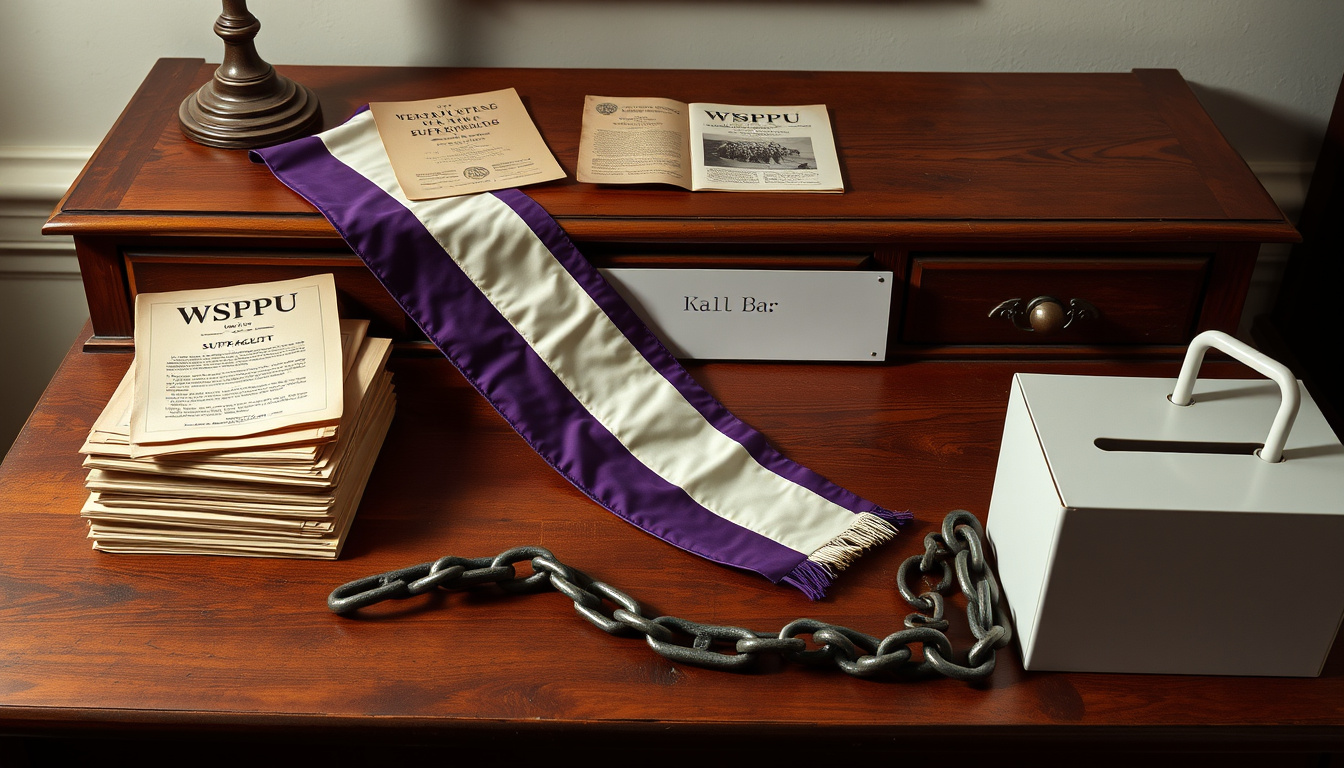
Emmeline Pankhurst was a leading British suffragette and the founder of the Women’s Social and Political Union (WSPU), the militant organization that became central to the campaign for women’s voting rights in Britain. She died in London on 14 June 1928, shortly before British women won full equal voting rights later that year.
Born on 14 or 15 July 1858 in Manchester, England, Pankhurst grew up in a politically active household. Her early involvement in the women’s suffrage movement began in the 1880s, and she quickly became one of its most visible and controversial figures.
Her legacy is tied to the fight for the vote, but her methods—including hunger strikes and property destruction—sparked debate that continues among historians. What remains undisputed is the central role she played in securing women’s representation in British democracy.
Who Was Emmeline Pankhurst? (Biography and Key Facts)
| Life 1858–1928, British political activist, leader of suffragette movement. |
Activism Founder of Women’s Social and Political Union (WSPU), militant tactics for women’s right to vote. |
Family Married to Richard Pankhurst; three daughters: Christabel, Sylvia, Adela (all activists). |
Death Died June 14, 1928, at age 69, shortly before women gained equal voting rights. |
Key Insights
- Emmeline Pankhurst’s militant approach was controversial but effective in advancing women’s suffrage.
- Her daughters, especially Christabel, played key roles in the movement.
- The ‘Freedom or Death’ speech (1913) remains a powerful example of rhetorical activism.
- Despite her death in 1928, she lived to see the Representation of the People Act 1928 grant equal voting rights.
- Her legacy is mixed: praised for courage, criticized for violent tactics and exclusion of working-class women.
Snapshot Facts
| Field | Details |
|---|---|
| Full Name | Emmeline Goulden Pankhurst |
| Born | July 15, 1858, Moss Side, Manchester, England |
| Died | June 14, 1928, Hampstead, London, England |
| Occupation | Political activist, suffragette leader |
| Known For | Leading the British suffragette movement, founding WSPU |
| Spouse | Richard Pankhurst (m. 1879–1898) |
| Children | Christabel, Sylvia, Adela, and Frank (died young) |
| Key Event | 1913 ‘Freedom or Death’ speech in Hartford, Connecticut |
| Death Cause | Complications from a heart condition (exhaustion and influenza contributed) |
What Was the Women’s Social and Political Union (WSPU)?
Founding of the WSPU
In 1903, Pankhurst founded the WSPU after her local branch of the Independent Labour Party refused to admit women members. The organization adopted the slogan “deeds, not words” and quickly became known for its willingness to break the law.
Militant Tactics and Civil Disobedience
The WSPU engaged in window-smashing, hunger strikes, and repeated arrests. Women who refused to eat while imprisoned were force-fed, a practice that drew widespread condemnation and public sympathy for the cause. The movement’s escalation included arson attacks, though the extent of Pankhurst’s personal involvement in the most extreme actions is debated among historians.
Delivered on 13 November 1913 in Hartford, Connecticut, this speech captures the militant tone of the campaign. Pankhurst stated: “I have to make my speech, and if you want to kill me, do it. I shall die as I have lived, a soldier in the cause of women’s rights.” The speech is listed among her works by the Archives of Women’s Political Communication.
Key Members and Leadership
Pankhurst led the WSPU alongside her daughter Christabel, who became a prominent suffrage leader. Other key figures included Annie Kenney and the Pethick-Lawrences. Internal disagreements later arose, particularly over the use of violence and wartime policy.
How Did Emmeline Pankhurst Die?
Final Years and Health Decline
During the First World War, Pankhurst suspended militant activities and supported the war effort, organizing women to work in factories. After the war, she continued campaigning but her health deteriorated.
Cause of Death and Circumstances
She died on 14 June 1928 in Hampstead, London, at age 69. The immediate cause was complications from a heart condition, exacerbated by exhaustion and influenza. Some sources note “heart failure” or “exhaustion,” but all agree that a long illness contributed.
The exact wording of the cause of death varies slightly across sources, but the underlying medical picture—heart strain combined with physical depletion—is consistent. No controversy surrounds the basic facts of her passing.
Burial and Memorials
Her funeral was a major public event. She is buried in Brompton Cemetery in London. A statue of Pankhurst stands in Victoria Tower Gardens near the Houses of Parliament, unveiled in 1930.
Who Were Emmeline Pankhurst’s Daughters?
Christabel Pankhurst: The Chief Lieutenant
Christabel Pankhurst (1880–1958) was Emmeline’s closest ally in leading the WSPU. She was a charismatic speaker and organizer who later fled to France to avoid arrest. After the war, she became a Christian evangelist.
Sylvia Pankhurst: The Rebel Daughter
Sylvia Pankhurst (1882–1960) was also a suffragette but disagreed with her mother and sister over wartime policy. She opposed the First World War and focused on working-class women in London’s East End. Their political rift led to a lasting personal split.
Adela Pankhurst: The Suffragette in Australia
Adela Pankhurst (1885–1961) was sent to Australia by Emmeline to avoid arrest and continued activism there. She later became involved in labour and feminist movements, though her political views shifted over time.
All three daughters were active suffragists. Their divergent paths illustrate the ideological breadth within the women’s movement of the early twentieth century.
What Key Events Marked Emmeline Pankhurst’s Life?
- 1858: Born in Manchester to a politically active family.
- 1879: Married Richard Pankhurst, a lawyer and women’s rights supporter.
- 1889: Helped form the Women’s Franchise League.
- 1903: Founded the Women’s Social and Political Union (WSPU).
- 1905: WSPU adopts militant tactics (protests, hunger strikes).
- 1913: ‘Freedom or Death’ speech in the US.
- 1914: World War I begins; Pankhurst suspends militant activities, supports war effort.
- 1918: Representation of the People Act grants limited voting rights to women over 30.
- 1928: Pankhurst dies on June 14; later that year, the Equal Franchise Act gives women equal voting rights.
What Facts About Emmeline Pankhurst Are Certain and What Remains Unclear?
| Established Information | Information That Remains Unclear |
|---|---|
| Emmeline Pankhurst was born in 1858 and died in 1928. | The exact cause of death – some sources say ‘heart failure’, others ‘exhaustion’ – but all agree on complications from a long illness. |
| She founded the WSPU in 1903. | The extent of her involvement in the more violent WSPU actions (e.g., arson) is sometimes debated among historians. |
| She was arrested multiple times and went on hunger strikes. | Her relationship with her daughters, especially Sylvia, became strained due to political differences; details vary. |
| Her death was due to a heart condition, exacerbated by exhaustion and influenza. | — |
What Broader Context Surrounded the Suffragette Movement?
The suffragette movement in Britain evolved from peaceful petitions to militant action, largely because constitutional methods failed to produce change. Pankhurst’s WSPU contrasted with the non-violent National Union of Women’s Suffrage Societies led by Millicent Fawcett. The outbreak of World War I in 1914 shifted priorities: Pankhurst suspended militancy and encouraged women to support the war effort, a decision that helped build political goodwill and ultimately facilitated the partial suffrage victory in 1918.
Pankhurst’s legacy in modern feminism remains complex. She is celebrated as a courageous icon by many, but criticized by others for her willingness to condone property destruction and for her exclusion of working-class women from leadership roles. The global women’s movement continues to grapple with these tensions.
What Are the Most Important Sources and Quotes About Emmeline Pankhurst?
“I have to make my speech, and if you want to kill me, do it. I shall die as I have lived, a soldier in the cause of women’s rights.”
— From her ‘Freedom or Death’ speech, 1913.
“We are here, not because we are lawbreakers; we are here in our efforts to become lawmakers.”
— Commonly attributed to Pankhurst, exact source uncertain.
“The whole history of the world shows that women are not the weaker sex.”
— Various sources, likely from her speeches.
Key archival sources include the National Archives UK online collection, the UK Parliament’s living heritage page, and the BBC History profile. The Pankhurst Museum website provides family-focused information. Independent reference works such as Wikipedia’s article and Britannica’s entry offer well-cited overviews.
What Is Emmeline Pankhurst’s Enduring Legacy?
Pankhurst’s 40‑year campaign achieved complete success in the year of her death, when British women obtained full equality in the voting franchise. Her willingness to use militant tactics remains both a source of inspiration and a point of contention. For those wanting to explore further, the full history of the suffragette movement and the story of Women’s suffrage in the United Kingdom provide essential context.
Frequently Asked Questions About Emmeline Pankhurst
What book did Emmeline Pankhurst write?
She wrote an autobiography, My Own Story (1914), which details her life and the suffragette campaign.
How do you pronounce Emmeline Pankhurst?
The name is pronounced EM‑uh‑leen PANK‑hurst. The first name rhymes with “caroline” and the surname has the stress on the first syllable.
What was the cause of Emmeline Pankhurst’s death?
She died from complications of a heart condition, worsened by exhaustion and influenza. She was 69.
Where is Emmeline Pankhurst buried?
Her grave is in Brompton Cemetery, London. A statue in Victoria Tower Gardens commemorates her.
What did Emmeline Pankhurst do for women’s rights?
She led the militant suffragette movement that pressured the British government to extend the vote to women. The 1928 Equal Franchise Act granted full voting equality.
How many daughters did Emmeline Pankhurst have?
She had three daughters who survived to adulthood: Christabel, Sylvia, and Adela. A son, Frank, died in childhood.
What is the legacy of Emmeline Pankhurst?
She is remembered as a key architect of women’s suffrage in Britain, though her militant methods and class politics remain debated.

Rebecca Haines is Managing Editor at DailyCity.co.uk, running the daily news list and covering UK and world stories with a city lens.