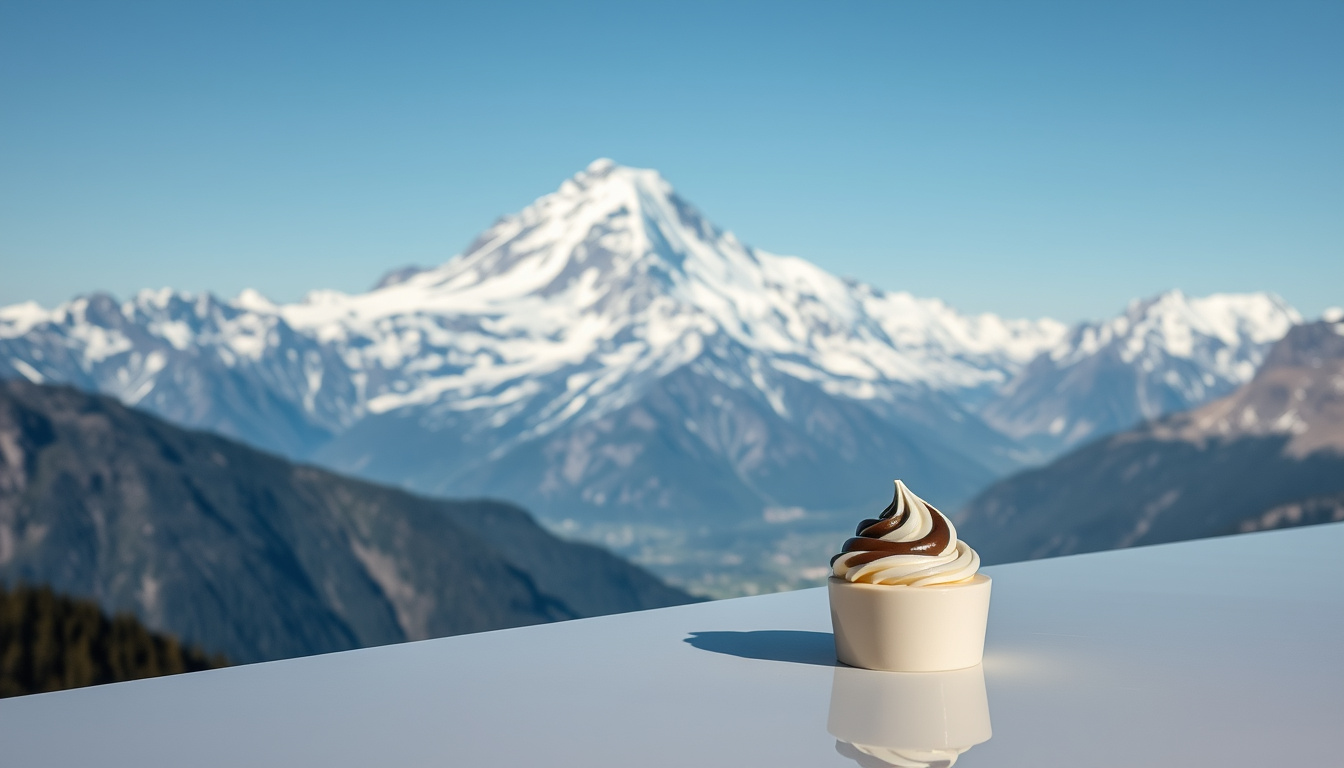
The name “Mont Blanc” carries significant weight in three distinct worlds: geography, luxury goods, and patisserie. It refers to a towering Alpine peak, a prestigious German brand known for its pens, and a delicate chestnut dessert. This guide breaks down each meaning, providing clear facts and distinctions to help you navigate the various contexts in which this iconic name appears.
Whether you are planning a mountaineering expedition, researching a luxury fountain pen, or simply curious about a classic French sweet, understanding the differences is essential. The mountain, the brand, and the dessert share a name, but they are separate entities with their own unique histories and characteristics.
This article provides a comprehensive overview of all three—the geographic landmark, the luxury house, and the culinary creation—along with key facts, timelines, and the distinctions that separate them.
Mont Blanc Mountain: Europe’s Highest Peak
Mont Blanc, the mountain, stands as the highest summit in the Alps and Western Europe. Its name, meaning “White Mountain,” is a direct reference to its snow-covered peak, a feature that has captivated climbers and tourists for centuries. Located on the border between France and Italy, it is a cornerstone of Alpine geography and culture.
The following overview provides essential data at a glance:
- Elevation: 4,808 meters (15,774 ft)
- First Ascent: August 8, 1786, by Jacques Balmat and Michel-Gabriel Paccard
- Location: Graian Alps, on the border of France and Italy
- Primary Gateway: Chamonix-Mont-Blanc (France) and Courmayeur (Italy)
Key insights about the mountain include its prominence as the 11th most prominent mountain in the world. It is not just a single peak but a massif, a group of mountains and glaciers that form a dramatic landscape. The town of Chamonix-Mont-Blanc, at its base, is the primary hub for mountaineering and winter sports, attracting over 2 million visitors each year.
- Mont Blanc is the highest peak in the Alps at 4,808 meters.
- The first successful ascent was made in 1786 by Balmat and Paccard.
- Chamonix-Mont-Blanc is the main base for expeditions and tourism.
- The mountain is part of a larger massif shared by France and Italy.
- It is a major destination for guided ascents, via routes like the Gouter and Trois Monts.
| Entity | Fact | Detail |
|---|---|---|
| Mont Blanc (mountain) | Height | 4,808 m (15,774 ft) |
| Mont Blanc (mountain) | First Ascent | August 8, 1786 by Jacques Balmat and Michel-Gabriel Paccard |
| Montblanc (brand) | Founded | 1906 in Hamburg, Germany |
| Montblanc (brand) | Flagship Product | Meisterstück fountain pen (1924) |
| Mont Blanc (dessert) | Main Ingredient | Chestnut purée (crème de marrons) |
| Mont Blanc (dessert) | Typical Presentation | Meringue base, chestnut vermicelli, whipped cream peak |
Montblanc Brand: Luxury, Precision, and Heritage
The luxury brand, spelled as a single word—Montblanc—is a completely separate entity from the mountain, though it draws its name and inspiration from it. Founded in 1906 in Hamburg, Germany, the company originally focused on high-quality writing instruments. Its iconic white star logo is a stylized representation of the snow-covered peak of Mont Blanc.
Montblanc has since expanded its product line to include a range of luxury goods. While still famous for its pens, the brand now produces fine watches, leather goods, and fragrances for both men and women. For more on luxury brands, see the article on Tommy Hilfiger – Official Website, Outlet Deals and Brand Facts 2025. The flagship product remains the Meisterstück fountain pen, first launched in 1924, a symbol of craftsmanship and status.
The simplest way to tell the brand from the other entities is the spelling. The luxury house is written as Montblanc (one word, no space). The dessert and the mountain are written as Mont Blanc (two words, with a space). The brand’s official website and all its product lines use the one-word spelling.
The brand’s association with the mountain is a matter of symbolism. The logo represents the peak’s snow cap, and the name implies a pursuit of excellence. Unlike the dessert, which was named for its visual resemblance to the mountain, the brand adopted the name to evoke a sense of high achievement and aspiration.
Mont Blanc Dessert and Coffee: A Culinary Tradition
The Mont Blanc dessert is a classic confection that, like the brand, takes its name from the mountain’s appearance. It consists of a sweetened chestnut purée, often piped into thin vermicelli-like strands, which is piled high to resemble a snowy peak. This is typically served on a base of meringue and topped with a generous dollop of whipped cream.
Origins and History of the Dessert
The exact origin of the Mont Blanc dessert is not fully settled, but evidence points to 19th-century France and Italy. Some sources trace a commercial “Mont Blanc” being sold in Paris as early as 1847. Other accounts connect it to older Alpine chestnut traditions, including an Italian dish called Monte Bianco, which is Italian for Mont Blanc. The modern form, with its distinct piped shape, became associated with the dessert’s mountain-like appearance later.
The dessert’s name, meaning “White Mountain,” perfectly describes its finished look. It has become a seasonal favorite, especially in Japan, where it appears in autumn and winter. Japanese sources note a standardized international definition for the dessert, indicating it should be sweet, made with chestnut cream, and use whipped cream.
The Mont Blanc dessert is not produced or sold by the Montblanc luxury brand. The similarity in name is purely coincidental, as both the dessert and the brand independently reference the mountain. A “Mont Blanc coffee” is a separate beverage (often a flavored latte or iced drink) and is also not related to the brand.
Timeline of Key Events
Understanding the chronology of the mountain, the brand, and the dessert helps to clarify their separate histories. The following timeline highlights the most significant milestones for each entity.
- 1786: First successful ascent of Mont Blanc by Jacques Balmat and Michel-Gabriel Paccard.
- 1800s: Mont Blanc becomes a key destination for alpinists, leading to the development of Chamonix as a resort.
- 1860s: Earliest recorded recipes for a Mont Blanc-like dessert appear in French culinary literature.
- 1906: Foundation of the company that would become Montblanc in Hamburg, Germany.
- 1924: Launch of the Meisterstück fountain pen, the cornerstone of the Montblanc brand.
- 2020s: Continued popularity of Mont Blanc as a climbing challenge and the brand’s expansion into smart accessories and different product lines.
Distinguishing Between Mont Blanc and Montblanc
Given the overlapping names, confusion between the entities is common. The table below summarizes what is clearly established and what remains a source of potential confusion. The primary rule for clarity is the spelling—one word for the brand, two for the mountain and dessert.
| Established Information | Information That Remains Unclear |
|---|---|
| Mont Blanc (mountain) and Montblanc (brand) are distinct entities. The former is geographic, the latter is a luxury goods company. | The exact origin of the Mont Blanc dessert is not fully settled, with competing claims from France and Italy in the 19th century. |
| The Montblanc brand is spelled as one word (Montblanc), while the mountain and dessert are two words (Mont Blanc). | The exact date and location of the first “modern” Mont Blanc dessert are debated, with some sources citing Paris in 1847 and others pointing to older Italian traditions. |
| The Mont Blanc dessert is named after the mountain for its visual resemblance; the brand uses the mountain’s name for symbolic branding. | The specific moment when the dessert’s piped “vermicelli” shape became the standard is not precisely documented. |
| Neither the Montblanc brand nor the mountain is directly connected to the Mont Blanc coffee drink. | The full details of the brand’s decision to adopt the Mont Blanc name over its original name are not widely recorded in common sources. |
Context and Cultural Significance
The term “Mont Blanc” is a powerful example of how a single name can acquire multiple meanings across different fields. The mountain stands as a natural landmark of immense scale. The brand, Montblanc, has built a global reputation on the association with that peak, using it as a metaphor for quality and prestige. The dessert, meanwhile, offers a playful, edible tribute to the same iconic shape.
From an informational perspective, any comprehensive discussion of “Mont Blanc” must address all three meanings to fully satisfy user intent. The semiotic connection—the mountain, the snow cap logo on a pen, and the mound of chestnut purée on a plate—creates a fascinating web of cultural references. Understanding these connections enriches one’s appreciation of geography, commerce, and culinary art.
Sources and Credibility
“Mont Blanc is the highest mountain in the Alps and Western Europe, rising 4,808 m above sea level.”
“Crafted with passion and precision, Montblanc products embody the spirit of exploration and the pursuit of perfection.”
— Montblanc Official Website
“Chamonix-Mont-Blanc is an iconic destination that attracts tourists from the world over.”
— Chamonix Tourist Office
“Climb the highest peak in the European Alps, Mont Blanc, with our IFMGA qualified guides.”
— Adventure Consultants
Summary: A Unified Guide to All Three Meanings
The name “Mont Blanc” signifies three different and unrelated things: a mountain in the Alps, a luxury goods brand, and a chestnut dessert. The mountain is a geographic landmark; the brand is a commercial entity; the dessert is a culinary creation. Understanding the context in which the name is used is key, and the spelling—one word (Montblanc) versus two words (Mont Blanc)—provides a clear, practical distinction. For more on luxury brands, see the article on Tommy Hilfiger – Official Website, Outlet Deals and Brand Facts 2025.
Frequently Asked Questions
What is the main difference between Mont Blanc and Montblanc?
The main difference is spelling and meaning. “Montblanc” (one word) is the luxury brand. “Mont Blanc” (two words, with a space) refers to the mountain or the dessert. Context usually makes the meaning clear.
How tall is Mont Blanc mountain?
Mont Blanc is 4,808 meters (15,774 feet) high. It is the highest mountain in the Alps and all of Western Europe.
When was the Montblanc brand founded?
Montblanc was founded in 1906 in Hamburg, Germany. It is best known for its luxury writing instruments, watches, and leather goods.
What is the Mont Blanc dessert made of?
The dessert is made primarily of chestnut purée (crème de marrons), which is piped into thin strands. It is typically served on a meringue base and topped with whipped cream.
Does Montblanc sell the Mont Blanc dessert?
No, Montblanc does not sell the dessert. The brand sells luxury goods like pens and watches. The dessert is a separate culinary creation sold in patisseries and restaurants.
Where is Mont Blanc mountain located?
It is located in the Graian Alps on the border between France and Italy. The main French town at its base is Chamonix-Mont-Blanc.
What is the flagship product of Montblanc?
The flagship product is the Meisterstück fountain pen, which was first launched in 1924. It is a symbol of the brand’s craftsmanship.
Is Mont Blanc coffee related to the brand or the mountain?
A “Mont Blanc coffee” is typically a flavored latte or iced coffee drink that is not related to either the Montblanc brand or the mountain. It is a separate beverage item.
How can I climb Mont Blanc?
Climbing Mont Blanc is a serious undertaking that requires experience, fitness, and proper gear. Most climbers join a guided expedition via routes like the Gouter or Trois Monts. See Adventure Consultants – Mont Blanc Guided Ascent for more details.
Are there other meanings of the name Mont Blanc?
Yes. Besides the mountain, brand, and dessert, the name is also used by a natural ski resort in Canada (Mont Blanc Natural Resort) and appears in various other commercial contexts.

Sophie Kendall is Culture & Events Editor at DailyCity.co.uk, covering restaurants, nightlife, theatre, exhibitions, festivals and city life.