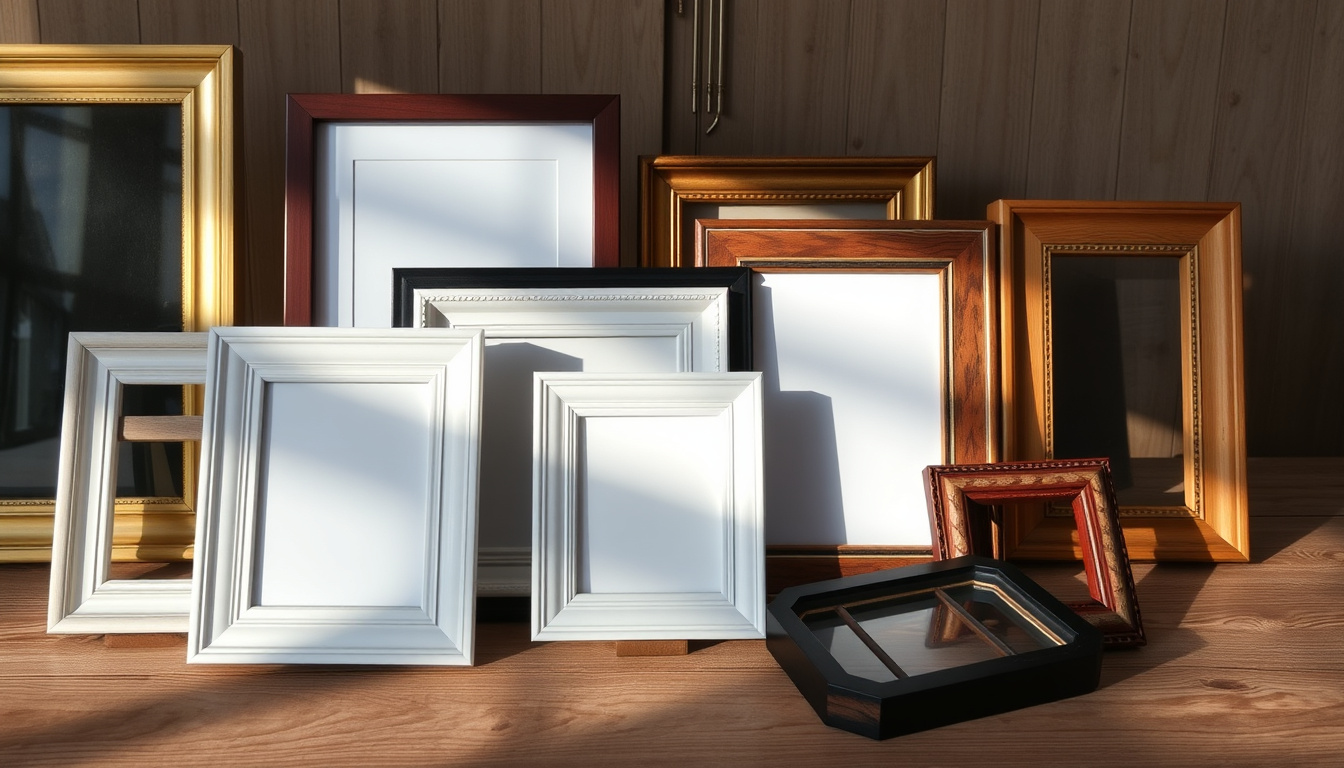
Whether you are framing a cherished family photograph, a limited-edition print, or an official certificate, finding the right picture frame can feel surprisingly complex. With sizes quoted in both inches and centimetres, a wide range of materials, and the choice between standard and made-to-measure options, it is easy to get lost. This guide breaks down everything you need to know about picture frames in the UK for 2025, from understanding common dimensions to selecting the perfect style for your home.
The UK picture frame market is dominated by online specialists who offer extensive customisation, alongside high-street retailers who focus on standard, ready-made sizes. Understanding the difference between these two paths is the first step in making a confident purchase. This article covers the most common questions, practical measuring advice, and a clear comparison of materials and styles to help you make an informed decision.
What size picture frame do I need?
Common Picture Frame Sizes
Find the perfect size for your photo – from 6×4 to A4 and beyond. See our conversion guide.
Wood vs Metal vs Gold
Compare materials to match your décor and durability needs. Discover which suits your photo best.
Custom vs Standard Frames
Learn when to choose made-to-measure and how to add a mount. Get the perfect fit.
Frame Styles & Trends
Explore modern, traditional, and gold frames. Get inspired for your wall display.
Key insights for choosing the right size
- Most UK buyers prefer made-to-measure frames for non-standard sizes, such as 50×70 cm or 30×40 cm prints.
- Wooden frames remain the top choice for traditional interiors, while metal frames are popular for modern minimalism.
- Gold picture frames are seeing a resurgence in 2025, especially for gallery walls and accent pieces.
- Adding a mount (mat) can transform a standard frame into a professional-looking display, but it requires a larger frame opening.
- A4 is one of the most common standard sizes, but many buyers are unsure of the exact frame dimensions needed for their document or print.
- Frame sizes are usually quoted by the inside opening, not the outer moulding size.
- Measuring the artwork itself, rather than the frame, is the most reliable approach for a perfect fit.
Picture Frames at a Glance
| Fact | Details |
|---|---|
| Standard sizes | 6×4, 7×5, 8×6, 10×8, 12×10, A4, A3. Often given in inches or cm. |
| Common materials | Wood (oak, pine, walnut), Metal (aluminium, steel, gold finish), Resin. |
| Custom frames | Typically 10-20% more expensive than standard, but offer unlimited size and colour options. |
| Mounting | Adds depth and protects artwork; standard mount sizes are cut to fit the frame opening. |
| UK market | Online custom framers like eframe, frames.co.uk, and easyframe dominate search results. |
| Size convention | Sizes refer to the internal dimension (opening) of the frame, not the outer moulding. |
| Measuring tip | Always measure the artwork or photo itself before ordering. |
Wooden vs metal picture frames: which is best?
The choice between wood and metal is one of the most significant decisions when buying a picture frame. Each material brings distinct advantages in terms of aesthetics, weight, durability, and cost. Understanding these differences helps you match the frame to both your décor and the specific item you are displaying.
Wooden picture frames: pros and cons
Wooden frames, often made from oak, pine, or walnut, are a classic choice. They offer a warm, natural look that suits traditional interiors and artwork. Moulding choices affect both appearance and weight; suppliers list different moulding profiles such as thin, standard, large, and square options, with approximate face and height measurements in millimetres. A well-crafted wooden frame can last for decades, but it is generally heavier and more expensive than a basic metal counterpart.
Metal picture frames: pros and cons
Metal frames, typically made from aluminium or steel, provide a sleek, minimalist look. They are lighter than wood, making them ideal for large pieces or gallery walls. Many metal frames now come with a gold finish, which can be painted or anodised rather than being real gold. Metal frames are often less expensive and offer a more uniform, modern appearance. However, they may lack the warmth and character of wood and can sometimes feel less substantial.
Gold picture frames: style and suitability
Gold frames are a classic option that has seen a strong revival in recent years. Modern gold finishes range from bright, polished yellow to subdued antique brass and brushed gold. They work well in both traditional and contemporary settings, particularly on gallery walls where they add a touch of elegance. It is important to check the exact colour swatch before ordering, as the term “gold” covers a wide spectrum. For a deep dive into another popular home furnishing category, see our Billy Bookcase – Complete Guide to Sizes, Doors, and Hacks.
For durability, metal frames (especially aluminium) are generally more resistant to warping and moisture than wood. However, high-quality wooden frames with proper joinery can be just as long-lasting. The best choice depends on your décor, the weight of the artwork, and your budget.
How to order a made-to-measure picture frame?
Ordering a custom or made-to-measure frame is straightforward, but requires careful attention to measurement. The process generally follows a consistent workflow across UK suppliers.
Standard vs custom: what to choose?
Standard frames are mass-produced in common sizes like 6×4, A4, and A3. They are affordable and readily available from high-street retailers. Custom frames are made to your exact specifications, ideal for non-standard artwork, oversized pieces, or exact-fit requirements. While custom frames cost 10-20% more, they offer unlimited size and colour options, as well as the ability to add a mount.
Adding a mount to your picture frame
A mount (or mat) is a border of card that sits between the artwork and the frame. It adds depth, protects the artwork from touching the glass, and can dramatically improve the presentation. When ordering a made-to-measure frame, you can specify the mount colour and the exact size of the cut-out. Remember that adding a mount requires a larger frame opening than the artwork size alone.
Understanding picture frame moulding options
Moulding refers to the profile and shape of the frame itself. UK framers offer a variety of profiles, including thin, standard, large, and square. The width and height of the moulding, measured in millimetres, affect both the look and the weight of the finished frame. Thinner mouldings suit modern, minimalist styles, while wider, more ornate profiles are common for traditional and gold frames.
Many buyers assume that a frame labelled “50×70” refers to the outer dimensions. In almost all cases, it refers to the inside opening. Always check the product description to confirm whether the quoted size is the opening or the outer size before purchasing.
What are the most popular picture frame styles?
The style of your picture frame should complement both the artwork and the room it hangs in. The market offers a wide spectrum, from ultra-modern to heavily ornate.
Modern picture frame styles
Modern frames favour clean lines, slim profiles, and neutral colours. Black, white, and metallic finishes (including aluminium and brushed gold) are common. These frames work well in contemporary homes and for displaying photography, abstract art, or posters.
Traditional picture frame styles
Traditional frames are characterised by wider mouldings, ornate detailing, and richer colours like dark wood, mahogany, or antique gold. They are the classic choice for oil paintings, family portraits, and classic prints. Many UK framers specialise in reproducing traditional profiles with modern materials.
Choosing colours for your picture frames
Colour choice can make or break a display. A frame should enhance the artwork without overpowering it. Neutral tones like black, white, and natural wood are safe choices. For a bold statement, consider a gold or coloured frame. If you are creating a gallery wall, mixing materials and finishes can add visual interest, but keeping a consistent colour theme helps maintain cohesion. For another product category guide with a similar buying-guide format, check out Chess Sets – Best UK Options for Luxury, Unique & Budget Buyers.
For a cohesive gallery wall, try mixing wood and metal frames in the same colour family (e.g., all black, or all gold). This creates a unified look even if the frame profiles differ. Adding mounts to all frames also provides a consistent white border that ties the display together.
The evolution of picture frames: a brief timeline
While the commercial intent of this guide is primary, understanding the history of picture frames adds context. Frames have evolved from simple wooden carvings in ancient times to the precision-engineered aluminium and custom-made options available today. The rise of online custom framers in the UK over the last two decades has dramatically increased accessibility and choice for consumers.
- Ancient and medieval periods: Early frames were simple, carved wooden borders for religious art. ~12th century
- Renaissance (15th-16th centuries): Ornate, gilded frames became popular, often featuring gold leaf and elaborate carvings.
- 19th century: Industrialisation led to mass-produced frames in standard sizes, making them affordable for the middle class.
- Mid-20th century: Modernism introduced minimalist metal frames and slim profiles.
- 1990s-2000s: The rise of online retail brought custom framing to a wider audience.
- 2020s: Made-to-measure frames become the norm for non-standard sizes; gold and metallic finishes return to popularity.
What size frame do I need for a 50×70 photo? Separating fact from uncertainty
Many common questions about picture frames have clear answers, but some details vary by retailer and product. The table below clarifies what is well-established and what remains less certain.
| Established information | Information that remains unclear |
|---|---|
| A 50×70 cm photo requires a frame with a 50×70 cm opening, or larger if using a mount. | Whether a frame labelled “50×70” refers to the opening size or the outer frame size – always check product details. |
| A 30×40 cm frame is approximately 11.8 × 15.7 inches. | The exact colour of “gold” frames varies from bright yellow to antique brass – confirm with a swatch. |
| A4 paper (210×297 mm) fits in a frame labelled A4, usually with a 21×29.7 cm opening. | The cost of custom frames can vary widely by material, size, and complexity. |
| A 6×4 inch photo requires a frame with a 6×4 inch opening (or slightly larger with a mount). | There is no single authoritative UK-wide 2025 standard for all framers; sizing and options vary by workshop. |
What does the picture frame market look like in the UK?
The UK picture frame market is shaped by a strong presence of online custom framers, such as eframe.co.uk, frames.co.uk, and easyframe.co.uk, who dominate search results and offer extensive product configurators. High-street retailers like Habitat and IKEA provide standard, ready-made frames at competitive prices but offer limited customisation. The trend towards personalised home décor continues to drive demand for made-to-measure frames, with online framers often offering savings of up to 55% compared to traditional high street prices. Most search results are UK-based, so international buyers may need to adapt size and supplier information for their local market.
What do UK framing sources say?
Several UK framing specialists offer consistent guidance on sizing and ordering. According to eframe.co.uk, frame sizes are always quoted by the inside opening, and measuring the artwork is the first step. Boldon Framing provides a made-to-measure service where you enter width and height in cm, mm, or inches. For oversized pieces, Harten Framing offers reinforced construction and acrylic glazing for large work up to 2 metres. These sources collectively recommend a simple workflow: measure the artwork exactly, decide on a mount, enter the dimensions, and confirm whether the quoted size is the opening or the outer frame size.
“Frame sizes are usually quoted by the inside opening. Always measure your artwork, not the frame.”
— eframe.co.uk
“Measure twice for accuracy. If using a mount, factor that into the opening size before ordering.”
— Framesrus.co.uk
“For large or unusual pieces, confirm maximum dimensions, glazing limits, and whether reinforcement is needed.”
— Harten Framing
Summary: your next steps for buying picture frames
Choosing the right picture frame comes down to a few simple steps: measure your artwork or photo carefully, decide on a material (wood, metal, or gold finish), choose between a standard or custom size, and decide whether to add a mount. Online UK framers provide comprehensive tools and options for every need, from a simple 6×4 snapshot to a large bespoke piece. For more practical home furnishing guidance, explore our Billy Bookcase – Complete Guide to Sizes, Doors, and Hacks.
Frequently asked questions about picture frames
What is the difference between a picture frame and a photo frame?
Generally interchangeable, but “picture frame” often refers to frames for artwork, while “photo frame” is for photographs. Both are used similarly in retail contexts.
Can I order a picture frame with a mount?
Yes, most custom framers offer mounts (mats) in various colours and sizes. Specify the mount colour and cut size when ordering.
How do I clean a picture frame?
Use a soft dry cloth. For glass, use a glass cleaner sparingly. Avoid harsh chemicals on wood or metal frames.
What is the standard picture frame size for an A4 photo?
A standard A4 frame has an opening of 21 x 29.7 cm (8.27 x 11.69 inches). If using a mount, the frame will be larger.
Are gold picture frames tacky?
No, gold frames are a classic choice. Modern gold finishes like brushed brass or antique gold suit many styles and interiors.
How much do custom picture frames cost?
Custom frames typically cost 10-20% more than standard frames. Prices vary by material, size, and complexity.
What is the largest size for a custom picture frame?
Limits vary by supplier. One UK framer lists a maximum of 915 mm × 1220 mm. Specialist makers can go up to 2 metres for oversized pieces.
Can I use a standard frame for a 50×70 photo?
Only if the standard frame has a 50×70 cm opening. Since this is not a common standard size, a made-to-measure frame is usually required.
What glazing options are available for picture frames?
Common options include standard glass, non-reflective glass, and acrylic. Specialist suppliers offer glazing from 2 mm to 6 mm thick.

Sophie Kendall is Culture & Events Editor at DailyCity.co.uk, covering restaurants, nightlife, theatre, exhibitions, festivals and city life.