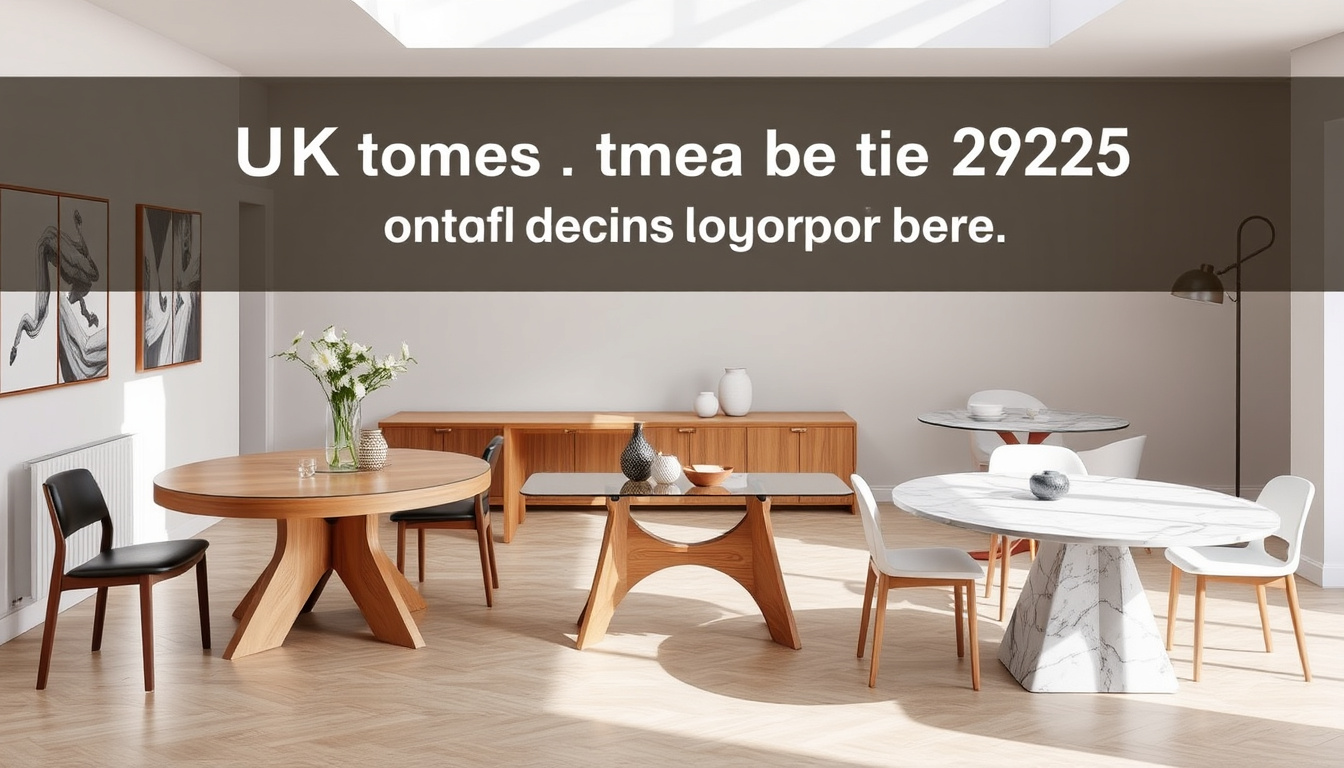
A dining table is often the largest piece of furniture in a home, and choosing the right one means balancing size, shape, material, and seating in a way that works for the room and the people who use it every day. Getting the dimensions right is the first and most important step — a table that looks perfect in a showroom can overwhelm a small space or leave too little room to move comfortably.
Standard UK dining tables sit at a height of 73–76 cm, with chair seats at 45–47 cm. Most homes need at least 90 cm of clearance around the table for chairs to pull out and for people to walk behind seated diners. These figures serve as a practical starting point for any purchase, whether the table is for a compact flat or a large family kitchen.
This guide covers the key factors — size, shape, extendable options, materials, and chair matching — to help buyers make an informed decision based on their specific room dimensions and dining habits.
What size dining table do I need?
The single most common mistake when buying a dining table is choosing one that does not fit the room. Measuring the space carefully, including clearance for chairs and circulation, should come before any style or material preference. UK retailers often classify tables as small (up to 120 cm), medium (120–152 cm), and large (152 cm or more), which provides a quick reference when browsing online or in-store.
- Most UK households buy a 4-seater or 6-seater table, making those sizes the best starting point for guidance.
- Round tables work well in small square rooms but are less practical for narrow, rectangular spaces.
- Extendable tables offer flexibility for entertaining without permanently using extra floor space.
- Solid wood is valued for its longevity; glass and veneer are easier to maintain but can be less durable over time.
- Chair height matters as much as table height for everyday comfort.
- Buying online requires checking dimensions, delivery access, and assembly service carefully before purchase.
| Fact | Detail |
|---|---|
| Standard table height | 74–76 cm (29–30 in) |
| Standard chair seat height | 45–50 cm (18–20 in) |
| Minimum clearance around table | 90–100 cm (36–40 in) |
| Width per person | 60 cm (24 in) |
| 4-seater table size | 120–140 cm long |
| 6-seater table size | 160–180 cm long |
| Round table for 4 | 120 cm diameter |
| Extendable leaf width | 40–60 cm |
Which dining table shape is best: round, square or rectangular?
Shape affects both seating capacity and how easily people can move around the table. The choice depends largely on the room layout and how many people need to sit regularly. Each shape has distinct practical trade-offs that buyers should consider before deciding.
Rectangular tables
Rectangular tables are the most common choice for family dining and larger rooms. They scale best for 4, 6, or 8 seats and fit naturally against walls or in long rooms. A 6-seater rectangular table is commonly around 150–180 cm long and 90 cm wide. For 8 people, the length typically reaches 200–220 cm with a width of 90–100 cm.
Round tables
Round tables soften visual bulk and improve traffic flow, making them a strong option for compact rooms and open-plan spaces. A round table of 90–110 cm diameter suits about 4 people, while 120–140 cm also fits 4 more comfortably, and 150 cm or more can seat 6 depending on chair size and layout.
Square tables
Square tables work well in small spaces and provide equal seating distance for all diners. A 90 x 90 cm square is often cited as a snug four-seat size, though elbow room is tighter than at a rectangular or round table of similar seating capacity.
Shape quick guide
Choose rectangular for maximum seating efficiency in larger rooms. Choose round for softer flow and better traffic movement in compact or open-plan spaces. Choose square when the room is small and equally proportioned, and opt for extendable if you host guests occasionally but want a compact everyday footprint.
Are extendable dining tables worth it?
Extendable dining tables offer the best compromise for households that need a compact everyday size but occasional extra capacity. Several UK retailers highlight extendable styles as suitable for flexible seating needs, and they are widely available in rectangular and round designs.
How do extendable dining tables work?
Most extendable tables use a drop-leaf mechanism or a removable leaf stored within the table. When extended, the table adds roughly 40–60 cm of length, allowing it to accommodate additional guests. The mechanism varies in smoothness and load capacity, so checking the quality of the extension system in person or through independent reviews is advisable.
What to look for when buying an extending table
Buyers should verify that the room has enough space for the table when fully extended, including clearance for chairs on both sides. The extension mechanism should move smoothly without excessive force, and the table surface should remain level when extended. Some models require storage space for the leaf when not in use.
Practical consideration
An extendable table needs enough room to expand fully. Before buying, measure the space with the table at its full length and add at least 90 cm of clearance on all sides. Also check that the extended table still allows comfortable access to other furniture or doorways in the room.
What is the best material for a dining table?
Material choice drives maintenance, durability, and total cost of ownership. Wood is the most common and versatile option, especially for traditional, rustic, or everyday family use. Solid wood, such as oak or teak, is generally associated with durability and a warmer look. Engineered wood is often used in more affordable tables where value and lighter construction matter.
Solid wood and engineered wood
Solid wood tables are valued for their longevity and can often be refinished if scratched or worn. Engineered wood tables cost less and weigh less, making them easier to move, but they are generally less durable over long periods. Many UK listings feature oak, teak, and other timber finishes across both price ranges. For those leaning towards solid wood, the Nick Offerman – Biography, Career and Personal Life article offers a useful look at woodworking and furniture craftsmanship.
Glass and other materials
Glass-top tables are chosen for a lighter visual appearance and can suit smaller rooms, though they still need careful cleaning and placement. Stone tables may be marketed as durable but can chip or stain if not maintained. The best material ultimately depends on household use, sunlight exposure, and how much maintenance the buyer is prepared to accept.
Material maintenance note
Solid wood tables require occasional polishing or oiling to maintain their finish. Glass tables show fingerprints and smudges easily and may need frequent cleaning. Engineered wood can be sensitive to moisture and heat, so coasters and placemats are recommended for any material to extend the table’s life.
How to choose dining tables and chairs that work together
Chair seat height should generally be about 25–30 cm lower than the tabletop to allow comfortable legroom. That is why dining chairs in the 45–47 cm seat-height range pair well with standard UK tables. As a simple buying check, ensure that chair arms, if present, can slide under the apron or underside of the table without hitting it.
- Week 1: Measure the room and check clearances for chairs and movement.
- Week 1: Define how many people need seating daily and occasionally.
- Week 2: Shortlist table shapes and materials that match the room.
- Week 2: Decide whether an extendable table is needed.
- Week 3: Compare budget ranges and delivery or assembly options.
- Week 4: Order the table and arrange chair measurements.
- On delivery: Inspect the item, assemble carefully, and apply a protective finish if needed.
If you want six chairs around a table, a rectangular table around 150–180 cm is usually a safer fit than a shorter one. Each seated person needs roughly 60 cm of table width, so a 150 cm table gives comfortable space for five people, and 180 cm works well for six.
What should I look for when buying an extending table?
Some aspects of extendable tables are well established, while others depend on specific product design and household conditions. The table below separates what is known with confidence from what remains uncertain.
| Established information | Information that remains unclear |
|---|---|
| Standard table height is 74–76 cm. | Exact clearance depends on chair depth and room layout. |
| Dining chairs typically have a seat height of 45–50 cm. | The best material depends on household use, sunlight and maintenance tolerance. |
| A minimum clearance of 90–100 cm allows chairs to pull out comfortably. | Extendable mechanisms vary in smoothness and load capacity; not all are equal. |
| Each seated person needs roughly 60 cm of table width. | Glass and stone tables can chip or stain if not maintained regularly. |
Where should I buy a dining table in the UK?
Dining tables are the centre of dining rooms and open-plan living spaces, so buying decisions should balance function, comfort, and style. Size mistakes are the most common problem: a table may look right in a showroom but overwhelm a small room. Shape affects both seating capacity and how easily people can move around the table.
The UK retail market includes specialist furniture shops, online retailers, and marketplaces, each with different delivery and aftercare policies. Buyers should always verify dimensions, weight, and delivery access before purchasing. Consumer advice organisations note that buyers have legal protections if goods arrive damaged or are not as described, so checking return policies is worthwhile.
Material choice drives maintenance, durability, and total cost of ownership. Extendable tables add flexibility but require space for the table to expand and for chairs to move. The Which? dining table reviews provide independent consumer testing and buying guidance that can help narrow down options across different price points.
Are online dining tables good quality?
Online dining tables vary widely in quality, and independent testing can help separate well-made pieces from those that cut corners on materials or construction. UK furniture industry guidance from the British Furniture Confederation recommends using standard height and clearance ranges as a starting point, but verifying exact specifications before purchase is essential. Product testing from consumer organisations can inform material and brand recommendations.
“Use standard height and clearance ranges as a starting point, not a strict rule.”
UK furniture industry guidance
“Let product testing inform material and brand recommendations.”
Which? buying guides
“Always verify dimensions, weight and delivery access before purchasing.”
Retailer specification pages
For buyers concerned about sustainability, checking wood sourcing through organisations such as the Forest Stewardship Council can provide additional assurance. Understanding Citizens Advice consumer rights is also useful for navigating delivery issues, refunds, and items that arrive damaged or not as described.
How do I make the right dining table choice?
The right dining table fits the room comfortably, seats the required number of people, suits the household’s daily routine, and matches the buyer’s budget and maintenance expectations. Measuring the room, including traffic flow, before shortlisting any table is the single most effective way to avoid costly mistakes. The Barbie Dolls – History, Value, and Best UK Retailers guide follows a similar structured approach to buying decisions that can be applied to furniture shopping as well.
Frequently asked questions about dining tables
Are glass dining tables fragile?
Glass dining tables are not necessarily fragile, but they are more prone to visible scratches and chips than wood or stone. Tempered glass is stronger than standard glass and is commonly used in dining tables to improve durability. Cleaning requires regular wiping to remove smudges and fingerprints.
How do I remove scratches from a wooden dining table?
Light scratches on solid wood can often be reduced using furniture polish or a beeswax treatment. Deeper scratches may require sanding and re-oiling for solid wood tables. Veneered tables cannot be sanded deeply because the wood layer is thin, so scratch prevention is more important for those surfaces.
Can I use a rug under a dining table?
Yes, a rug can define the dining area and add comfort underfoot. Choose a rug large enough for chairs to stay on the rug when pulled out. A minimum of 60 cm extra on each side of the table is recommended so chair legs do not catch on the edge when moving.
How many people fit at a 180 cm dining table?
A 180 cm long rectangular table comfortably seats six people, with roughly 60 cm of width per person. If the table is 90 cm wide, six chairs fit well. Seven people can sit in a tight configuration, but everyday comfort is best at six.
Do extendable dining tables save space?
Extendable tables save floor space when not in use because they can be kept at a smaller everyday size. When extended, they require the same clearance as a fixed table of that size. The space-saving benefit applies only when the table is in its compact configuration.
Should I buy a dining table with a bench or chairs?
Benches can seat more people in a compact width and work well against walls, but they are less adjustable for individual comfort. Chairs offer better back support and are easier to move. Many households use a mix of chairs on one side and a bench on the other for flexibility.
How can I protect a dining table from heat damage?
Use coasters, placemats, and trivets for hot dishes to prevent heat marks on any table surface. Solid wood can develop white rings from heat or moisture if not protected. Glass tables are less susceptible to heat but can crack under sudden temperature changes.
How much clearance is needed behind dining chairs?
A minimum of 90 cm behind the chair when someone is seated allows other people to walk past comfortably. If the room is tight, 75 cm is the absolute minimum for occasional use. More space is always better for everyday comfort and accessibility.

Henry Morgan is Senior Reporter at DailyCity.co.uk, covering breaking news and general city stories across the UK.