
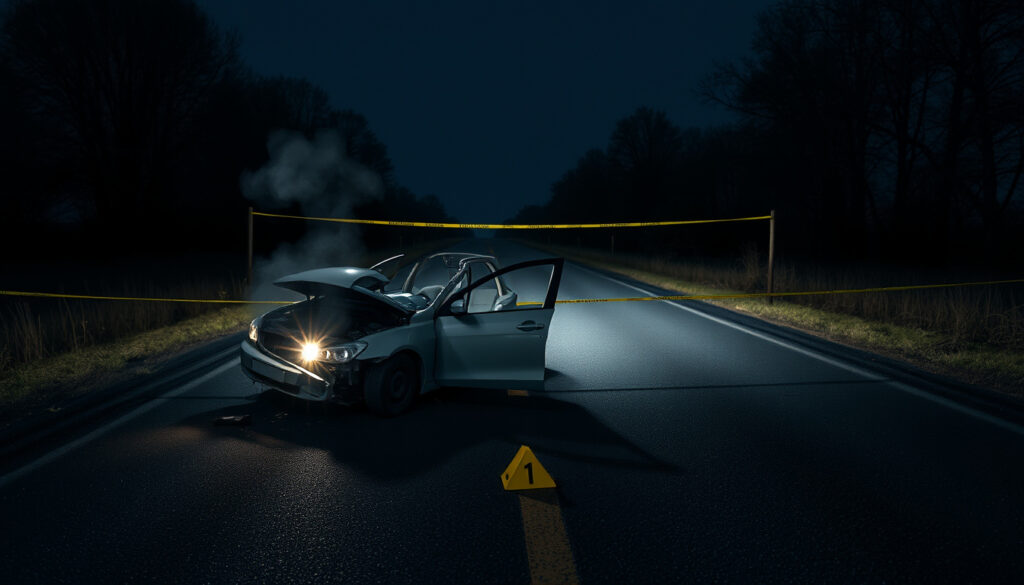
Malcolm John Webster is an English former nurse serving a life sentence for the murder of his first wife, Claire Morris. In May 2011, the High Court in Glasgow found that Webster drugged Morris, staged a car crash on a remote road in Aberdeenshire and set the vehicle on fire while she was inside. He was also convicted of attempting to murder his second wife, Felicity Drumm, in a similarly engineered crash in New Zealand in 1999. A full summary of the conviction is available in his Wikipedia biography.
The case became known in the British press as that of the “Black Widower.” Prosecutors described Webster as a calculating and practiced deceiver who staged apparent accidents to obtain life-insurance money. His trial ran for 16 weeks, and the jury reached guilty verdicts in less than four hours.
Webster received a life sentence with a minimum term of 30 years. His appeal was dismissed in December 2013, and a later legal article reported that he has claimed a miscarriage of justice.
Who Is Malcolm Webster?
Malcolm John Webster, an Englishman convicted of murdering his first wife
Murder of Claire Morris in 1994 and attempted murder of his second wife in a staged crash
Crime in 1994; conviction in 2011; appeal dismissed in December 2013
Scotland for the murder; New Zealand for the attempted murder
Key insights at a glance:
- Malcolm Webster was convicted for staging a car crash that killed his first wife and then staging a similar crash against his second wife.
- The case is often framed as a premeditated pattern across two countries: Scotland and New Zealand.
- He was sentenced to life imprisonment with a minimum term of 30 years.
- His appeal was dismissed by a Scottish court in December 2013.
- A later legal article reports that Webster has claimed a miscarriage of justice, adding a fresh legal dimension to the case.
- The investigation, known as Operation Liffey, spanned three countries and gathered around 1,000 statements.
| Full name | Malcolm John Webster |
|---|---|
| Born | 18 April 1959 |
| Nationality | English |
| Conviction | Murder of Claire Morris; attempted murder of his second wife |
| Sentence | Life imprisonment with a minimum term of 30 years |
| Appeal status | Appeal dismissed — December 2013 |
| Investigation | Operation Liffey |
| Victims | Claire Morris; Felicity Drumm |
How Did Malcolm Webster Kill Claire Morris?
Claire Morris was 32 when she died in May 1994. Her death was initially treated as an accident, and Webster later claimed more than £200,000 through life-insurance policies.
Who Was Claire Morris?
Claire Morris married Webster in September 1993. She was 32 years old when she died in the Aberdeenshire crash eight months later.
How Was the Crash Staged?
In May 1994, Webster drugged Morris, staged a car crash on a remote road in Aberdeenshire and set the vehicle on fire while she was inside. The death was at the time treated as an accident. Webster subsequently claimed more than £200,000 through life-insurance policies.
How Did the Attempted Murder of Felicity Drumm Compare?
In 1999, Webster was convicted of attempting to murder Felicity Drumm in New Zealand. Prosecutors said he used sedatives and engineered a crash similar to the one that killed Morris, seeking another insurance payout. The drugging occurred over a period that included Drumm’s pregnancy and endangered both her and her unborn child.
Prosecutors in both cases identified the same method: sedating the victim, staging a car crash and then seeking an insurance payout. In the New Zealand case, the drugging continued over a period that included Drumm’s pregnancy.
What Happened at Malcolm Webster’s Trial and Appeal?
Webster was charged in 2009 with Morris’s murder, the attempted murder of Drumm and the bigamy-related offence. His trial at the High Court in Glasgow lasted 16 weeks; prosecutors presented evidence for roughly 50 days, while the jury reached guilty verdicts in less than four hours. Webster denied murdering Morris and attempting to kill Drumm, maintaining that the first crash was an accident and rejecting the allegation that he acted for insurance money. The jury, comprising nine women and six men, convicted him unanimously on the principal charges in May 2011.
What Sentence Did Malcolm Webster Receive?
On 5 July 2011, Webster received a life sentence with a minimum term of 30 years before parole could be considered — one of the toughest sentences imposed in Scotland at the time. The court also convicted him of related theft and fraud offences committed between 1994 and 2008. He was subsequently removed from the nursing register.
What Other Convictions Came from the Trial?
Webster was also found guilty of intending to marry Simone Banarjee bigamously to gain access to her estate. He reportedly pretended to have leukaemia as part of the deception.
Did Malcolm Webster Appeal His Conviction?
Yes. BBC News reported that Webster lost his appeal in December 2013. The specific reasons for the dismissal are not detailed in the available sources.
The dismissed appeal of December 2013 is separate from the later reported miscarriage-of-justice claim, which a law-firm article says Webster has raised. The available sources do not connect the two procedurally.
How Was Malcolm Webster Caught?
How Was the Morris Case Reopened?
The Morris case was originally considered an accidental death. It was reopened in 2008, and forensic testing of preserved liver tissue found evidence that she had received a sedative before the crash.
What Was Operation Liffey?
Operation Liffey was the name of the wider investigation. Police and authorities in Scotland, England and New Zealand worked on it, with approximately 1,000 statements gathered across several countries.
How Did Police Link the Two Incidents?
The similar method in the two crashes — and the insurance claims that followed — connected the Scotland and New Zealand cases. Documentary coverage of the investigation describes how the covert work unfolded across both countries.
Court records and documentary accounts describe the investigation as one of the first to draw a direct line between a 1994 death in Scotland and a 1999 attempted murder in New Zealand. The sources do not disclose every forensic detail of that connection.
Where Is Malcolm Webster Now?
Webster is serving the life sentence imposed in July 2011. Because the court set a minimum term of 30 years, parole cannot be considered until that term has been served. The available sources do not confirm an exact eligibility date.
A law-firm article reports that Webster has claimed a miscarriage of justice. The claim is described in legal commentary, but the available sources do not show a court ruling on it or its current procedural status.
How Did the Malcolm Webster Case Develop Over Time?
- — Malcolm John Webster is born.
- — Webster marries Claire Morris.
- — Claire Morris dies in a staged car crash in Aberdeenshire; the death is initially treated as an accident (BBC News; Wikipedia).
- — Webster attempts to murder his second wife, Felicity Drumm, in New Zealand (Press and Journal; The Independent).
- — The Morris case is reopened; forensic testing finds evidence of a sedative.
- — Webster is charged with murder, attempted murder and a bigamy-related offence.
- — A jury convicts Webster on the principal charges.
- — Webster is sentenced to life with a minimum term of 30 years.
- — Webster’s appeal is dismissed (BBC News).
- — A law-firm article reports that Webster claims a miscarriage of justice (MJS Criminal Defence Lawyers).
What Is Established and What Remains Unclear in the Malcolm Webster Case?
| Established information | Information that remains unclear |
|---|---|
| Malcolm Webster was convicted of the murder of Claire Morris. | The current outcome of his reported miscarriage-of-justice claim is not stated in available sources. |
| He was also convicted of the attempted murder of his second wife, Felicity Drumm. | Specific forensic, toxicological and crash-reconstruction details have not been fully published. |
| He was sentenced to life imprisonment with a minimum term of 30 years. | Felicity Drumm’s current status is not documented in the available sources. |
| His appeal was dismissed in December 2013. | Whether the reported miscarriage-of-justice claim has progressed is not confirmed. |
Why Has the Malcolm Webster Case Remained in the Public Eye?
The case is a powerful example of a patterned, cross-border intimate-partner homicide attempt. The geographic separation between Scotland and New Zealand meant the two incidents were not immediately connected, and Operation Liffey is highlighted as the investigation that ultimately tied them together.
Media branding of the case as “Murder by Medic” reflects the documentary framing around Webster’s clinical access and methodical staging. In the British press, the case became known as that of the “Black Widower,” reflecting the prosecution’s claim that Webster targeted wives or prospective partners for financial gain.
The case was dramatized in the 2014 ITV series The Widower, in which Webster was portrayed by actor Reece Shearsmith. Morris’s family later campaigned to have her headstone removed because it described her death in terms inconsistent with the murder conviction; the headstone was removed in 2011.
Stories of people who project an ordinary public image while hiding a lethal pattern continue to attract true-crime audiences. A parallel case is covered in the profile of Linda Calvey – BBC Gangster Podcast Reveals Her True Story, another UK convict linked to the “Black Widow” label.
Where Can the Malcolm Webster Case Details Be Verified?
Official records of the case fall under the Scottish criminal justice system. The Scottish Courts website publishes case information, while the Crown Office and Procurator Fiscal Service handles prosecution matters. The documentary series Murder by Medic dedicates an episode to Webster’s case.
“Wife killer Malcolm Webster loses his appeal.”
BBC News
“Man Claims Miscarriage of Justice After Two Staged Accidents to Murder Wives.”
MJS Criminal Defence Lawyers
What Is the Bottom Line on the Malcolm Webster Case?
Malcolm Webster was convicted in 2011 of murdering Claire Morris and attempting to murder Felicity Drumm in staged car crashes separated by five years and two continents. His life sentence, with a minimum term of 30 years, is among the toughest imposed in Scotland; the appeal was dismissed in December 2013, while a later reported miscarriage-of-justice claim remains unresolved in the available sources. Public debate about such cases continues, from the evidence behind convictions like Webster’s to the way reputations are shaped after death, a theme also examined in August Ames – Biography, Death and Social Media Controversy.
When is Malcolm Webster eligible for parole?
Webster received a life sentence with a minimum term of 30 years in July 2011. That term must be served before parole can be considered. The available sources do not confirm an exact eligibility date.
How long has Malcolm Webster been in prison?
Webster has been in custody since his conviction in May 2011. By 2026, he has served roughly 15 years of the minimum 30-year term.
What happened to Malcolm Webster’s second wife?
Felicity Drumm survived the 1999 crash in New Zealand. She was pregnant at the time of the drugging, which endangered her and her unborn child. Her current status is not documented in the available sources.
Where did Malcolm Webster stage the car crash in New Zealand?
The available sources say the incident took place in New Zealand in 1999, but they do not name the exact location.
Who was Simone Banarjee?
Simone Banarjee was the target of Webster’s bigamy plot. He was found guilty of intending to marry her bigamously to gain access to her estate, and reportedly pretended to have leukaemia as part of the deception.
Why was Claire Morris’s headstone removed?
Morris’s family campaigned to have the headstone removed because its wording described her death in terms inconsistent with the murder conviction. The headstone was removed in 2011.
Did Malcolm Webster ever admit killing Claire Morris?
No. Webster denied murdering Morris and attempting to kill Drumm. He maintained that the first crash was an accident and rejected the claim that he acted for insurance money.

Henry Morgan is Senior Reporter at DailyCity.co.uk, covering breaking news and general city stories across the UK.