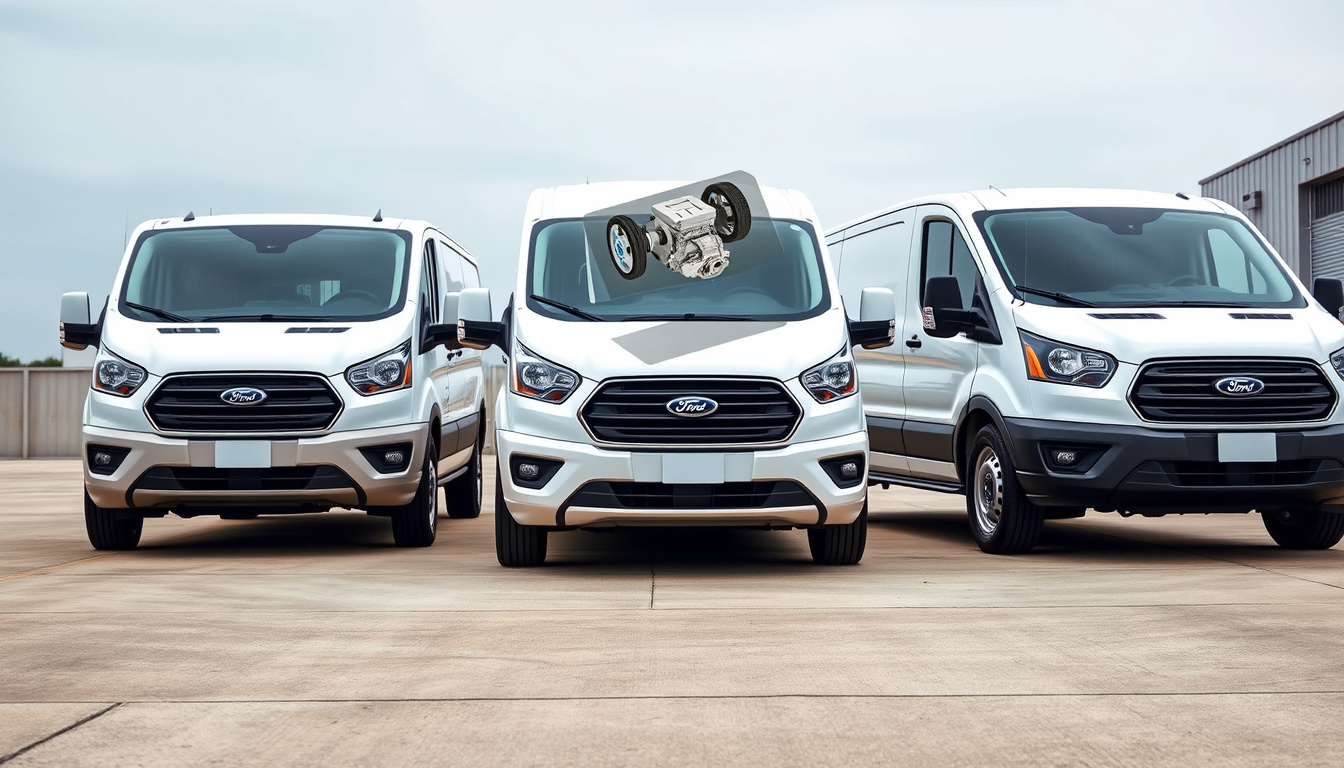
The Ford Transit Custom has been the UK’s best-selling medium-sized van for years, prized for its car‑like handling, practical load space, and now a choice of diesel, electric, and plug‑in hybrid powertrains. Whether you run a small business, a fleet, or need a crew carrier, the Transit Custom line‑up covers a wide range of budgets and use cases. This guide breaks down the 2025 model year – from prices and specifications to the key differences between diesel and electric versions – so you can decide which variant fits your needs.
Buying a van is a significant investment, and the Transit Custom market can feel crowded with trim levels, body lengths, and fuel types. Understanding the core features, costs, and long‑term ownership considerations will help you make a confident choice. We have gathered the latest official data, expert reviews, and market insights to give you a fact‑based overview.
Note that the Ford Transit Custom is a distinct model from the larger Ford Transit (full‑size van). The Custom is shorter, narrower, and designed for urban environments while still offering impressive payload and towing capabilities.
What is the Ford Transit Custom and what are its key features?
£35,000 – £50,000 (approx, depending on trim)
£15,000 – £35,000 (depending on age, mileage)
Panel Van, Kombi, Double Cab in Van
Diesel, Electric (E-Transit Custom), Plug-in Hybrid (PHEV)
- The Ford Transit Custom is the UK’s best-selling medium van, competing with the VW Transporter and Mercedes Vito.
- The electric E-Transit Custom offers a target range of 236 miles, making it viable for urban fleets.
- Trim levels (Leader, Sport, Limited) vary significantly in equipment and price – the Sport is popular for its styling.
- Used examples are plentiful on Autotrader and Evans Halshaw, with prices starting around £15,000 for older models.
- The 6‑seater (Double Cab in Van) is a niche choice for crew transport, with limited availability.
| Fact | Value |
|---|---|
| Overall Length | 5,072 mm (short wheelbase) / 5,453 mm (long wheelbase) |
| Max Payload | Up to 1,300 kg (diesel) |
| Towing Capacity | Up to 2,500 kg (braked) |
| Electric Range (E-Transit Custom) | Up to 236 miles (WLTP target) |
| Engine Options (Diesel) | 2.0L EcoBlue, 105–185 PS |
| Warranty | 3 years / 60,000 miles (standard) |
How much does a Ford Transit Custom cost?
New Ford Transit Custom prices
Ford UK lists the diesel Transit Custom from £32,350 (excl. VAT) for the entry‑level Leader short‑wheelbase model. The electric E‑Transit Custom starts at £43,380 (excl. VAT), making the diesel roughly £11,000 cheaper upfront. The MS‑RT performance electric version rises to about £60,490. The plug‑in hybrid (PHEV) Trail trim does not have a published UK price but is expected to sit between the diesel and electric.
Used Ford Transit Custom prices
The used market offers considerable savings. On Autotrader, examples from 2015–2020 typically range from £15,000 to £35,000 depending on age, mileage, and condition. Diesel models dominate the used stock, while nearly‑new electric vans are still rare and command a premium.
Ford Transit Custom 6‑seater pricing
The Double Cab in Van (DCIV) body style, which seats up to six people, is a niche variant. Prices for a new 6‑seater start around £35,000–£38,000 for diesel versions. Used DCIV models are harder to find but can be located through specialist dealers and Ford’s approved‑used network.
Service costs for the diesel Transit Custom in Australia are reported at roughly $499 per service. UK service intervals and costs may differ, so it is advisable to check with a local Ford dealer for exact figures.
Which Ford Transit Custom model is right for you?
Overview of trim levels
Ford offers a clear hierarchy of trims: Leader (basic work van), Trend (entry‑level with better equipment), Limited (mid‑range with more comfort), and Sport / MS‑RT (performance‑focused styling and power). The Leader is often chosen for fleet use, while the Sport adds sporty bumpers and dark tinted windows.
Ford Transit Custom Sport
The Sport trim is distinguished by its aggressive front grille, black exterior styling pack, and larger alloy wheels. It is available on both diesel and electric models. In the E‑Transit Custom, the Sport variant can be specified with the 210kW (282hp) motor, making it the most powerful van in the class.
Ford Transit Custom Limited
The Limited trim focuses on comfort and technology. It includes features such as a 13‑inch touchscreen, rear‑view camera, heated front seats, and privacy glass. For businesses where the van doubles as a mobile office, the Limited is the most refined choice.
Is there a Black Edition?
Ford has offered limited‑run Black Edition models in the past, but for the current generation the closest option is the Sport trim with the black styling pack. Official “Black” badged versions have not been confirmed for the 2025 model year.
If you need a 6‑seater, look for the Double Cab in Van variant. It is not available on every trim – the DCIV is usually offered in Trend or Limited specifications. Check availability with your local Ford dealer or search on Autotrader for used stock.
Ford Transit Custom: Diesel vs Electric – which should you choose?
Diesel engine specs (2.0L EcoBlue)
The diesel Transit Custom uses a 2.0‑litre four‑cylinder turbo‑diesel producing 125kW (167bhp) and 390Nm of torque. It drives the front wheels through an 8‑speed automatic gearbox. Payload reaches up to 1,269kg and braked towing capacity is 2,500kg. Combined fuel consumption is 8.0L/100km (about 35 mpg), with CO₂ emissions of 209 g/km. The fuel tank holds 70 litres of diesel plus 20 litres of AdBlue.
Electric E‑Transit Custom specs
The E‑Transit Custom is powered by a 64kWh usable battery (74kWh total) on a 400V architecture. Three power outputs are available: 100kW (134hp), 160kW (215hp), and 210kW (282hp) – the last reserved for Sport and MS‑RT trims. The WLTP range is 209 miles for the standard battery; an extended battery variant is expected to deliver up to 250 miles. DC fast charging from 10–80% takes 39 minutes at 125kW. AC charging on an 11kW wallbox takes 6.7 hours.
Plug-in Hybrid (PHEV) option
Ford also offers a PHEV version called the Transit Custom Trail, which features all‑wheel drive. It produces 230 PS and 200 Nm of torque. The PHEV is designed for those who need off‑road capability but want lower fuel costs than a petrol van. Exact UK pricing has not been announced.
Which one for your business?
The diesel remains the best choice for high‑payload work and long‑distance runs where charging infrastructure is unreliable. The electric model suits urban fleets that can charge overnight and benefit from zero‑emission zone access. The PHEV sits in between, offering flexibility for mixed driving patterns.
The diesel Transit Custom can carry up to 1,269 kg, while the electric E‑Transit Custom maxes out at 1,011 kg. If payload is your priority, the diesel is the clear winner. Towing capacity is 2,500 kg for diesel versus 2,300 kg for the electric – a smaller gap, but still worth considering.
How reliable is the Ford Transit Custom?
Reliability history
The Transit Custom has a generally strong reputation among UK van owners. The 2.0L EcoBlue diesel engine, introduced in 2018, is considered more reliable than earlier units. Earlier models (2012–2018) experienced some issues with the EGR valve and diesel particulate filter (DPF), but those have been largely addressed in facelifted versions. What Car? rates the Transit Custom as above average for dependability in its class.
Warranty coverage
Ford offers a standard 3‑year / 60,000‑mile warranty on new Transit Customs. Extended warranties are available through Ford Protect. The E‑Transit Custom’s battery is covered by an 8‑year / 100,000‑mile warranty (or similar terms, depending on market).
Ford Transit vs Transit Custom – what’s the difference?
The larger Ford Transit is a full‑size van with a higher payload and larger dimensions. The Transit Custom is a medium‑sized van designed for better manoeuvrability and lower running costs. The two models share some engines but are built on different platforms. The Custom is the more popular choice for urban tradespeople.
A brief history of the Ford Transit Custom
- 2012 – First generation launched, replacing the Ford Transit (2000–2012) in the medium van segment.
- 2018 – Facelift: updated styling, new 2.0L EcoBlue diesel engine, 8‑speed automatic gearbox introduced.
- 2022 – Ford unveils the all‑new second‑generation Transit Custom, with a new platform, tech, and electrified options.
- 2023 – E‑Transit Custom (electric) goes on sale; plug‑in hybrid (PHEV) announced.
- 2024 – Ford introduces the Transit Custom Nugget campervan variant.
- 2025 – Current model year – continued production of diesel, electric, and PHEV versions.
What do we know for sure about the Ford Transit Custom?
Established information
- Official fuel economy figures for diesel models are published by Ford and tested under WLTP.
- Electric range of 236 miles is a target; real‑world range may be lower depending on conditions.
- Prices for new models are confirmed by Ford UK; used prices fluctuate with market.
Information that remains unclear
- Resale values for electric models are not yet established due to limited market history.
- Long‑term reliability of the E‑Transit Custom is unknown as it is a new model.
- Specific trim availability (e.g., 6‑seater) may vary by dealership and region.
Why does the Ford Transit Custom dominate the UK van market?
The Transit Custom has become the go‑to medium van because it balances car‑like driving dynamics with genuine work‑horse capability. The introduction of electric and hybrid versions has broadened its appeal to fleets facing low‑emission zone restrictions. The used market remains liquid, with plenty of stock on platforms like Autotrader and Evans Halshaw. The Sport trim attracts style‑conscious buyers, while the Limited offers luxury normally found in passenger cars. The 6‑seater DCIV variant is a niche but crucial option for tradespeople who need to transport a crew.
This widespread acceptance means parts and servicing are widely available, and residual values tend to hold up better than some rivals. For many UK businesses, the Transit Custom is simply the safe choice.
What do expert reviews say about the Transit Custom?
“The New Ford Transit Custom Van offers large load capacity & enhanced connectivity, provides zero emissions, and a target range of 236 miles.”
– Ford UK
“The Custom is pretty easy to drive around town thanks to its high driving position giving a clear view forwards.”
Auto Express named the Transit Custom “Mid-size Van of the Year 2025”, praising its refined diesel engine and the quiet, punchy electric version. They note that the MS‑RT electric model delivers 281bhp for racier looks and extra grunt.
What is the future of the Ford Transit Custom?
The Transit Custom will continue to evolve with stricter emissions regulations. Expect more electric variants, possible hydrogen fuel cell options, and increased connectivity features. The used market will see a gradual influx of E‑Transit Customs as fleet vehicles are replaced. For now, the choice between diesel and electric depends on your payload needs, driving patterns, and access to charging. If you’re curious about how other automotive icons have reinvented themselves, see Mat Armstrong – From BMX Pro to Car Builder.
Frequently asked questions about the Ford Transit Custom
What is the difference between Ford Transit and Transit Custom?
The Ford Transit is a larger full‑size van, while the Transit Custom is a medium‑sized van designed for urban use and car‑like handling. The Custom is narrower and shorter, making it easier to park.
Is the Ford Transit Custom reliable?
Generally, yes. The Transit Custom has a good reputation for reliability, especially the 2.0L EcoBlue diesel. However, earlier models (2012–2018) had some issues with the EGR valve and DPF; later models are improved.
How long is the warranty on a new Ford Transit Custom?
Ford offers a 3‑year/60,000‑mile warranty as standard. Extended warranties are available.
What is the towing capacity of a Ford Transit Custom?
Braked towing capacity is up to 2,500 kg, depending on model and engine. Unbraked capacity is around 750 kg.
Does the Ford Transit Custom have a black edition?
Ford has offered limited edition ‘Black’ versions in the past, but currently the Sport trim with black styling pack is the closest option.
What is the fuel economy of the diesel Transit Custom?
Official WLTP combined fuel consumption is 8.0L/100km (approximately 35 mpg). Real‑world figures will vary with load and driving conditions.

Henry Morgan is Senior Reporter at DailyCity.co.uk, covering breaking news and general city stories across the UK.