Edward VI: Biography, Cause of Death, Successor & Height
Edward VI became King of England at nine years old and died before his sixteenth birthday. His short reign reshaped English religion, triggered a succession crisis, and left historians debating the precise cause of his death for centuries.
As the only legitimate son of Henry VIII and Jane Seymour, Edward inherited a throne his father had fought dynastic wars to secure. His six-year rule was dominated by regents, religious upheaval, and a deteriorating health that ultimately cut short one of the most pivotal Tudor reigns.
This article examines the core biographical facts of Edward VI’s life, the competing theories around his cause of death, the complicated succession that followed, and the physical and personal details that remain elusive in the historical record.
What Was Edward VI’s Cause of Death?
Edward’s cause of death is not absolutely certain in the historical record, but the strongest modern consensus is that he died from tuberculosis or a related fatal lung infection. His last illness is often linked to a bout of measles in 1552, which may have weakened his immune system and allowed dormant tuberculosis to become active.
His Age and the Tragic End of a Young King
Edward died at age 15 on 6 July 1553 at Greenwich Palace. He had reigned for about 6 years and 5 months, making him one of the shortest-reigning Tudor monarchs. Because Edward had no wife and no children, his death left the Tudor succession in a fragile state.
The Impact of His Death on the Tudor Succession
Edward’s death triggered a chain of events that unfolded with remarkable speed. On his death, Lady Jane Grey was proclaimed Queen and held the throne for nine days. The succession crisis of 1553 exposed the fragility of Tudor dynastic planning. Henry VIII’s will had placed Mary and Elizabeth after Edward in the line of succession, but Edward’s own Devise for the Succession attempted to set that aside.
Who Succeeded Edward VI and Who Came Before Him?
His Predecessor: King Henry VIII
Edward VI’s father and predecessor was Henry VIII, one of the most consequential monarchs in English history. Henry reigned for 38 years and is best known for breaking with the Catholic Church to establish the Church of England, primarily to secure a male heir. Edward was the son Henry had long sought, born to his third wife, Jane Seymour, who died shortly after childbirth.
When Henry VIII died on 28 January 1547, Edward inherited not only the throne but also a kingdom undergoing profound religious and political change. It would fall to Edward’s regency to push England further into Protestant territory.
His Successor: The Nine-Day Queen and Queen Mary I
Edward accepted Jane Grey as his heir, and on his death in 1553, Jane assumed the throne. Her reign lasted just nine days before Mary Tudor, backed by significant popular support and military force, deposed her. Mary I then became Queen of England, the first crowned queen regnant in English history.
The Devise for the Succession: In early 1553, as his health declined, Edward drafted a Devise for the Succession that bypassed both Mary and Elizabeth, declaring them illegitimate. Edward excluded Mary and Elizabeth on the grounds that both had been declared illegitimate during their father’s reign, though Mary had been restored to the succession by Parliament in 1544. The plan collapsed within days of Edward’s death when Mary gathered support and claimed the throne.
His Father: King Henry VIII
Henry VIII was Edward VI’s father and the dominant figure of the Tudor dynasty. Henry died when Edward was only nine, leaving the young king in the care of a regency council that Henry himself had appointed. Edward never knew his mother, but her family remained influential during his reign. Jane’s brother, Edward Seymour, became Lord Protector and effectively ruled England during the early years of Edward’s minority.
Personal Life and Appearance
Edward VI never married and had no children. He died at 15, before any marriage negotiations could be finalized. The absence of a wife and children directly caused the succession crisis of 1553. If Edward had lived to marry and produce an heir, the Tudor dynasty might have continued without the turmoil that followed his death.
Edward had two older half-sisters, both of whom would become queens of England. Edward’s relationship with both sisters was shaped by religion. His determination to exclude Mary from the throne was the driving force behind the Devise for the Succession and the brief reign of Lady Jane Grey.
Height and Appearance
No reliable height measurement for Edward VI exists in the historical record. The absence of a precise height figure is common for historical figures of this period, where detailed medical records were not kept. What is established is that he was described as slight and sickly, not that he was notably short or tall for his age.
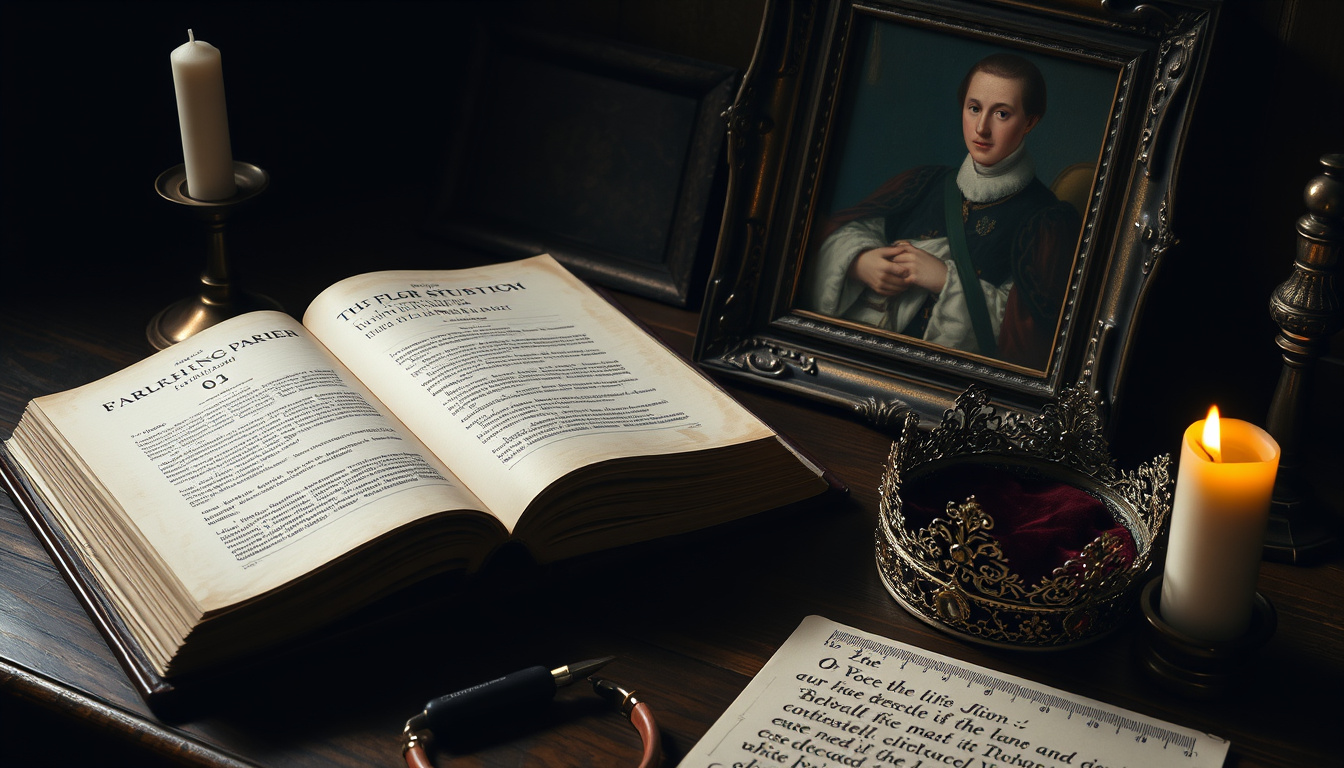
Edward VI is one of the best-documented Tudor monarchs in terms of portraiture, despite his short life. The National Portrait Gallery in London holds several versions of his likeness, including a portrait painted around 1546 when he was about nine years old. His expression is solemn, reflecting the Tudor convention of portraying monarchs with gravity and dignity.
What Happened During Edward VI’s Reign?
Edward’s reign was a period of strong Protestant Reformation change in England. Under his government, the Church of England became more explicitly Protestant than under Henry VIII, with reforms shaped by key advisers such as Thomas Cranmer, Archbishop of Canterbury, and Edward Seymour, Lord Protector. The Book of Common Prayer, introduced in 1549 and revised in 1552, replaced the Latin Mass with English-language services and became a defining text of English Protestantism.
- 1547 – Edward becomes King at age 9.
- 1549 – The first Book of Common Prayer is introduced.
- 1552 – Edward suffers a severe bout of measles; the 42 Articles of Religion are issued.
- 1553 – Edward dies at Greenwich Palace and is buried in Westminster Abbey.
What Is Certain and What Remains Unclear About Edward VI’s Death?
| Certain | Unclear |
|---|---|
| Edward died on 6 July 1553 at Greenwich Palace. | The precise infection that killed him is not known. |
| His death left the Tudor succession in crisis. | Whether his final illness was tuberculosis or another lung disease remains debated. |
| He was succeeded by Lady Jane Grey for nine days before Mary I took the throne. | The full impact of his alleged poisoning is not supported by evidence. |
| The nickname “The Lost Tudor King” is a modern label used in popular media and by Historic Royal Palaces. | It is not a formal historical term, but it accurately reflects his short, overshadowed life. |
Why Was Edward VI’s Reign Historically Significant?
Edward’s reign is historically important because it was a period of strong Protestant Reformation change in England. The Edwardian Reformation also produced the 42 Articles of Religion, which set out the doctrinal positions of the Church of England. Edward’s reign, though brief, pushed England further along the Protestant path than Henry VIII had ever intended.
The succession crisis triggered by Edward’s death had equally profound consequences. The fight over England’s religious identity that played out in Edward’s reign and its aftermath shaped the nation’s trajectory for generations.
For readers interested in other great biographical narratives, the life of King Louis XIV – The Sun King Biography, Versailles and Legacy offers a compelling contrast of a monarch who reigned for 72 years.
Where Do Historians Source Information About Edward VI?
Historians draw on several primary sources for Edward VI’s life, including his own Chronicle, a diary-like document covering the early years of his reign, the accounts of his physicians, and state papers from the Privy Council. His Chronicle is a key historical document, and his education made him fluent in Latin, French, Greek, and English. Contemporary portraits and the records of the royal household also provide rich material.
“Edward VI was the only legitimate son of Henry VIII and Jane Seymour, and he reigned as King of England and Ireland from 28 January 1547 to 6 July 1553.”
“Edward’s reign is historically important because it was a period of strong Protestant Reformation change in England.”
“On Edward’s death in 1553, Jane assumed the throne; however, the wider succession ultimately brought Mary I to the throne after Jane’s brief reign.”
Readers interested in another complex leader might also enjoy George Washington – Biography, Height, Wife & Slavery Facts.
Frequently Asked Questions
Was Edward VI engaged to be married?
Yes, there was a plan to marry him to Mary, Queen of Scots, but it fell through. He died before any marriage.
Who was the tallest Tudor king?
Edward VI was noted to be of short stature and slight build.
What language did Edward VI speak?
He was highly educated and fluent in Latin, French, Greek, and English.
Did Edward VI really write a diary?
Yes, his Chronicle is a key historical document covering the early years of his reign.
Why is Edward VI called the ‘boy king’?
He became king at age 9, the first minor to inherit the English throne since Henry VI.
Why did Edward VI have no children?
He died at age 15, before he could marry and produce an heir. His young age at death is the sole reason.
What is the best movie about Edward VI?
No widely acclaimed feature film focuses solely on Edward VI.
Are there any books about Edward VI?
Yes, key biographies include Edward VI: The Lost King of England by Chris Skidmore and The Boy King.
Who ruled after Edward VI?
Lady Jane Grey ruled for nine days after Edward’s death. Mary I then took the throne.
What did Edward VI look like?
He was noted to be of short stature and slight build, with no reliable height recorded.

Olivia Hartley is Business & Economy Correspondent at DailyCity.co.uk, reporting on the city economy, property, retail, hospitality and employment.