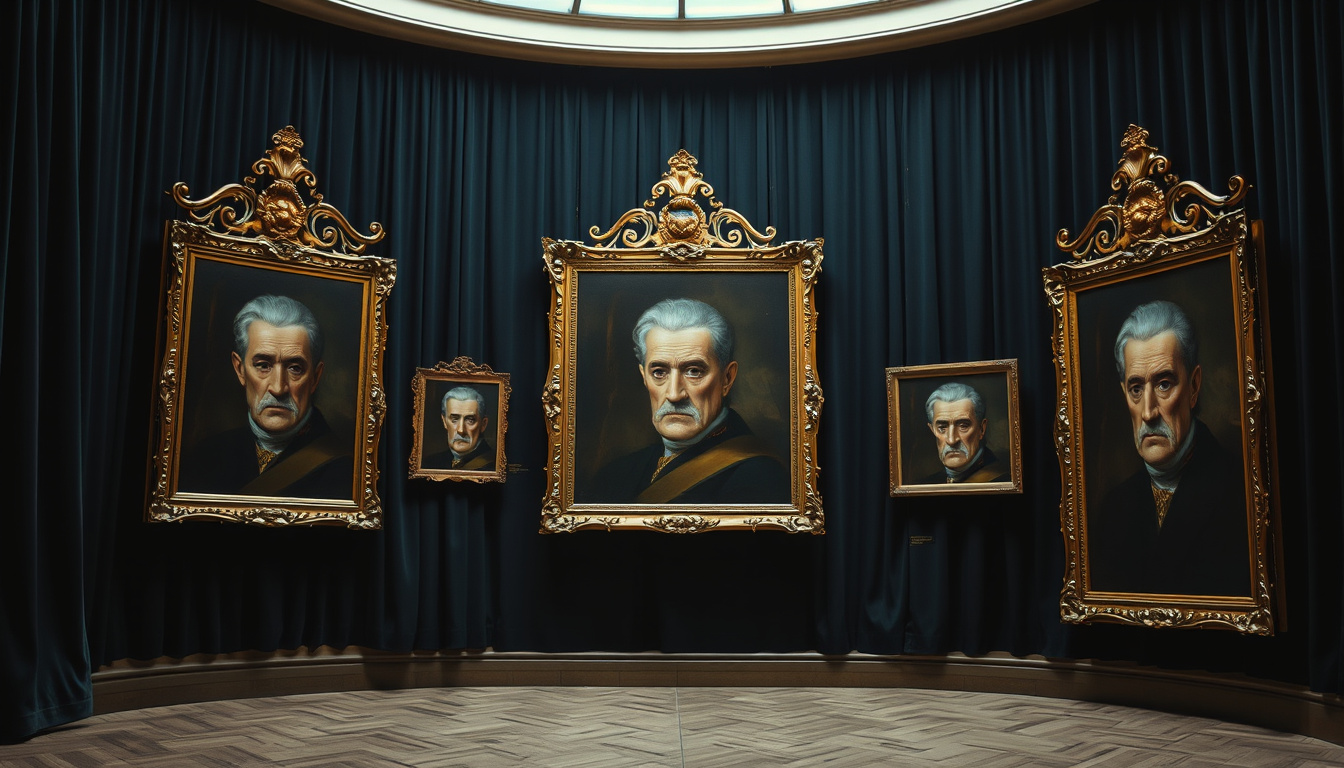
Charles II of Spain, the last Habsburg king of the Spanish Empire, remains one of the most striking examples of how dynastic inbreeding can shape the course of history. Born frail and sickly, he reigned for 35 years yet died childless, triggering a war that redrew the map of Europe.
His death in 1700 without an heir ended the Spanish Habsburg male line and helped spark the War of the Spanish Succession. Genetic studies have estimated his inbreeding coefficient at about 0.254, roughly comparable to the offspring of close-sibling unions. He is widely regarded as the most extreme case of royal consanguinity in recorded history.
Was Charles II of Spain Inbred?
The short answer is yes. The Spanish Habsburgs married within a narrow pool of relatives for generations. One study found that nine of the 11 marriages in the dynasty over roughly two centuries were consanguineous, including uncle-niece, first-cousin, and double-first-cousin unions. Charles II represented the culmination of that practice.
The last Habsburg ruler of Spain, known for severe inbreeding and physical disabilities.
Generations of cousin marriages within the Habsburg dynasty led to genetic disorders.
His death without an heir triggered the War of the Spanish Succession.
Called “El Hechizado” (The Bewitched) due to his many ailments and superstitions.
Genetic analyses found Charles II had the highest inbreeding coefficient among the Spanish Habsburgs, higher than his father Philip IV and higher than the dynasty founder Philip I. Researchers have speculated that he may have suffered from multiple recessive genetic disorders, including combined pituitary hormone deficiency and distal renal tubular acidosis, which could explain much of his complex illness profile, including impotence and infertility.
Key Insights on Charles II’s Inbreeding
- Charles II of Spain is a textbook example of extreme inbreeding in royal families. His coefficient of inbreeding was 0.254, higher than a child of sibling incest.
- Despite his frailty, his reign lasted 35 years (1665–1700) and was marked by political decline. He became king at age 4, with his mother as regent.
- His death without a direct heir changed the balance of power in Europe. His will led to the War of the Spanish Succession (1701–1714).
- His nickname “The Bewitched” reflects the contemporary belief that his ailments were caused by witchcraft. He was subjected to exorcisms and bizarre treatments.
- Nine of the 11 marriages in the Spanish Habsburg dynasty over roughly two centuries were consanguineous.
- Genetic analyses found Charles II had the highest inbreeding coefficient among the Spanish Habsburgs.
- Researchers have proposed specific inherited disorders, but these remain hypotheses rather than definitive diagnoses from direct clinical evidence.
Charles II of Spain: Key Facts
| Attribute | Detail |
|---|---|
| Full Name | Charles II of Spain (Carlos II) |
| Born | 6 November 1661, Madrid |
| Died | 1 November 1700, Madrid |
| Reign | 1665–1700 |
| House | Habsburg (Spanish branch) |
| Father | Philip IV of Spain |
| Mother | Mariana of Austria |
| Spouse | Marie Louise of Orléans (m. 1679; died 1689); Maria Anna of Neuburg (m. 1690) |
| Children | None (infertility likely due to inbreeding) |
| Nickname | El Hechizado (The Bewitched) |
| Successor | Philip V (first Bourbon king of Spain) |
Who Was Charles II of Spain’s Father and Family?
Charles II was born on 6 November 1661 in Madrid to Philip IV of Spain and Mariana of Austria. Philip IV was his father, and Mariana of Austria was both his mother and his father’s niece, making Charles the product of an uncle-niece union. That closeness was typical of the Habsburg pattern.
Who Was Charles II of Spain’s Father?
Philip IV ruled Spain from 1621 to 1665. He was a patron of the arts and a central figure in the Thirty Years’ War, but his reign also saw the decline of Spanish power. His marriage to Mariana of Austria, his own niece, was a dynastic choice that preserved Habsburg bloodlines at the cost of genetic diversity.
Did Charles II of Spain Have Children?
He had no children. He married twice: first to Marie Louise of Orléans in 1679, and after her death in 1689, to Maria Anna of Neuburg in 1690. Neither marriage produced an heir. Modern researchers attribute his infertility to the genetic effects of extreme inbreeding.
Because Charles II died childless after two marriages, the Spanish Habsburg line became extinct. The succession dispute that followed drew major European powers into war and reshaped the continent’s political order.
Who Was Charles II of Spain’s Predecessor?
His father, Philip IV of Spain, was his direct predecessor. Philip IV ruled from 1621 until his death in 1665, at which point the four-year-old Charles inherited the throne. His mother, Mariana of Austria, served as regent during his minority.
Who Succeeded Charles II of Spain?
Charles II’s will named Philip of Anjou, grandson of Louis XIV of France, as his successor. Philip became Philip V, the first Bourbon king of Spain. That decision was contested by other European powers, who feared a union of the French and Spanish crowns.
What Was the War of the Spanish Succession?
The dispute over Charles II’s inheritance escalated into the War of the Spanish Succession (1701–1714), one of the major European conflicts of the early 18th century. The war ended with the Treaty of Utrecht, which confirmed Philip V as king but stripped Spain of its European territories in Italy and the Netherlands. The Habsburg line in Spain was extinct, replaced by the Bourbon dynasty.
The broader historical significance is that Charles II’s death did not merely end a dynasty. It opened a struggle over the Spanish imperial inheritance that had consequences for decades. Internal link: War of the Spanish Succession.
What Was Charles II of Spain’s Relationship with France?
Charles II’s first wife was Marie Louise of Orléans, a niece of Louis XIV of France. The marriage was arranged as part of a broader diplomatic effort to maintain peace between Spain and France. After Marie Louise died in 1689, Charles married Maria Anna of Neuburg, whose family was aligned with Austrian Habsburg interests.
French influence at the Spanish court fluctuated during his reign. His mother, Mariana of Austria, had at times allied with the French court, while other factions within the Spanish nobility pushed for closer ties with Austria. These competing pressures shaped the political landscape of his later years.
Charles II’s will naming Philip of Anjou as his successor was a deliberate attempt to keep the Spanish Empire intact under French protection. It succeeded in preserving the empire but at the cost of provoking a European war that lasted 13 years.
What Was Charles II of Spain’s Nickname and Why?
Charles II was known in Spanish as “El Hechizado,” meaning “The Bewitched.” The nickname reflected contemporary beliefs that his numerous physical and mental ailments were caused by witchcraft or demonic possession, rather than genetics.
Why Was Charles II of Spain Called “The Bewitched”?
In an era without modern medicine, the severity of Charles II’s disabilities seemed inexplicable. He was described as physically and mentally disabled, frail, and affected by severe constitutional problems. Reported features included a large tongue, jaw deformity associated with the “Habsburg jaw,” developmental delay, epilepsy, and general ill health. Exorcisms and bizarre treatments were performed in an attempt to cure him. Internal link: Habsburg inbreeding.
What Was the Habsburg Jaw?
The “Habsburg jaw” is a term used to describe the pronounced mandibular prognathism seen in many members of the Habsburg dynasty. Charles II had this facial deformity, which was part of a broader pattern of physical traits linked to generations of consanguineous marriage. The condition is often cited as a visible marker of the dynasty’s extreme inbreeding.
How Did Charles II of Spain’s Life Unfold from Birth to Death?
- 1661: Born in Madrid to Philip IV and Mariana of Austria.
- 1665: Becomes king at age 4 upon father’s death; mother serves as regent.
- 1675: Reaches nominal adulthood; regency ends.
- 1679: Marries Marie Louise of Orléans.
- 1689: Marie Louise dies; childless.
- 1690: Marries Maria Anna of Neuburg.
- 1690s: Health deteriorates; unable to produce an heir.
- 1700: Dies childless; his will names Philip of Anjou (later Philip V) as successor.
- 1701: War of the Spanish Succession begins.
What Is Known and What Remains Uncertain About Charles II of Spain?
| Established Information | Information That Remains Unclear |
|---|---|
| Charles II of Spain was the last Habsburg king of Spain. | The exact extent of his physical and mental disabilities is debated by historians. |
| He was severely inbred, with a high coefficient of inbreeding (0.254). | Whether he was truly “bewitched” or his ailments were purely genetic is a historical question; modern medicine attributes them to inbreeding. |
| He died without children. | Some details of his medical treatments (e.g., exorcisms) are recorded but may be exaggerated. |
| His death led to the War of the Spanish Succession. | Exact medical diagnosis remains uncertain; researchers have proposed specific inherited disorders, but these remain hypotheses, not definitive diagnoses from direct clinical evidence. |
Why Does Charles II of Spain’s Reign Matter in European History?
Charles II’s reign represents the decline of the Spanish Empire and the end of the Habsburg dynasty in Spain. His extreme inbreeding was a result of generations of intermarriage to maintain political alliances. The lack of an heir forced a European crisis, culminating in the War of the Spanish Succession, which reshaped the continent’s power dynamics. This topic is often studied in genetics and history to illustrate the dangers of consanguinity.
Even if his health problems had multiple causes, his childlessness was the immediate dynastic issue that led to the succession crisis. The war that followed confirmed the Bourbon dynasty in Spain and reduced Spanish influence in Europe, marking a turning point in the balance of power.
What Do Historians and Primary Sources Say About Charles II of Spain?
Historian John H. Elliott described Charles II as “the most pitiable of all the Habsburgs.” That assessment captures the contemporary view of a monarch who was seen as a tragic figure, unable to rule effectively or produce an heir.
“The most pitiable of all the Habsburgs.”
— Historian John H. Elliott
Primary sources from the Spanish National Archives, including wills and regency documents, provide a detailed record of his reign. Modern genetic studies, such as the Alvarez et al. (2009) paper “The Role of Inbreeding in the Extinction of a European Royal Dynasty,” have added a scientific dimension to the historical record. The Royal Collection Trust also holds portraits that document the physical characteristics of the Habsburg family.
What Is the Lasting Legacy of Charles II of Spain?
Charles II’s legacy is twofold. He is remembered as the monarch whose death ended the Spanish Habsburg line and triggered a major European war. He is also cited as a cautionary example of the biological consequences of dynastic inbreeding. His story bridges genetics, history, and political science, illustrating how personal biology can influence the fate of empires.
Frequently Asked Questions
Was Charles II of Spain the same as Charles II of England?
No. Charles II of Spain (1661–1700) was the last Habsburg king of Spain, while Charles II of England (1630–1685) was the Stuart monarch restored after the English Civil War. They are often confused due to the same regnal number.
How did Charles II of Spain die?
He died on 1 November 1700 at age 38 from complications of his numerous health issues, likely including kidney failure and severe physical deformities. His body was described as “shrunken and weak.”
Why couldn’t Charles II of Spain have children?
He was likely infertile due to extreme inbreeding. Geneticists estimate his coefficient of inbreeding was 0.254, leading to sterility and other physical impairments.
What was the Habsburg jaw?
The Habsburg jaw is a pronounced mandibular prognathism seen in many Habsburg dynasty members, including Charles II. It is a visible marker of the family’s extreme inbreeding.
How long did Charles II of Spain reign?
He reigned for 35 years, from 1665 to 1700, becoming king at age 4 after his father Philip IV died.
Who was Charles II of Spain’s mother?
His mother was Mariana of Austria, who was also the niece of his father Philip IV. She served as regent during his childhood.
Was Charles II of Spain physically disabled?
Yes. Sources describe him as physically and mentally disabled, frail, and affected by severe constitutional problems including a large tongue, jaw deformity, developmental delay, epilepsy, and general ill health.
What caused the War of the Spanish Succession?
The war was triggered by Charles II’s death without an heir. His will left the Spanish throne to Philip of Anjou, grandson of Louis XIV of France, which other European powers opposed.
Who ruled Spain after Charles II?
Philip V, the first Bourbon king of Spain, succeeded him. Philip V ruled from 1700 to 1746 (with a brief interruption in 1724).
What is Charles II of Spain’s inbreeding coefficient?
Genetic studies estimate his inbreeding coefficient at about 0.254, roughly comparable to the offspring of close-sibling unions.

Henry Morgan is Senior Reporter at DailyCity.co.uk, covering breaking news and general city stories across the UK.