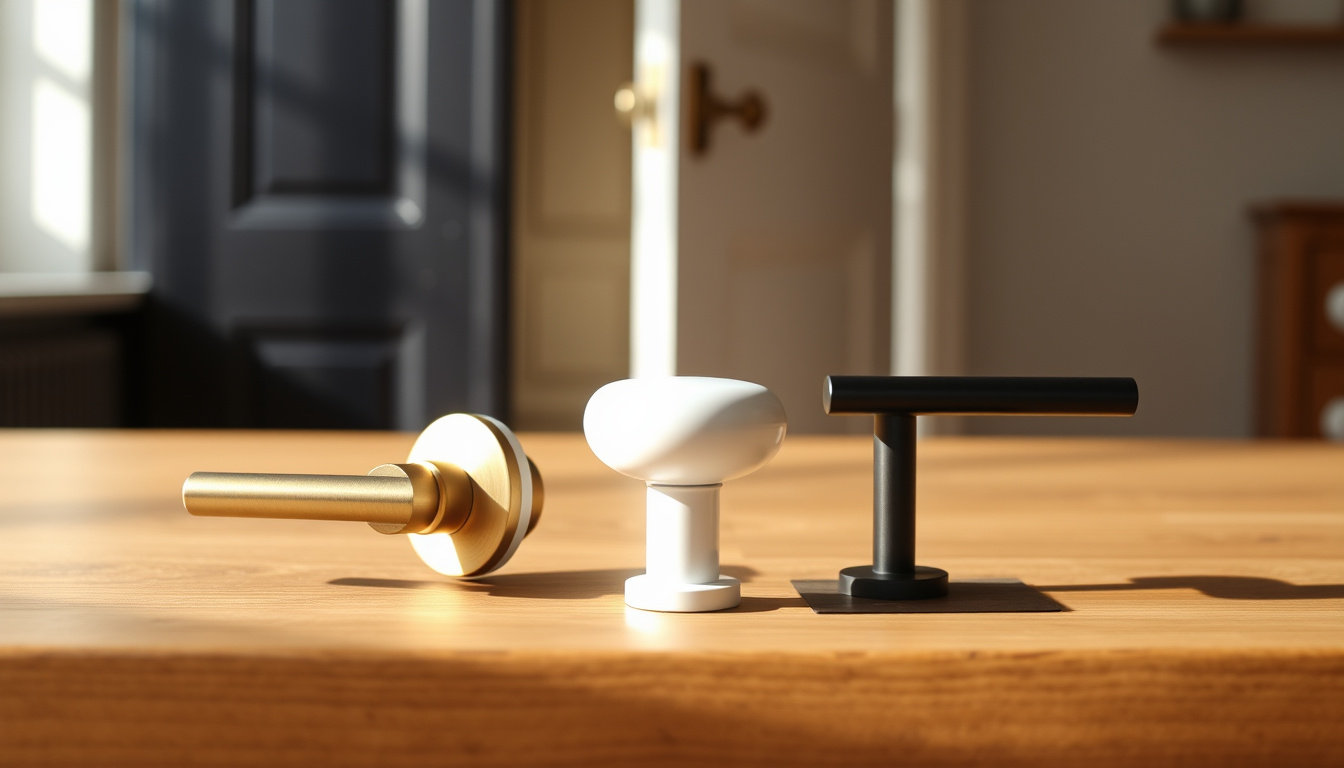
Choosing the right door knob might seem like a minor detail, but it affects how a door feels, how long it lasts, and how well it suits the character of a room. From polished brass on a Victorian hallway to sleek chrome in a modern kitchen, the options cover a wide range of materials, finishes, and sizes. This buying guide draws on industry specifications, retailer advice, and period property expertise to help you select the right knob for internal doors, external entrances, wardrobes, and cupboards.
What Are the Best Door Knobs for Internal Doors?
| Internal | External | Wardrobe | Material Highlights |
|---|---|---|---|
| Best for bedrooms, passage doors | Weather‑resistant options | Small sizes, easy grip | Brass: durable, classic |
| Popular: brass, chrome, porcelain | Look for weather rating | Glass and wood popular | Chrome: modern, easy clean |
| Price range £3–£20 | Price range £8–£35 | Price range £2–£15 | Wood: warm, but avoid moisture |
Key Insights to Keep in Mind
- Bathroom knobs should be moisture‑resistant – brass or stainless steel are best; wooden knobs are not recommended.
- Standard UK spindle size is 8 mm (5/16 inch) – always check before buying.
- Porcelain and glass knobs are ideal for period properties but can be fragile.
- Most door knobs come with matching escutcheons and backplates – ensure compatibility with your door thickness (typically 35–45 mm).
- External door knobs require a locking mechanism or thumb latch – plain knobs are not secure for exterior use.
Snapshot: Internal vs External vs Wardrobe Knobs
| Feature | Internal Door Knob | External Door Knob | Wardrobe Knob |
|---|---|---|---|
| Typical Price (UK) | £5 – £20 | £10 – £40 | £3 – £12 |
| Common Finishes | Brass, Chrome, Satin Steel | Stainless Steel, Black, Brass | Wood, Glass, Ceramic |
| Durability | Medium to High | High – weather resistant essential | Low to Medium |
| Installation | Screw on, single spindle | Often includes latch / lock | Single screw, stub spindle |
| Average ratings | 4.2/5 (Screwfix) | 4.0/5 (B&Q) | 4.3/5 (specialist sites) |
Which Door Knob Materials Are Most Durable and Stylish?
The material you choose affects longevity, appearance, and how the knob performs in different settings. Below is a breakdown of the most common options based on verified product information and industry guidance.
Brass – Timeless and Widely Used
Polished, satin, or antique‑aged brass is the most popular choice today. It works well in Victorian homes and luxury interiors. Brass is naturally corrosion‑resistant, though for external use you should select polished brass specifically made for outdoors to avoid tarnishing (Period Home Style).
Chrome – Sleek and Hard‑Wearing
Polished chrome offers a mirror‑like finish that resists rust. It suits modern and minimalist interiors and is easy to clean. Chrome knobs are considered both practical and affordable (Handles4Homes).
Wood – Warmth and Character
Stained or painted wooden knobs add a natural touch and are a good match for Edwardian houses or rustic decor. They are less durable in high‑traffic areas and should be sealed if used externally (BuildWorld).
Glass and Ceramic – Colour and Decoration
Clear, faceted, or coloured glass knobs are popular in Art Deco settings and add visual interest. Modern tempered glass is quite durable, but antique specimens may break easily. Ceramic (porcelain) knobs are also common in period bathrooms (Home Depot).
Stainless Steel – Practical and Rust‑Free
Sleek and modern, stainless steel is ideal for external doors, kitchens, and bathrooms. It won’t rust and is very easy to clean, making it a top choice for high‑traffic and wet areas.
Bronze and Pewter – Rustic and Traditional
Oil‑rubbed bronze develops a changing patina over time, adding character to farmhouse or rustic decor. Pewter offers a flat, muted finish for traditional interiors.
For bathrooms and kitchens, stainless steel or brass are the safest bets because they resist moisture. Wooden knobs are not recommended in wet environments unless they carry a clear weather‑resistant treatment.
Where Can I Buy Door Knobs Near Me? (B&Q, Screwfix & Online)
In the UK, major retailers such as B&Q and Screwfix stock a broad range of door knobs, though specific prices and reviews vary by store and product line. Specialist online shops like Knobbles and Bobbles, Hiatt Hardware, and Willow and Stone offer curated collections, particularly for period and antique styles.
Budget‑friendly options are often stainless steel or chrome, while brass and black finishes tend to be pricier and add a touch of luxury. Handles with built‑in locks or soft‑close features cost more but offer extra value.
When shopping online, check that the hardware is compatible with European or UK‑standard latch mechanisms (76 mm or 100 mm lengths). For certified quality and security, look for ANSI/BHMA ratings (Ipsa Mart).
For more home furnishing inspiration, you may also find the Bar Stools – The Complete UK 2025 Buying Guide useful for matching hardware with interior style.
How Do I Install a Door Knob? (Step‑by‑Step Guide)
Installation is generally DIY‑friendly, but several measurements must be correct to avoid problems.
Check Your Latch and Backset
The existing latch mechanism should be at least 76 mm long (ideally 100 mm) to centre the knob on the door panel. For a 76 mm latch with a 57 mm backset, the knob sits practically central on a standard panel.
Spindle Size and Unsprung Knobs
The standard spindle diameter in the UK is 8 mm. If you choose an “unsprung” knob (one that doesn’t spring back), you need a stronger, higher‑quality mechanism – cheaper latches may not work properly.
Clearance and Door Rebate
Ensure the door has enough space for 50 % of the knob diameter plus finger room when closed into the rebate. Avoid striking your knuckles against the door frame when the door opens into a room.
Moulded Doors
For moulded doors, confirm that the knob fits the panel width (often around 125 mm) and that the latch is compatible. Making a paper template beforehand can help determine the right size for your door.
Most door knobs can be fitted with a basic screwdriver and, if a new hole is needed, a drill. Many retailers include written instructions. For external doors, additional security features such as a 5‑pin lock cylinder are recommended by the Guild of Architectural Ironmongers.
What Is the Difference Between a Door Knob and a Door Handle?
A door knob is a spherical piece that you turn to retract the latch. A door handle (or lever handle) is an elongated shape that you push down. Both operate the same latch mechanism, but knobs are more often associated with traditional and period properties, while handles are common in modern and minimalist interiors.
When choosing for a period property, match the material to the era: brass for Victorian, wood for Edwardian, and nickel or chrome for Art Deco. Glass knobs are easy to clean with mild soap and water – harsh chemicals should be avoided as they can damage the finish.
Internal door knobs typically accommodate a 50 mm diameter, while external doors may need larger knobs up to 75 mm. A useful comparison can be found in the Discount Code – Verified Codes for June 2026 in the UK, which may help you find deals on door furniture.
A Brief History of Door Knobs: From Antique Brass to Modern Minimalism
- 1700s: First cast brass door knobs appear in Georgian England, often handcrafted.
- 1850s: Mass production begins with the Industrial Revolution – iron and brass knobs become common.
- 1920s: Art Deco and glass knobs popular; porcelain knobs used in bathrooms.
- 1970s: Satin chrome and aluminium knobs introduced; modernism dominates.
- 2020s: Black matte and aged brass revival; smart door knobs with keyless entry emerging.
What You Need to Know Before Buying Door Knobs – Facts vs Common Confusions
| Established Information | Information That Remains Unclear |
|---|---|
| Internal door knobs do not need a lock – use a passage set or privacy set for bathrooms. | Can wooden knobs be used externally? Only if treated with weather‑resistant sealant – many wooden knobs are not rated for outdoor use. |
| Brass is naturally antimicrobial, making it suitable for high‑touch areas. | Are all glass door knobs fragile? Modern tempered glass knobs are quite durable, but antique glass may break easily. |
| All major UK retailers (B&Q, Screwfix) stock door knobs with standard spindle holes (8 mm). | Does the finish affect grip? Satin finishes offer more grip than polished – but personal preference varies. |
How to Choose the Right Door Knob – Context and Recommendations
Matching the material to the location and exposure is the most important decision. For internal doors, brass or chrome offer the best balance of style and cost. For external doors, stainless steel or outdoor‑grade polished brass are recommended for durability. Always verify the latch length (76 mm or 100 mm) and door panel width before purchasing to ensure proper centering and fit.
UK building regulations require that external knobs be lockable for security, and internal knobs for bathrooms must have a privacy function. Cheaper plastic or untreated wooden knobs may need replacing sooner than brass or stainless steel, so consider the long‑term cost.
If you are retrofitting a door, match the backplate size to the existing holes. Many knobs come with matching escutcheons, but dimensions vary – measure carefully.
Sources and Key Quotes
“A door knob should be both functional and harmonious with the character of the building.” – Historic England (paraphrased)
“For external use, select a knob with a minimum of a 5‑pin lock cylinder for security.” – GAI best practice
Authoritative guidance can be found in British Standard BS EN 1906:2010 – ‘Building hardware. Lever handles and knob furniture. Requirements and test methods’ – and in specification guides published by the Guild of Architectural Ironmongers. For period properties, Historic England offers advice on choosing appropriate door furniture. Retailers such as Screwfix also provide practical buying guides.
Stay Updated: Door Knob Trends and Innovations in 2025
Smart door knobs with fingerprint or phone unlocking are beginning to enter the market, alongside sustainable materials such as recycled brass and FSC‑certified wood. Customisable knobs with interchangeable inserts (stone, resin, wood) are also gaining popularity. For security‑focused advice, consult Which? Best Door Knobs for Home Security.
Frequently Asked Questions
Can I use an internal door knob on an external door?
No – internal knobs lack weather resistance and security features. Always choose a dedicated external door knob.
What is the standard backplate size for door knobs?
Common backplate dimensions are 50 mm x 50 mm, but many variations exist. Measure your existing backplate or consult product specs.
How do I remove an old door knob?
Remove the visible screws on the neck or backplate. If no screws, look for a small slot to release the knob. Use a screwdriver or Allen key as needed.
Are door knobs with keylocks safe for bedrooms?
Yes, but ensure the lock can be opened from the outside in an emergency (privacy lock vs security lock).
Do I need a professional to fit a door knob?
Most door knobs are DIY‑friendly. Basic tools: screwdriver, drill (if new hole needed). Many retailers include fitting instructions.
Which finish is easiest to keep clean?
Chrome and satin stainless steel repel fingerprints and grime. Brass and copper require occasional polishing.

Henry Morgan is Senior Reporter at DailyCity.co.uk, covering breaking news and general city stories across the UK.