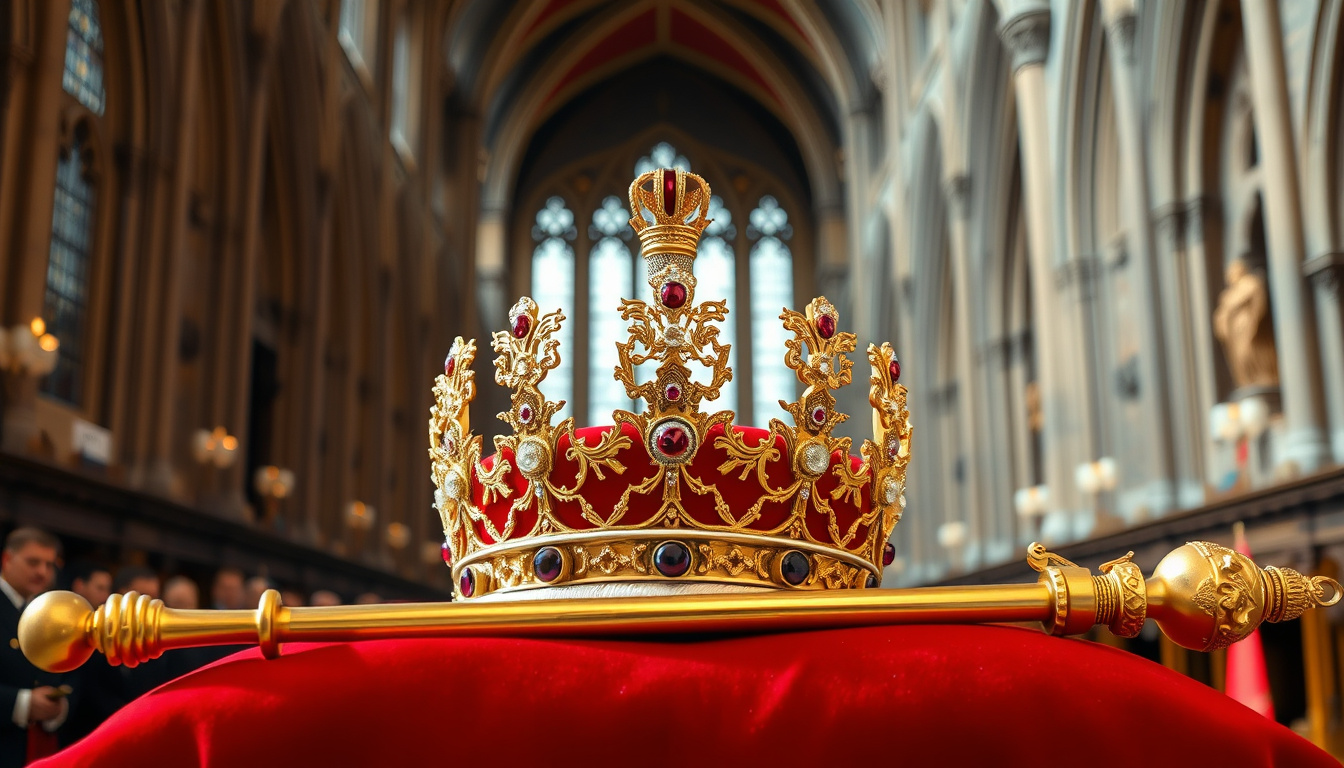
King Charles III became the monarch of the United Kingdom and 14 other Commonwealth realms on 8 September 2022, following the death of his mother, Queen Elizabeth II. He was crowned at Westminster Abbey on 6 May 2023, at age 73, making him the oldest person ever to assume the British throne. His reign marks a new chapter in the history of the British Monarchy: History and Succession, and his full name is Charles Philip Arthur George.
Before becoming king, Charles spent decades as the longest-serving heir apparent in British history. He was known as the Prince of Wales, a title he held from 1958 until his accession. His life has been shaped by public service, environmental advocacy, and a sometimes turbulent personal life, including his marriages to Princess Diana and later Camilla, now Queen Camilla.
Understanding who King Charles III is also requires looking at the history of earlier British kings named Charles. This article provides a clear, fact-based overview of his biography, coronation, and the key differences between Charles I, Charles II, and Charles III.
Who is King Charles III?
- King Charles III is the oldest person ever to accede to the British throne (age 73).
- His reign began immediately upon the death of Queen Elizabeth II on 8 September 2022; the coronation took place on 6 May 2023 at Westminster Abbey.
- He is the first British monarch to have a university degree (BA from Cambridge).
- His full title includes “King of the United Kingdom” and 14 other Commonwealth realms.
- Historical King Charles I was executed in 1649 after the English Civil War; King Charles II restored the monarchy in 1660 and died in 1685.
- There is no British King Charles IV; the confusion may arise from Charles IV of Spain (1748-1819) or Charles IV, Holy Roman Emperor.
| Attribute | King Charles III | King Charles I | King Charles II |
|---|---|---|---|
| Born | 14 Nov 1948 | 19 Nov 1600 | 29 May 1630 |
| Died / Status | Living (2025) | 30 Jan 1649 (executed) | 6 Feb 1685 (natural causes) |
| Reign | 2022–present | 1625–1649 | 1660–1685 |
| Spouse | Camilla (Queen Consort) | Henrietta Maria of France | Catherine of Braganza |
| Notable Event | Coronation 2023 | English Civil War, execution | Restoration of monarchy |
When and how was King Charles III crowned?
Charles became king immediately upon his mother’s death, but the coronation was held later, which is standard in the British monarchy. The ceremony took place on 6 May 2023 at Westminster Abbey, the first coronation in the UK in seven decades.
Why the delay between accession and coronation?
Accession is the automatic transfer of sovereignty. The coronation is a ceremonial event that traditionally occurs months later to allow for planning and mourning. Charles’s accession was 8 September 2022; his coronation followed on 6 May 2023.
What happened during the coronation?
The service, conducted by the Archbishop of Canterbury, included the anointing, the presentation of regalia, and the crowning. Charles was crowned the third Carolean king, a term used for a monarch named Charles. The event was attended by heads of state, dignitaries, and millions of viewers worldwide.
At 73, King Charles III became the oldest British monarch to be crowned, surpassing King William IV who was crowned at 64.
What happened to King Charles I and King Charles II?
King Charles I: The Executed Monarch
Charles I reigned over England, Scotland, and Ireland from 1625 to 1649. His conflict with Parliament led to the English Civil War, and he was captured, tried for treason, and executed by beheading on 30 January 1649. His death led to a brief republic known as the Commonwealth.
King Charles II: The Restoration King
Charles II, son of Charles I, lived in exile after his father’s execution. He was invited back to restore the monarchy in 1660, an event called the Restoration. He ruled until his death from natural causes on 6 February 1685, and was known for his charm and patronage of the arts.
There is no British King Charles IV. The confusion often comes from Charles IV of Spain (1748-1819) or Charles IV, Holy Roman Emperor. The last English monarch named Charles was Charles II.
Some people mistakenly believe Charles I died naturally. He was executed, and Charles II died 36 years later in 1685, not in the same year.
Timeline of the British Monarchs Named Charles
- – Birth of Charles I (19 Nov)
- – Charles I becomes king
- – Execution of Charles I (30 Jan)
- – Restoration of monarchy, Charles II becomes king
- – Death of Charles II (6 Feb)
- – Birth of Charles III (14 Nov)
- – Investiture as Prince of Wales
- – Marriage to Lady Diana Spencer
- – Marriage to Camilla Parker Bowles
- – Accession to throne (8 Sep)
- – Coronation (6 May)
What is certain and what is unclear about the Charles kings?
| Claim | Status |
|---|---|
| King Charles IV is a British monarch | False – There is no British King Charles IV. The confusion may come from Charles IV of Spain, Charles IV of France, or Charles IV, Holy Roman Emperor. |
| King Charles III is the direct successor of Queen Elizabeth II | True – He became king immediately upon her death on 8 September 2022. |
| King Charles I died naturally | False – Charles I was executed by beheading on 30 January 1649 after being convicted of treason by Parliament. |
| King Charles II died in the same year as Charles I | False – Charles II died in 1685, 36 years after his father’s execution. |
Historical and modern significance of the name Charles
The name “Charles” has been borne by only three British kings since the Norman conquest. Charles I (1625-1649) was the only English monarch to be executed, leading to a brief republic. Charles II (1660-1685) restored the monarchy and ruled after the Interregnum. Charles III (2022-) ascended at an advanced age and has focused on modernizing the monarchy.
King Charles III is known for his environmental advocacy, architectural criticism, and charitable work through The Prince’s Trust. His reign has seen continued public support for the monarchy alongside debates about its future.
Sources and key quotes
His Majesty The King is the Head of State of the United Kingdom and 14 other Commonwealth realms.
— Official Royal Family website
Charles became king upon his mother’s death in 2022. At the age of 73 he was the oldest person to accede to the British throne.
Charles II was tall, handsome, sharp of mind, impeccably attired and charming.
Key takeaways about King Charles III
King Charles III is the current British monarch, crowned in 2023 at age 73. He is the third king named Charles in British history, following Charles I (executed) and Charles II (restored). There is no British King Charles IV. His reign began in 2022 and continues as of 2025. For more on the role of the monarchy, see British Monarchy: History and Succession.
Frequently asked questions about King Charles
What is King Charles III’s net worth?
King Charles III’s personal net worth is estimated at around £1.8 billion, though much of the wealth is tied to the Crown Estate and Duchy of Cornwall.
Does King Charles III have any children?
Yes, he has two sons: Prince William (heir apparent) and Prince Harry, Duke of Sussex.
Where does King Charles III live?
His official residences include Buckingham Palace (London), Windsor Castle, and Clarence House. He also spends time at Balmoral Castle (Scotland) and Sandringham House (Norfolk).
What is the difference between coronation and accession?
Accession is the immediate assumption of the throne upon the previous monarch’s death. Coronation is a ceremonial event that usually takes place months later. Charles became king on 8 September 2022, but his coronation was on 6 May 2023.
Are there any other famous King Charles?
Yes, Charles I and Charles II of England, Charles IV of Spain, Charles IX of France, and several Holy Roman Emperors named Charles (Charlemagne being Charles I).
How old is King Charles III?
He was born on 14 November 1948, making him 76 years old as of 2025.
What was King Charles III’s role before becoming king?
He was known as the Prince of Wales and held that title for over 60 years, during which he carried out official duties and charitable work.
Who was King Charles IV?
There is no British King Charles IV. The confusion may come from Charles IV of Spain (1748-1819) or Charles IV, Holy Roman Emperor (1316-1378).

Henry Morgan is Senior Reporter at DailyCity.co.uk, covering breaking news and general city stories across the UK.