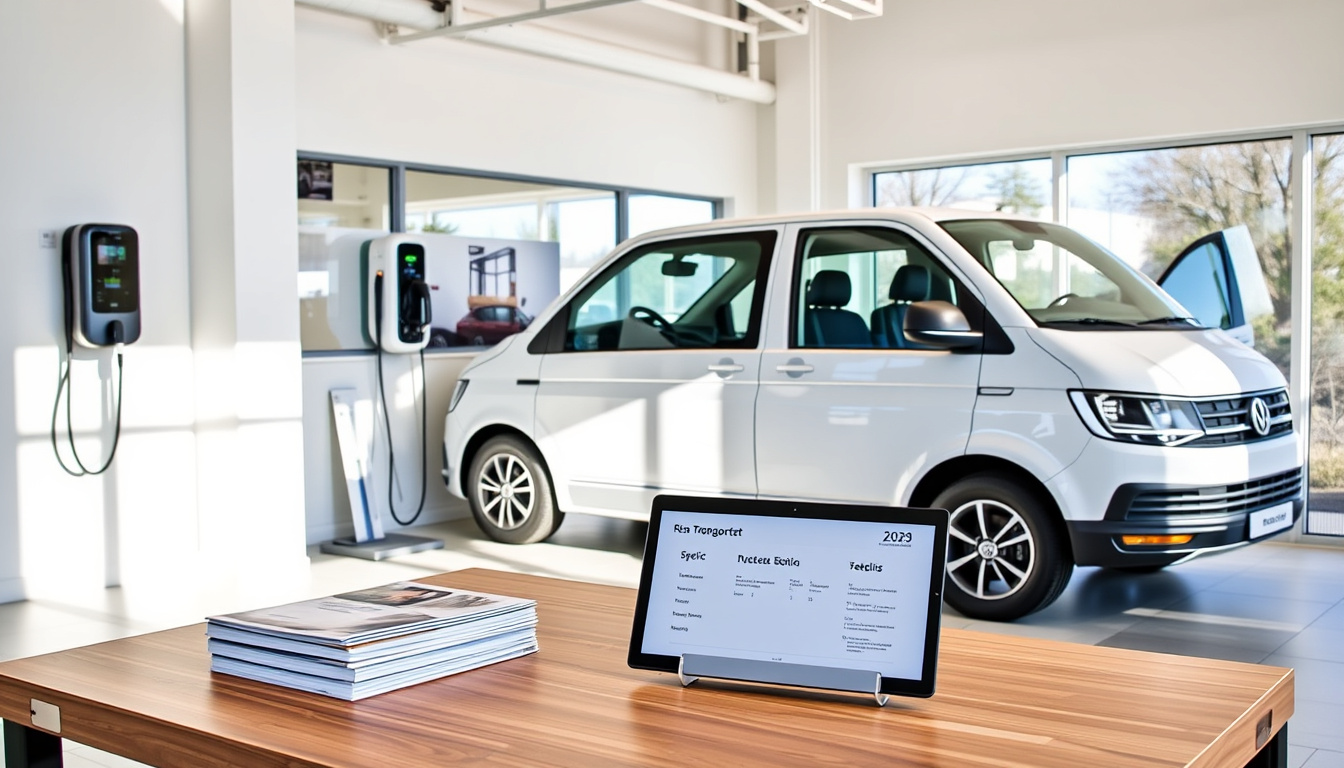
The VW Transporter has remained a staple of European roads since 1950, evolving from the rear-engined original “Bulli” into a family of panel vans, Kombis, and camper bases. For the 2025 model year, Volkswagen has expanded the range to include all-electric and plug-in hybrid powertrains alongside the proven 2.0L TDI diesel. With more than 12 million units sold worldwide, the Transporter is the best-selling van in history.
Buyers today face choices that did not exist a decade ago. The T5 and T6 generations dominate the used market and remain the default starting point for camper conversions, while the T7 introduces a platform shared with the Ford Transit Custom. Model selection, payload planning, and body style have become more important than ever.
Diesel or electric, panel van or Kombi, T6 or T7: the practical differences between these options shape how the van performs as a workhorse, a family carrier, and a camper.
What are the key differences between the VW Transporter T5 and T6?
The T5 generation ran from 2003 to 2015 and established the modern Transporter formula. The T6, produced from 2015 to 2024, refined that architecture with cleaner TDI engines, updated safety equipment, and a more contemporary cabin. A T6.1 refresh brought further equipment updates and mild-hybrid availability on some versions.
| Models available | T5, T6, T7 (2025), Electric (e-Transporter) |
|---|---|
| Powertrains | Diesel (2.0L TDI), all-electric, plug-in hybrid |
| Starting price (new) | £35,000 – £50,000+ (estimated, UK) |
| Electric range (WLTP) | Approx. 200–250 miles (official estimates) |
Several points stand out from the model history and the current line-up.
- The VW Transporter is the best-selling van in history, with more than 12 million units sold.
- The 2025 model range includes all-electric and plug-in hybrid powertrains alongside established diesel options.
- The T6 generation (2015–2024) is particularly popular among camper converters and commercial buyers.
- The new Transporter shares its platform with the Ford Transit Custom, making the two mechanically similar.
- The electric version offers two power outputs, 136 PS and 218 PS, with fast-charging capability.
- T6 common rail diesel engines are generally regarded as more reliable than earlier T5 units.
The table below sets out the headline specifications across the three generations.
| Specification | T5 (2003–2015) | T6 / T6.1 (2015–2024) | T7 (2025 onwards) |
|---|---|---|---|
| Platform character | Classic van base, earlier TDI era | Refined Transporter van platform | Multivan is car-based; e-Transporter is a dedicated electric van |
| Engine options | TDI diesel engines (earlier generation) | 2.0L TDI (84–204 PS) | Electric 136/218 PS, plug-in hybrid, diesel TDI |
| Max payload | Varies by age, engine, and body style | ~1,000–1,200 kg | ~1,000–1,100 kg; electric version ~767–1,088 kg |
| Seating | 2–9 seats | 2–9 seats | 2–9 seats |
| Wheelbase | Short and long | Short and long | Short and long |
| Towing (braked) | Around 2,000–2,500 kg on most diesel models | Higher braked ratings on diesel models; around 1,500 kg on the ABT e-Transporter | — |
| Camper conversion suitability | Very strong for used projects | Excellent for modern builds | Mixed, depends on the variant |
The reliability picture is fairly consistent across owner reports. T6 common rail diesel engines are generally regarded as more reliable than earlier T5 units, though a well-maintained T5 can still be a sound buy. The T6 platform is documented in detail on Wikipedia, and specialist guides such as Camper King’s T6 overview explain why the generation remains so popular with camper builders.
Is the VW Transporter electric a good choice for 2025?
The electric Transporter arrives in two forms. The T7 e-Transporter is the factory-built electric van variant, while the ABT e-Transporter based on the T6.1 was the earlier electrification route. Both use the familiar Transporter body shell, with the battery packaged under the floor, so passenger seat counts stay the same as the diesel versions.
What is the VW Transporter electric range?
Official WLTP estimates put the electric Transporter at roughly 200–250 miles. Real-world range depends heavily on load, temperature, and driving style, so a converted camper will not match the most optimistic figures.
How long does it take to charge?
The electric Transporter is specified with fast-charging capability, but a single standard charging time does not appear in the available specifications. Charging duration depends on the charger output, the battery’s state of charge, and the temperature.
What are the electric model specs (136 PS vs 218 PS)?
The electric version is offered with two power outputs, 136 PS and 218 PS. The T7 electric model is reported to use a 64 kWh battery with rear-wheel drive, and payloads range from around 767 kg to 1,088 kg depending on specification. Bear Hug Campers describes electric campervans as well suited to city driving and shorter trips, with longer touring demanding careful charging-stop planning.
The earlier ABT e-Transporter conversion, based on the T6.1, shows the weight penalty clearly. Kerb weight sits around 2,700 kg, roughly 700 kg heavier than a diesel equivalent, and payload is limited to about 1,000 kg even after uprating to a 3,500 kg gross vehicle weight. Towing capacity drops as well, with the ABT version rated at approximately 1,500 kg braked, compared with higher ratings on diesel Transporters.
The battery-backed figures explain why planning starts with a basic question: How much does a VW Transporter weigh?
Official WLTP estimates of around 200–250 miles assume moderate loads and favourable conditions. Cold weather, a full camper conversion, and motorway speeds all reduce the achievable range, so longer tours need planned charging stops.
How to find the best VW Transporter for sale (new and used)?
Where to buy a new VW Transporter?
New Transporters, including the electric versions, are available to order through authorised Volkswagen Van Centres in the UK. The official Volkswagen Vans UK website carries the current model range and body style options, from panel van to Kombi.
Order timing varies by specification and dealer, and no single published lead time covers the full range.
What to check when buying a used VW Transporter?
Used Transporters need the same inspection as any older van, but a few checks carry particular weight.
- The VIN plate and exact gross vehicle weight should be checked before buying, because later T6.1 and T7 vans may have higher base limits than older vans.
- A public weighbridge is the reliable way to measure the van’s real payload before planning a conversion.
- Service history records matter, especially for timing belt, turbo, and DPF maintenance on diesel vans.
- Electrical systems, doors, climate controls, and warning lights all need testing during a test drive.
- Gas safety certificates and M1 crash-test documentation should be present for any fitted seats in an existing camper or day-van conversion.
- Travel seats must be bolted through the chassis and fitted with approved seatbelts.
Some of these checks come up repeatedly in converter guides. The question of timing belt, turbo, and DPF maintenance is covered in this T6 vs T7 buying overview, while gas safety and seat certification requirements are set out in Route 300 Campers’ guide to used campers.
Are there any special deals on the VW Transporter?
Promotional pricing on the Transporter is set by individual dealers, and the offers available at any given time depend on stock, finance packages, and the model year. The official Volkswagen Vans UK website lists the current model line-up and dealer network.
Can the VW Transporter be converted into a camper van?
Is the VW Transporter a good base for a camper?
For most converters, the answer is yes, and the T5 and T6 are the strongest used bases. They have the best-established aftermarket, with proven pop-top, bed, kitchen, insulation, and seat options, and they remain the easiest platforms for traditional diesel camper builds. Practical Motorhome includes the Transporter among the leading choices for camper conversions.
The T7 requires more thought. The Multivan is a passenger-car-derived vehicle, better suited to removable kits and day-van use than drilling-heavy full builds, as Campal’s camper conversion guide explains. The e-Transporter is the electric van-focused option with better electrification potential, but the weight and range-planning constraints are significant.
What are the best camper conversion kits for the VW Transporter?
Removable camper kits are an option for T5, T6, and T6.1 vans. These systems let a van switch between camper duties and daily driving without permanent structural changes.
A common professional layout combines a rock-and-roll bed, a side kitchen, a pop-top roof, insulation, ply lining, 12V electrics, a leisure battery, and a gas system. Most builds start with a Kombi or a panel van with added rear windows. A typical T6 camper conversion offers four belted travel seats and four berths when fitted with a rear bed and pop-top.
How much does a camper conversion cost?
No single average price for a full conversion appears across the available specifications. What is documented is the weight involved: typical third-party conversions add 250–400 kg, depending on the roof, kitchen, bed, batteries, and water tanks. That weight directly reduces the payload available for passengers and luggage.
On the used market, high-spec camper conversions command a premium over standard panel vans, reflecting the fitted kitchen, bedding, electrical systems, and conversion labour.
A typical conversion adds 250–400 kg through the pop-top, kitchen, water tanks, and leisure batteries. On an electric Transporter the battery pack already adds roughly 700 kg compared with a diesel version, so the remaining payload needs careful planning. A public weighbridge is the reliable way to establish the true figure.
Drawing habitation power from the traction battery is not straightforward. Even in an electric camper, a separate leisure battery system is normally still needed for lights, heating, and 12V appliances.
What seating and body style options does the VW Transporter offer?
Is there an 8-seater VW Transporter?
The Transporter can seat more than eight people in some configurations. Typical layouts range from two or three seats in panel vans to five or six in Kombi versions, and up to nine in Shuttle and Caravelle-style models. The electric Transporter keeps similar seat counts to the diesel versions because the battery is positioned under the floor.
The body style determines the answer to a question that comes up constantly: How many seats can a VW Transporter van have?
What is the difference between panel van and kombi?
Panel vans are cargo-focused, with two or three seats and no rear side windows. Kombi versions add a second row of seats and side glazing, making them the natural starting point for camper conversions. Most professional camper builds use a Kombi or a panel van with added rear windows.
Can the VW Transporter be used as a minibus?
Shuttle and Caravelle-style Transporters seat up to nine people and are widely used as minibuses. Any travel seat fitted during a conversion must be bolted through the chassis and fitted with approved seatbelts, and M1 crash-test documentation should be present for seats in a camper or day-van conversion.
How has the VW Transporter evolved through the generations?
Seven generations separate the original 1950 van from the 2025 line-up.
- T1 (1950–1967): The original “Bulli” with a rear engine and iconic split-window design.
- T2 (1967–1979): A larger, safer body, still with the engine at the rear.
- T3 (1979–1992): A more angular design with water-cooled engines.
- T4 (1990–2003): The switch to front engines and a cab-forward layout.
- T5 (2003–2015): Modern styling, TDI engines, and Euro 5/6 emission standards.
- T6 (2015–2024): Refined exterior, advanced infotainment, and mild-hybrid availability.
- T7 (2025 onwards): All-electric and plug-in hybrid versions, built on a platform shared with the Ford Transit Custom.
The full history of the Transporter, including each generation’s technical changes, is documented on Wikipedia.
What is confirmed about the VW Transporter and what remains uncertain?
Some aspects of the Transporter story are well established, while others depend on conditions, specifications, and future regulation.
| Established information | What remains uncertain |
|---|---|
| Official WLTP estimates put the electric range at roughly 200–250 miles. | Real-world range varies with load, temperature, and driving style. |
| The current Transporter line-up still includes diesel options alongside electric and plug-in hybrid versions. | Future diesel availability may change as emissions regulations evolve. |
| T6 common rail diesel engines are generally regarded as more reliable than earlier T5 units. | Individual maintenance history can matter more than the generation itself. |
| The Transporter is a well-established base for camper conversions. | Warranty implications and conversion complexity vary by converter and model year. |
Where does the VW Transporter fit in the medium van market?
The Transporter competes directly with the Ford Transit Custom, Mercedes Vito, and Renault Trafic. In T7 form, it shares its platform with the Ford Transit Custom, making the two vans nearly identical mechanically. Volkswagen differentiates through interior quality, brand cachet, and a deep camper conversion heritage.
The Transporter occupies the premium end of the medium van segment. It holds strong residual values and maintains a loyal following among tradespeople and lifestyle buyers. The electric version positions Volkswagen as a major player in zero-emission commercial vehicles.
Running costs depend on fuel type, emissions, and the vehicle’s registration details, with UK vehicle tax rates for vans published by the DVLA.
What do the main sources say about the VW Transporter?
Authoritative sources align on the Transporter’s core strengths, from sales history to the breadth of the current powertrain line-up.
“The Transporter is the best-selling van in history with over 12 million units sold worldwide.”
— Wikipedia
“The new Transporter Commerce Pro S is available as a panel van or kombi, with a choice of powertrains: turbocharged diesel, all electric and a plug-in hybrid.”
— Volkswagen Vans UK
“The diesel engines are strong, the VW Transporter is a better van to drive [than the Transit Custom].”
— Carwow
Independent reviews from What Van? and other trade titles provide ongoing assessment of the Transporter range.
Which VW Transporter should you choose?
For a used diesel camper project, the T5 offers the broadest used-market availability and the largest aftermarket. The T6 or T6.1 provides the best balance of modern equipment, conversion support, and parts compatibility. The T7 Multivan suits buyers who want a newer, car-like family vehicle with a removable camping kit, while the T7 e-Transporter is suited to local and regional all-electric use. Payload, seating, and body style should each be checked against the specific VIN plate before purchase.
What do buyers commonly ask about the VW Transporter?
How much does a used VW Transporter cost?
Prices vary by age, mileage, and condition. A used T5 (2003–2015) can range from £5,000 to £15,000, while a T6 (2015–2024) typically costs £15,000–£35,000. High-spec camper conversions command a premium.
What is the best VW Transporter engine?
The 2.0L TDI in the T6, particularly the 150 PS and 204 PS versions, offers a strong balance of performance and fuel economy. For electric buyers, the 218 PS model provides the best performance.
Is the VW Transporter reliable?
Generally yes, but earlier T5 engines had some reliability issues. The T6 and newer models improved significantly. Regular maintenance, especially timing belt and EGR upkeep, plays a key role.
Can I buy a new VW Transporter now?
Yes. New models, including the electric versions, are available for order from authorised Volkswagen Van Centres. Lead times vary by specification and demand.
What is the VW Transporter payload capacity?
A T6 is rated at roughly 1,000–1,200 kg, while the electric T7 is reported at 767–1,088 kg. Adding a camper conversion of 250–400 kg reduces the remaining payload substantially.
VW Transporter vs Ford Transit Custom: which is better?
The new Transporter shares its platform with the Ford Transit Custom and the two are nearly identical mechanically. Volkswagen differentiates through interior quality, brand cachet, and a stronger camper conversion heritage.

Rebecca Haines is Managing Editor at DailyCity.co.uk, running the daily news list and covering UK and world stories with a city lens.