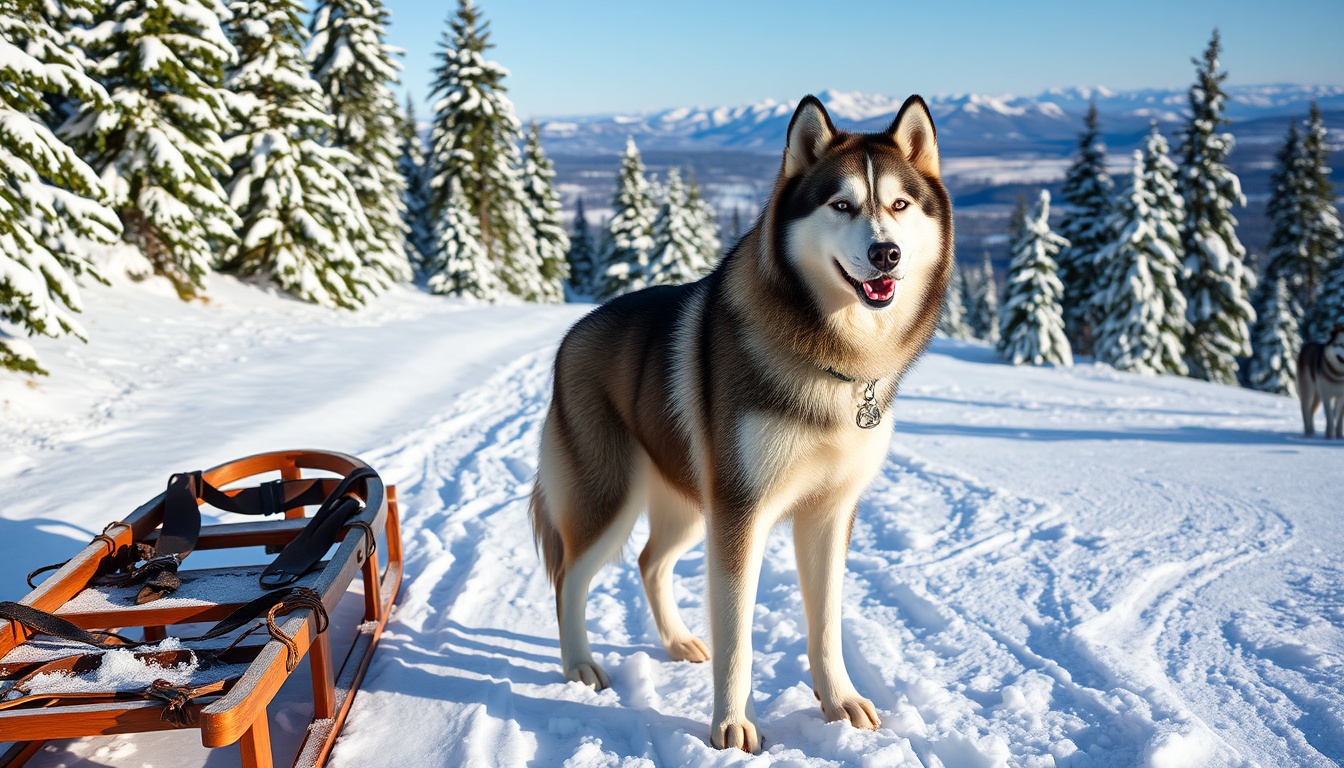
The Alaskan Malamute is a large, powerful Arctic sled dog bred for endurance and heavy freight pulling, not speed. Developed by the Mahlemut Inupiat people of Alaska, this breed carries a rich history of working alongside humans in extreme conditions. While its wolf-like appearance often draws comparisons to the Siberian Husky, the Malamute is a distinct breed with a heavier build, a more independent temperament, and a coat built for cold climates.
Understanding the Malamute requires looking beyond its striking looks. Prospective owners need to know about its exercise needs, grooming demands, and strong-willed personality. This guide covers the key facts about the Alaskan Malamute, from its temperament and size to its colors and pronunciation, based on information from major kennel clubs and breed authorities.
What Is the Temperament of an Alaskan Malamute?
The Alaskan Malamute temperament is often described as affectionate, friendly, loyal, devoted, and dignified. The American Kennel Club (AKC) notes that they are playful on invitation but maintain a dignified presence. However, this breed also has a strong independent streak, and multiple sources point out that Malamutes can be strong-willed, stubborn, and sometimes dominant with other dogs. They are not ideal “one-person” dogs; they are typically social with people but can be dog-selective.
| Category | Value |
|---|---|
| Breed Group | Working |
| Height | 23–25 inches (male), 21–23 inches (female) |
| Weight | 75–85 lbs (male), 65–75 lbs (female) |
| Life Expectancy | 10–14 years |
- Alaskan Malamutes are pack animals with a strong independent streak, making training consistency critical.
- Despite their size, they are not typically guard dogs but are alert and loyal to family.
- The breed requires significant exercise and mental stimulation to prevent destructive behavior.
- Giant Alaskan Malamutes are not a separate breed but larger individuals within standard weight ranges.
- Sable is a recognized color pattern in the breed standard, often with a black mask.
| Fact | Detail |
|---|---|
| Origin | Mahlemut tribe, Alaska |
| Purpose | Heavy freight sled pulling |
| First Kennel Club Registration | 1935 (AKC) |
| Recognition | AKC Working Group, UKC Northern Breed Group |
| Notable Health Issues | Hip dysplasia, bloat, hypothyroidism, eye problems |
| Coat Type | Thick double coat |
| Exercise Needs | High – daily vigorous activity |
How Big Do Alaskan Malamutes Get? Size and Giant Variants
The breed standard from the Royal Kennel Club gives preferred shoulder heights of 64 cm (25 in) for males and 58 cm (23 in) for females, with weights around 39 kg (85 lb) for males and 34 kg (75 lb) for females. These figures are the clearest reference for typical adult size, though some consumer breed guides report broader ranges, such as 58–71 cm in height and 32–43 kg in weight.
What Is a Giant Alaskan Malamute?
Some non-standard or pet-site descriptions mention a “giant” Alaskan Malamute, but this is not an official kennel-club breed variety. It usually refers to unusually large individuals rather than a separate recognized type. Breeders who promote oversized dogs may produce animals with health risks, but the breed standard does not recognize a giant variant.
The term “giant” is not part of the official breed standard. Any Malamute significantly exceeding the standard weight range (e.g., over 100 lb) is not considered a separate variety and may be outside the breed’s intended conformation.
Alaskan Malamute vs Husky: Key Differences
Compared with a Siberian Husky, a Malamute is generally larger, heavier, and more muscular. The Malamute was bred for heavy freight pulling over long distances, while the Husky was developed for speed and lighter loads. This difference in purpose leads to distinct physical and temperamental traits.
Physical Contrasts
Malamutes have a heavier bone structure, a broader head, and a thicker coat. Their eyes are typically brown, whereas Huskies often have blue or multi-colored eyes. The Malamute’s tail is usually carried curled over the back, while the Husky’s tail may hang down when relaxed.
Temperament and Trainability
Both breeds are intelligent and independent, but Malamutes are often described as more stubborn and less eager to please than Huskies. The Royal Kennel Club notes that Malamutes are strong-willed, making them a more challenging breed for first-time owners. Huskies tend to be more outgoing and less dog-aggressive. For more on the Husky temperament, see the Siberian Husky comparison.
If you are considering a sled dog, the Malamute is better suited for heavy work and cold climates, while the Husky is more adaptable to varied activities and may be more tolerant of other dogs. Both require substantial exercise and experienced handling.
Alaskan Malamute Puppies: What to Know Before Buying
The breed is generally considered a large breed that finishes growing around 18 to 24 months. Puppy coat color can shift as the dog matures, but adult patterns consistently feature white markings with gray, black, sable, red, or related shades. Prospective owners should be prepared for a high-energy, strong-willed puppy that needs consistent training and socialization.
Finding a Responsible Breeder
When looking for Alaskan Malamute puppies for sale, it is crucial to seek breeders who perform health screenings for hip dysplasia, bloat, and eye problems. The AKC breed standard provides a reliable reference for conformation and temperament. Be wary of breeders advertising “giant” Malamutes, as this is not a recognized variety.
Malamutes are not ideal for first-time dog owners. Their independent nature requires a firm, consistent handler. They also need a lot of space and exercise; apartment living without adequate outdoor access is not recommended.
How Do You Pronounce Alaskan Malamute?
The standard pronunciation is “AL-uh-skən MAL-uh-myoot.” Wikipedia gives the phonetic form /ˈmæləˌmjuːt/. The emphasis is on the first syllable of “Malamute” (“MAL-uh-myoot”). Variations exist regionally, but the most widely accepted pronunciation follows the English phonetic pattern.
Alaskan Malamute Colors: White, Sable, and Other Variations
Standard colors range from light gray through black, and from gold through red to liver, always with white on the underbody, legs, feet, and part of the mask. Commonly reported colors include sable, red, black, gray, and white. In the breed standard, the only solid color allowed is white. Sable is a recognized pattern, often with a black mask, and is less common than other shades.
White Alaskan Malamute
White is a recessive color, not albinism. A white Malamute may have a pure white coat or white with slight cream shading. This color is accepted by the breed standard as long as the dog meets all other conformation requirements.
Sable Alaskan Malamute
Sable refers to a coat where individual hairs have bands of color, often black-tipped with a lighter base. It is a genetically distinct pattern and is recognized in the breed standard. Sable Malamutes may have a black mask and white markings as per the standard.
How Did the Alaskan Malamute Breed Develop Over Time?
- Pre-1900s: Developed by the Mahlemut Inupiat people in Alaska for sledding and heavy freight.
- 1935: Recognized by the American Kennel Club (AKC).
- 1940s-1950s: Used by explorers such as Admiral Byrd in Antarctic expeditions.
- 1960s-1970s: Gained popularity as a family companion in colder climates.
- Present: Ranked among the top 60 most popular breeds by the AKC, with working and show lines persisting.
What Is Certain and What Is Uncertain About the Alaskan Malamute?
| Established Information | Information That Remains Unclear |
|---|---|
| The Alaskan Malamute is a distinct breed from the Siberian Husky, with larger size, heavier bones, and different temperament. | The “giant” Alaskan Malamute is not an official variant; some breeders promote oversized dogs, but they may have health risks. |
| The breed originated from the Mahlemut tribe. | Pronunciation varies regionally; standard is “MA-luh-myoot.” |
| The only solid color allowed in the breed standard is white. | Sable color is less common but accepted; white is a recessive color, not albino. |
What Is the Background and Purpose of the Alaskan Malamute?
The Alaskan Malamute was developed by the nomadic Mahlemut Inupiat people of Alaska for heavy freight sled pulling. Unlike the Siberian Husky, which was bred for speed, the Malamute’s strength and endurance made it ideal for hauling heavy loads over long distances in harsh Arctic conditions. Today, the breed retains its working drive and is often used in sledding, weight pulling, and as a family companion in cold climates.
Working lines tend to have higher drive and endurance, while show lines may have a more moderate temperament. Both types require significant exercise and mental stimulation. The breed is prone to overheating and is not ideal for warm climates without air conditioning.
What Do Breed Authorities Say About the Alaskan Malamute?
“The Alaskan Malamute is an affectionate, loyal, and playful but dignified dog.”
– American Kennel Club
“They are strong dogs with thick, fluffy coats, known for their independence.”
– Dogs Trust
“The breed takes its name from the Mahlemut tribe of nomadic Inuits.”
– Royal Kennel Club
What Is the Key Takeaway About the Alaskan Malamute?
The Alaskan Malamute is a powerful, independent working dog that requires an experienced owner, substantial exercise, and consistent training. Its history as a freight sled dog shapes its temperament and physical needs. Prospective owners should carefully consider the breed’s high energy, strong will, and heavy shedding before bringing one home. For more details on the breed standard, see the Siberian Husky comparison.
Frequently Asked Questions
Are Alaskan Malamutes good with children?
Malamutes are generally affectionate and loyal to family, including children, but their large size and strong will require supervision. They are not recommended for very young children without adult guidance.
Do Alaskan Malamutes bark a lot?
Malamutes are not frequent barkers, but they do vocalize with howls, grumbles, and “talk” sounds. They can be noisy if bored or under-exercised.
How much exercise does an Alaskan Malamute need?
They need at least 60–90 minutes of vigorous daily exercise, including running, hiking, or pulling activities. Without enough exercise, they may become destructive.
Are Alaskan Malamutes easy to train?
Training can be challenging due to their independence and stubbornness. Positive reinforcement and consistency are essential. They are not recommended for first-time owners.
What is the lifespan of an Alaskan Malamute?
The average lifespan is 10 to 14 years, though some individuals may live longer with proper care and genetics.
Do Alaskan Malamutes shed a lot?
Yes, they have a thick double coat that sheds heavily, especially during seasonal coat blows. Regular brushing is necessary year-round.
Can Alaskan Malamutes live in warm climates?
They are prone to overheating and are not ideal for hot climates without air conditioning. They thrive in cold weather.
Are Alaskan Malamutes aggressive?
They are not typically aggressive toward people, but they can be dominant and dog-selective. Early socialization is important to manage dog interactions.
What is the difference between a Malamute and a Husky?
Malamutes are larger, heavier, and more muscular, bred for heavy freight. Huskies are smaller, faster, and more outgoing. Malamutes are generally more independent and stubborn.
How much does an Alaskan Malamute puppy cost?
Prices vary widely by breeder and location, typically ranging from $1,000 to $2,500. Puppies from champion lines or with health certifications may cost more.

Henry Morgan is Senior Reporter at DailyCity.co.uk, covering breaking news and general city stories across the UK.