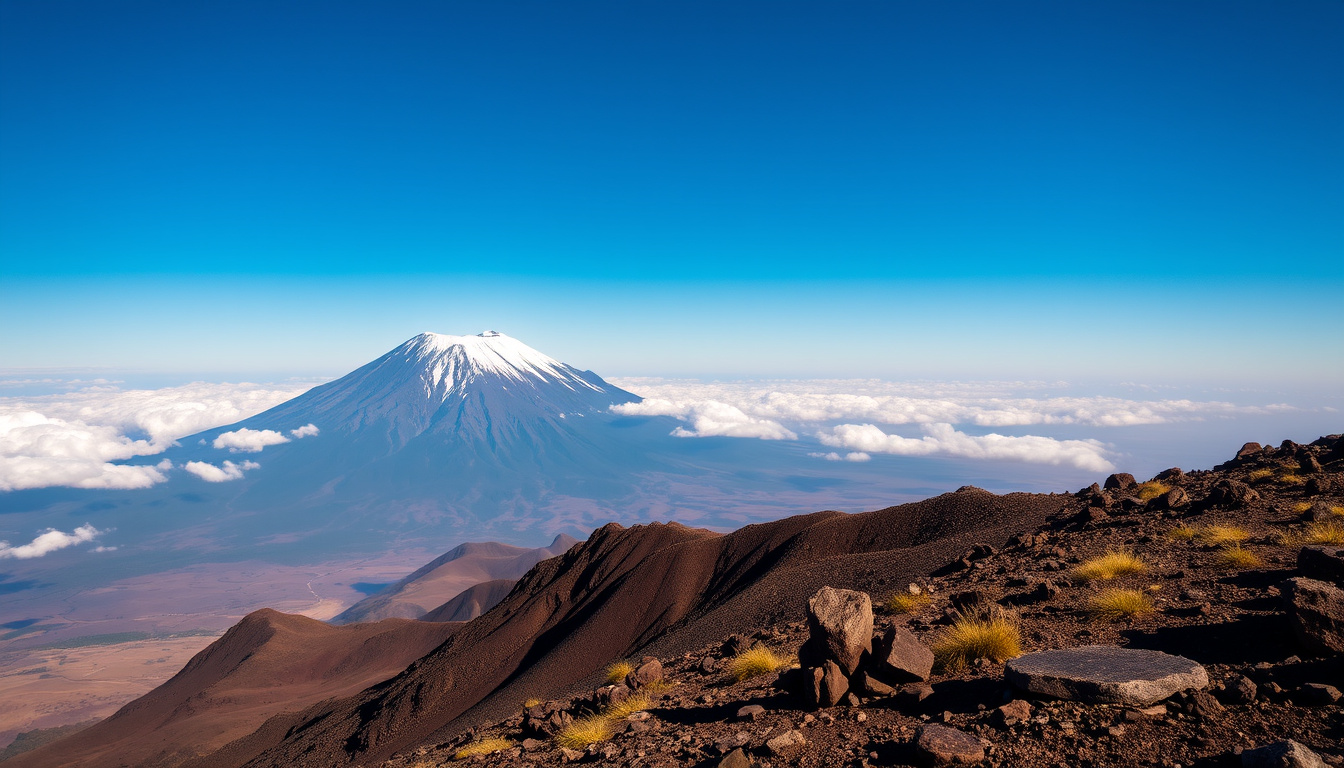

Mount Kilimanjaro, a dormant stratovolcano in northeastern Tanzania, is the tallest mountain in Africa and the highest freestanding mountain on Earth. Rising to 5,895 meters (19,341 feet) at its summit, Uhuru Peak, this iconic landmark attracts tens of thousands of climbers each year. While a non-technical climb, reaching the summit requires careful planning, physical preparation, and an understanding of the mountain’s geography, routes, and inherent risks. This guide covers the essential facts every prospective climber needs.
Where is Mount Kilimanjaro Located?
Mount Kilimanjaro is located in northeastern Tanzania, East Africa, near the border with Kenya. The mountain sits between the towns of Moshi and Arusha, which serve as the primary gateway hubs for expeditions. Its precise location places it about 100 kilometers south of the Kenyan border, a fact that sometimes leads to the mistaken belief that the mountain lies within Kenya. According to official maps and the UNESCO World Heritage listing for Kilimanjaro National Park, the mountain lies entirely within Tanzanian territory.
- Free-standing giant: Kilimanjaro is the highest free-standing mountain in the world, not part of a mountain range.
- Three volcanic cones: The massif is composed of three distinct cones: Kibo (the highest), Mawenzi, and Shira.
- Rapidly receding glaciers: The glaciers on the upper slopes are in dramatic retreat, with scientists predicting they could disappear entirely by 2040.
- Achievable for beginners: A person with good general fitness can summit, but altitude sickness affects roughly half of all climbers.
- Low but real risk: The annual death rate is estimated at around 10-15, with most fatalities caused by preventable factors like altitude sickness or falls.
| Fact | Detail |
|---|---|
| Continent | Africa |
| Country | Tanzania |
| Elevation | 5,895 m (19,341 ft) |
| First ascent | 1889 (Hans Meyer, Ludwig Purtscheller) |
| Volcanic status | Dormant (last eruption ~150-200k years ago) |
| Glacier coverage | ~2 sq km (down from ~12 sq km in 1912) |
| Climbing season | Dry seasons: Jan-Mar, Jun-Oct |
| Avg summit success rate | ~65% (varies by route) |
How Tall is Mount Kilimanjaro?
The accepted official height of Mount Kilimanjaro, measured at Uhuru Peak on the Kibo cone, is 5,895 meters (19,341 feet) above sea level. This makes it the highest point on the African continent. The mountain is a volcanic massif, a geological feature formed by the East African Rift volcanism, which also created the other two cones: Mawenzi (5,149 m) and Shira (3,962 m).
Is Kilimanjaro a Volcano?
Yes, Kilimanjaro is a stratovolcano, though it is considered dormant, not extinct. While it has not erupted in recorded history, with the last major eruption occurring an estimated 150,000 to 200,000 years ago, volcanic activity is not impossible. Scientists monitor the mountain for seismic activity, and fumaroles (gas vents) are still present near the summit, indicating residual heat.
What are the Three Volcanic Cones?
Kibo, Mawenzi, and Shira represent different stages of the mountain’s volcanic history. Shira is the oldest and most eroded, now forming a plateau. Mawenzi is the second-highest peak and a dramatic, jagged ridge. Kibo is the youngest and tallest, and the only cone upon which the summit glaciers persist.
The glaciers atop Kilimanjaro are in rapid retreat, losing more than 80% of their area since the early 20th century, according to National Geographic. This ice loss is driven by rising air temperatures and has direct consequences for climbing safety, as melting ice can trigger dangerous rockfalls.
Can a Beginner Climb Kilimanjaro?
A beginner with a reasonable level of fitness and a strong mind can successfully climb Kilimanjaro. The trek is classified as non-technical, meaning no ropes or climbing equipment are required for the ascent. However, it is a strenuous high-altitude trek. The main challenge is not the physical difficulty of the terrain but the altitude.
How Long Does It Take to Climb Kilimanjaro?
The duration of a climb depends entirely on the route chosen. Most itineraries range from 6 to 8 days. To maximize the chance of success and minimize the risk of altitude sickness, a 7- or 8-day itinerary is strongly recommended. These longer schedules allow for better acclimatization, which is the single most important factor for a safe summit.
What is the Shortest Route Up Kilimanjaro?
The shortest physical route is the Umbwe route, which can be completed in 5 or 6 days. It is also the steepest and most direct, leading to a high failure rate due to insufficient time for the body to adapt to the altitude. For this reason, it is considered one of the most difficult options.
What is the Best Time to Climb Kilimanjaro?
The two optimal climbing windows are the dry seasons: from January to March and from June to October. These periods offer the clearest skies, lower precipitation, and the best trail conditions. The long rains (March to May) and the short rains (November) make the trails slippery and reduce visibility, generally making these periods less popular.
Is Kilimanjaro Dangerous?
Climbing Kilimanjaro is generally considered safe for those who are properly prepared and take the risks seriously. All main routes, with one well-documented exception, are considered relatively safe. The greatest dangers are not from falls or wildlife but from the altitude itself and poor decision-making.
How Many Deaths on Kilimanjaro Per Year?
Exact annual death counts are not centrally published, but credible estimates from mountain safety experts and tour operators suggest an average of 10 to 15 fatalities per year. This number is tiny relative to the roughly 30,000 to 50,000 people who attempt the climb annually. The primary causes of death are severe Acute Mountain Sickness (AMS), heart attacks, or accidents like falls.
Is Kilimanjaro Evil or Cursed?
There is no credible scientific or cultural basis for the idea that the mountain is evil or cursed. This label likely stems from local mythology, media sensationalism, or confusion with the mountain’s Swahili name (Kilima Njaro), which some have incorrectly translated. In reality, the mountain is a sacred site to the local Chagga people and a source of national pride for Tanzania.
The Western Breach Danger
The most significant safety concern on Kilimanjaro is the Western Breach route (via Arrow’s Glacier). This route was closed in 2006 after a rockfall killed three climbers. The rockfalls are directly linked to the melting of the glacier, which releases rocks once held in place by ice. While the route has since reopened, it remains the most dangerous summit route and is avoided by many responsible operators.
The Western Breach is considered the most dangerous summit route on the mountain. The danger of ongoing rock-slides from melting ice makes it a high-risk choice. Most experts and guides recommend the Northern Circuit or Lemosho routes for the best safety and acclimatization.
Which is Harder: Kilimanjaro or Mount Kenya?
This is a common comparison for trekkers planning an African adventure. Mount Kenya, the second-highest mountain in Africa at 5,199 meters (17,057 feet), is taller than Kilimanjaro’s peak of 5,895 meters.
However, in terms of difficulty, the climbing experience is very different. Mount Kilimanjaro’s summit via the standard routes is a non-technical walk-up. In contrast, the main peak of Mount Kenya (Batian) requires technical rock climbing skills. The more common trekking peak of Mount Kenya (Point Lenana, 4,985 m) is less demanding than Kilimanjaro but still involves scrambling. For a typical trekker, a 7-8 day itinerary on Kilimanjaro is often considered less technically challenging than a summit attempt on Mount Kenya’s main peak.
Key Historical and Environmental Milestones
- 1889: First successful ascent by Hans Meyer and Ludwig Purtscheller.
- 1912: First detailed glacial survey; ~12 sq km of ice.
- 1973: Designated as a national park (Kilimanjaro National Park).
- 1987: Declared a UNESCO World Heritage Site.
- 2000s: Glacial retreat accelerates; scientists raise alarm.
- 2020: Record number of climbers (~50k/year pre-pandemic).
- 2025: Current glacial coverage ~2 sq km; annual ice loss continues.
What is Certain and Uncertain About Kilimanjaro?
| Established Information | Information That Remains Unclear |
|---|---|
| Kilimanjaro is located in Tanzania. | Whether it is an active volcano. It is considered dormant. |
| The glaciers are rapidly melting. | The exact year they will disappear. Most models project near-total loss by 2040-2050. |
| The mountain is not evil or cursed. | The origin of this myth. It has no basis in the local Chagga culture. |
Geological and Environmental Context
Mount Kilimanjaro is a stratovolcano formed by the powerful tectonic forces of the East African Rift Valley. As the African continent slowly splits apart, magma has risen to the surface, creating this massive volcanic edifice over millions of years. The mountain hosts five distinct ecological zones, from lush rainforest at its base to an arctic desert at its summit.
The ongoing recession of Kilimanjaro’s glaciers is a key indicator of global climate change. While some studies suggest that lower precipitation played a role, the primary driver is rising air temperatures. This loss of ice also has indirect political implications; the shrinking glaciers are a powerful visual symbol of climate change, drawing global attention to the region. The park itself, managed by Tanzania National Parks (TANAPA), protects this unique ecosystem.
What Do Official Sources Say About Kilimanjaro?
“Kilimanjaro is the highest mountain in Africa and the highest free-standing mountain in the world.”
— UNESCO World Heritage Centre
“The glaciers atop Kilimanjaro are in rapid retreat, losing more than 80% of their area since the early 20th century.”
— National Geographic
“The average summit success rate across all routes is about 65%, with the Lemosho and Machame routes highest.”
— Climbing Kilimanjaro (tour operator data)
What Are the Next Steps for Kilimanjaro Trekkers?
Kilimanjaro remains a premier trekking destination. The most important decision a prospective climber can make is to choose a longer itinerary (7-8 days) and a route that offers excellent acclimatization, such as the Lemosho or Northern Circuit. By prioritizing safety, respecting the mountain’s environment, and preparing for the physical demands of high altitude, a successful summit is a realistic goal for a well-prepared adventurer.
For a deeper dive into the specifics of each trail, start with our Climbing Routes Comparison. For more on how to prepare effectively, read about Safety & Summit Success on Kilimanjaro.
Frequently Asked Questions
What is the best time of year to climb Kilimanjaro?
The best times are the dry seasons: January to March, and June to October. These offer clearer skies and lower precipitation.
How much does it cost to climb Kilimanjaro?
Costs range from $1,500 to $6,000 depending on route, operator, and level of service. Park fees alone are ~$800-1,000.
What gear do I need to climb Kilimanjaro?
Essential gear includes: insulated boots, warm layers, rain jacket, sleeping bag rated to -15°C, headlamp, trekking poles, and hydration system.
Do I need training to climb Kilimanjaro?
While no technical climbing skill is needed, good cardiovascular fitness, leg strength, and prior multi-day hiking experience are highly recommended.
Is there a mobile network on Kilimanjaro?
Yes, coverage is available on most routes up to base camps, but may be spotty near summit. Consider satellite messenger for emergencies.
What is the altitude of Kilimanjaro’s summit?
The summit, Uhuru Peak, is at 5,895 meters (19,341 feet) above sea level.
Which Kilimanjaro route has the highest success rate?
The Lemosho and Northern Circuit routes, with itineraries of 8 or more days, have the highest success rates, often exceeding 90%.
Can I see glaciers from the summit?
Yes, the summit of Kibo is still capped by a shrinking ice field, but it is significantly smaller than it was a century ago.

Rebecca Haines is Managing Editor at DailyCity.co.uk, running the daily news list and covering UK and world stories with a city lens.