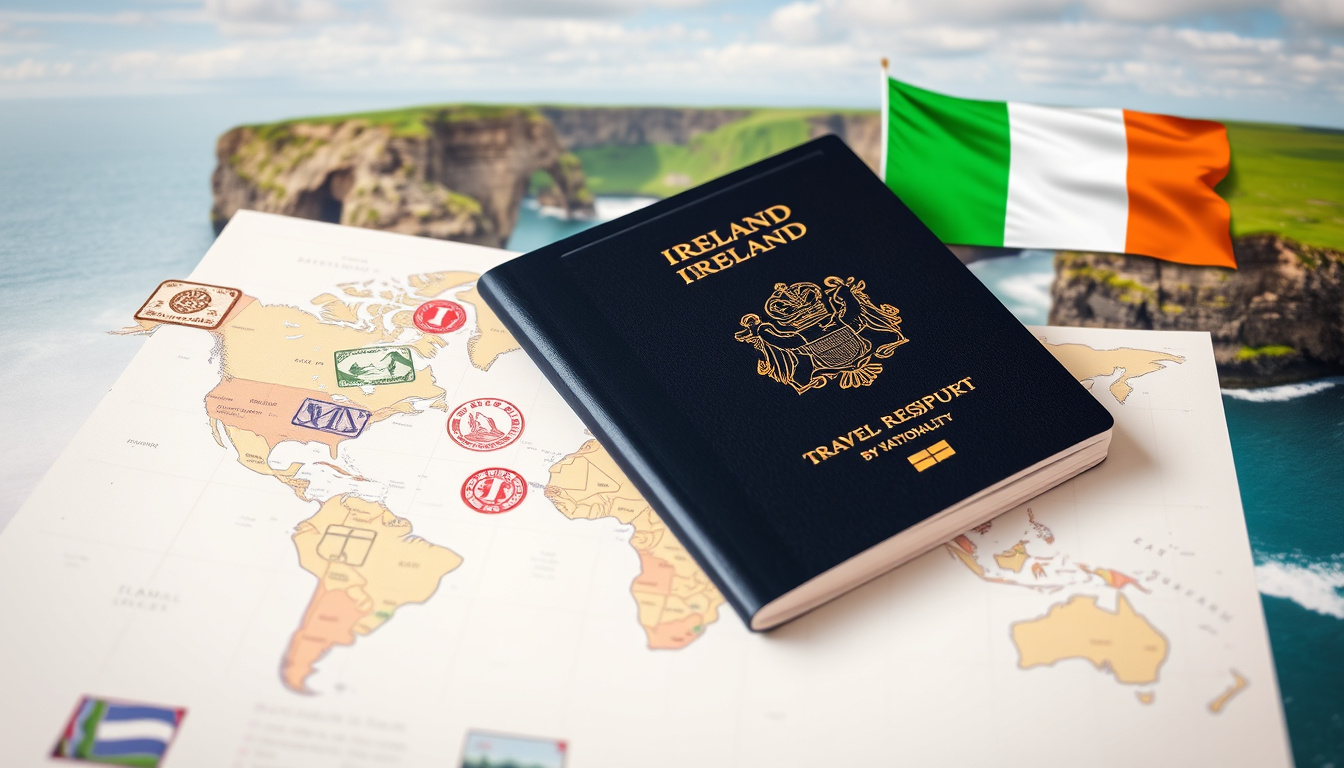
Planning a trip to Ireland involves understanding specific entry requirements that vary depending on your nationality. While some travellers can enter with just a photo ID, others must carry a valid passport. The rules depend heavily on whether you qualify under the Common Travel Area, your citizenship status, and how you plan to arrive. This guide breaks down everything you need to know about passport and visa requirements for entering the Republic of Ireland.
Ireland operates independently from both the Schengen Area and the United Kingdom’s post-Brexit system, meaning its entry requirements follow a distinct set of rules. For citizens of the United States, United Kingdom, European Union, Australia, and Canada, no visa is required for short visits, though documentation requirements differ significantly between groups.
Understanding these distinctions before departure can prevent unnecessary delays or denied boarding. Airlines and ferry operators often enforce stricter requirements than the legal minimum, making it essential to verify carrier policies alongside official government guidance.
Do You Need a Passport to Go to Ireland?
The answer depends primarily on your citizenship and how you are travelling. Citizens of the United States, Australia, and Canada always require a valid passport for entry into Ireland. British and Irish citizens, however, benefit from special provisions under the Common Travel Area that can allow travel with alternative identification.
Legal entry requirements and airline boarding requirements are not the same thing. While some travellers may legally enter Ireland without a passport, carriers frequently require one for boarding.
| Nationality | Passport Required? | Photo ID Alternative | Key Notes |
|---|---|---|---|
| United States | Yes | No | Must be valid for duration of stay |
| United Kingdom | No (legal minimum) | Yes (recommended) | Common Travel Area rules apply |
| European Union | Often ID suffices | Yes | Check specific airline requirements |
| Australia | Yes | No | No visa required for visits |
Key Facts to Remember
- The Common Travel Area allows British and Irish citizens to travel without passports, but airlines and ferry operators often require them anyway
- All non-EEA visitors, including Americans and Australians, need a valid passport
- Post-Brexit changes have had minimal impact on Common Travel Area passport arrangements
- Children under 16 must have their own passport or appropriate identification
- Dual citizens holding Irish nationality should use their Irish passport to access Common Travel Area benefits
- EU national identity cards remain valid for entry into the Republic of Ireland, unlike the situation in Northern Ireland from 2025
| Requirement Type | Details |
|---|---|
| Legal Minimum | Passport for non-CTA travellers; official photo ID acceptable for UK/Irish citizens at border |
| Airline Reality | Passport almost always required for boarding, even for CTA-eligible passengers |
| Visa Waiver Period | 90 days for many nationalities; varies by citizenship |
| Passport Validity | Recommended: valid for stay plus 6 months; must be issued within last 10 years |
Passport Requirements from the UK (Common Travel Area)
The Common Travel Area represents a unique arrangement between Ireland and the United Kingdom that predates both countries’ membership in the European Union. Established in 1923, it enables British and Irish citizens to travel freely between both jurisdictions without passports, visas, or border checks.
This arrangement covers not only the Republic of Ireland and Great Britain but also Northern Ireland and the surrounding islands. Citizens of either country can live, work, study, and access public services in the other without requiring any special permissions.
Travel Within the Common Travel Area
While the legal framework permits travel without a passport, practical reality often differs. Ferry operators and airlines typically require some form of photographic identification for all passengers. Ryanair mandates either a passport or national identity card, while Aer Lingus requires a passport or Irish passport card for most flights between Ireland and the United Kingdom.
The exception applies specifically to flights between Belfast and the United Kingdom, where slightly more flexibility exists. However, British citizens flying from London or Manchester to Dublin should expect cabin crew to request passport documentation.
Despite Common Travel Area rights, certain administrative processes now require a passport. Opening a bank account, obtaining a Personal Public Service number, or accessing some government services in Ireland may necessitate presenting a British passport, even for Irish citizens living in the UK.
Post-Brexit Changes
Brexit did not fundamentally alter the Common Travel Area arrangements. British citizens retained their rights under the CTA following the UK’s departure from the European Union. The 2019 joint ministerial confirmation reaffirmed that no passport or visa would be required for citizens exercising their Common Travel Area rights.
However, one significant change affects those transiting through Northern Ireland. From April 2, 2025, non-UK, non-Irish, and non-visa holders require a United Kingdom Electronic Travel Authorisation for direct travel to Northern Ireland or when entering Northern Ireland from the Republic of Ireland. This requirement does not apply to travel solely within the Republic of Ireland.
Do US Citizens Need a Passport for Ireland?
American citizens absolutely require a valid passport to enter Ireland. This requirement applies regardless of the purpose of visit, whether for tourism, business, or transit. No exceptions exist for US nationals under the Common Travel Area or any other programme.
Passport Requirements for Americans
Your passport must be valid for the entire duration of your intended stay in Ireland. While the minimum validity period is not explicitly mandated by Irish law, most airlines enforce a requirement that the passport remain valid for at least six months beyond your planned departure date. This practice aligns with international aviation standards.
Additionally, your passport must have been issued within the last ten years. If you recently renewed your passport, check the issue date carefully, as some airlines have been known to deny boarding to travellers whose passports appear to have been issued more than a decade ago, even if the document itself remains valid.
US citizens do not need a visa for visits to Ireland of up to 90 days. However, if you hold dual citizenship with Ireland, using your Irish passport upon arrival provides access to Common Travel Area benefits and typically results in faster processing.
Entry Rules for EU Citizens and Other Nationalities
Citizens of European Union and European Economic Area countries enjoy particularly favourable conditions when entering Ireland. Under EU law, they have the right to free movement, which translates into straightforward entry requirements for short visits.
EU and EEA Citizens
A valid passport or national identity card is sufficient for entry into Ireland if you are a citizen of any EU or EEA country. This includes the 27 EU member states plus Iceland, Norway, and Liechtenstein. Unlike the situation developing in Northern Ireland, where EU national identity cards will no longer be accepted from 2025, the Republic of Ireland continues to accept these documents.
However, travellers should note that airlines may have their own requirements. While a national identity card satisfies Irish border control, some carriers prefer passengers to present passports. Checking with your airline before travelling can prevent last-minute complications.
Australian and Canadian Citizens
Citizens of Australia and Canada follow similar rules to their American counterparts regarding passport requirements. A valid passport is mandatory, and no visa is required for short stays. Australians can remain in Ireland for up to 90 days without a visa, as can Canadians.
The same recommendations regarding passport validity and recent issuance apply. Ensure your passport meets the ten-year issuance requirement and will remain valid throughout your intended stay plus a reasonable buffer period.
Do You Need a Visa for Ireland?
For citizens of the United States, United Kingdom, all EU and EEA countries, Australia, and Canada, no visa is required for visits to Ireland of up to 90 days. This visa exemption applies to tourism, business meetings, and family visits.
Countries That Do Require Visas
Many other nationalities do require visas to enter Ireland. The full list of visa-exempt countries is maintained by the Irish Department of Foreign Affairs and the Irish Immigration Service. Nationals of countries not on this list should apply for an appropriate visa before attempting to travel.
Libyan nationals face particular restrictions unless they are long-term residents with strong travel histories to Western countries. These cases are assessed individually by Irish immigration authorities.
Ireland is not part of the Schengen Area and therefore will not require the European Travel Information and Authorisation System (ETIAS). Travellers who would need ETIAS for Schengen countries do not need this authorisation for Ireland. Similarly, Ireland is unaffected by the EU Entry/Exit System being introduced from October 2025.
Special Documentation Cases
Certain travel documents can serve in place of a passport for entry into Ireland. These include Irish Residence Permits, certain EU family residence cards, and 1954 Convention Travel Documents issued by Ireland. Travellers relying on these documents should confirm their validity with Irish authorities before planning travel.
Key Milestones in Ireland’s Travel Rules
Understanding how Ireland’s entry requirements developed provides useful context for current rules. Several pivotal moments have shaped the present situation.
- 1923: The Common Travel Area agreement is established between Ireland and the United Kingdom, creating passport-free travel for citizens of both countries
- 1973: Ireland joins the European Economic Community, introducing passport-free travel with continental Europe while preserving the CTA
- 1997: The Good Friday Agreement is signed, further cementing the rights of Irish and British citizens to move freely between both jurisdictions
- 2020: Brexit takes effect, but the Common Travel Area arrangements between Ireland and the UK are explicitly preserved
- 2025: UK introduces Electronic Travel Authorisation requirements for those transiting through Northern Ireland; Ireland remains unaffected
What’s Clear and What Remains Uncertain
Established Information
Several aspects of Ireland’s entry requirements are definitively established and unlikely to change in the near term. Citizens of the US, Australia, and Canada need passports. British and Irish citizens can legally enter using alternative photo identification under Common Travel Area provisions. EU citizens can use national identity cards. No visas are required for citizens of major Western nations for stays up to 90 days.
Points of Uncertainty
Some areas involve genuine uncertainty that travellers should be aware of. Airlines sometimes deny boarding to travellers who technically meet legal entry requirements but lack the documentation the carrier prefers. Carrier policies can change with limited notice, and enforcement varies between different operators on the same route.
Additionally, while the Common Travel Area remains stable, broader regulatory frameworks continue to evolve. Travellers should verify current requirements with official sources shortly before departure, as minor changes to implementation or enforcement can occur.
Understanding Ireland’s Position in Global Travel
Ireland occupies a distinctive position in European travel infrastructure. As an EU member, it participates in European free movement arrangements, but it has never joined the Schengen Area. This means Ireland maintains its own border controls independent of the common European border system.
The decision to remain outside Schengen reflects Ireland’s unique relationship with the United Kingdom and the Common Travel Area. Maintaining border controls with the rest of Europe allows Ireland to keep its CTA arrangements with Britain intact, a priority that successive Irish governments have maintained despite EU pressure to join Schengen.
This arrangement means travellers moving between Ireland and mainland Europe still pass through passport controls, even though EU citizens can use national identity cards rather than passports. For travellers from countries like the United States or Australia, this distinction is irrelevant, as passports are always required.
What Authorities Say
“British and Irish citizens do not need a passport to travel within the Common Travel Area. However, carriers will require identification and a passport is strongly recommended.”
— Irish Government travel information service, ireland.com
“You do not need a visa if you are a citizen of the United States of America, Canada, Australia or New Zealand.”
— Irish Immigration Service, irishimmigration.ie
Official guidance consistently emphasises that while legal minimums may allow travel with less documentation, practical considerations frequently necessitate carrying a passport. The UK’s Foreign Travel Advice service recommends British citizens contact the Irish Embassy for specific queries and emphasises that airline and ferry operators set their own identification requirements.
Preparing for Your Trip to Ireland
Regardless of your nationality, taking certain steps before travelling will help ensure a smooth arrival in Ireland. Begin by confirming your passport’s validity and checking when it was issued. If you are eligible for the Common Travel Area, consider whether your airline or ferry operator requires a passport specifically.
For those travelling from countries that require visas, apply well in advance of your planned departure. Processing times can vary, and delays are common during peak travel periods. Keep copies of all travel documents separate from the originals while travelling.
Finally, verify current entry requirements through official Irish government sources before departure. Regulations can change, and what applies today may differ from requirements in place next year. The Ferry to France from UK route demonstrates how interconnected British and Irish travel options have become, making it worthwhile to understand all documentation requirements for your complete journey.
Frequently Asked Questions
Do I need a passport to go to Ireland from the UK?
Legally, no. British citizens can enter Ireland using alternative photo identification under Common Travel Area provisions. However, airlines and ferry operators typically require a passport or national ID card for boarding. Flying from London to Dublin, for example, will almost certainly require passport documentation.
What identification do children need for Ireland?
Children must have their own valid passport or appropriate identification. Unlike some countries, Ireland does not offer special exemptions for minors travelling with parents. Birth certificates alone are generally insufficient for international travel to Ireland, though they may be useful for proving citizenship if a passport is lost.
Do British citizens need a passport for Ireland?
British citizens do not legally require a passport to enter Ireland due to the Common Travel Area. However, in practice, most carriers will require some form of photographic identification. A valid passport is the most straightforward option and will cause fewer complications at check-in.
Can I travel to Ireland with just a driving licence?
British and Irish citizens may be able to travel using a driving licence within the Common Travel Area, particularly by ferry. However, this is not guaranteed, and travellers risk being denied boarding. For flights, a passport or national ID card is almost always required.
Is Ireland part of the Schengen Area?
No, Ireland has never joined the Schengen Area. It maintains its own border controls separate from mainland Europe. This distinction is important for travellers who may be planning to visit multiple European countries, as Ireland’s entry requirements differ from those of Schengen members.
What happens if my passport is expired when I arrive in Ireland?
An expired passport will not be accepted for entry into Ireland. Airlines typically deny boarding to passengers with expired passports before they reach Irish border control. If your passport has expired, you must renew it before travelling. Emergency passport services are available through most passport agencies.
Do dual citizens need to use their Irish passport for Ireland?
While not legally required, dual citizens holding Irish nationality should use their Irish passport when entering Ireland. This provides seamless access to Common Travel Area benefits and typically results in faster processing at immigration. Using a foreign passport when an Irish one is available may create unnecessary complications.
Do I need ETIAS for Ireland?
No. Ireland is not part of the Schengen Area and therefore is not implementing the European Travel Information and Authorisation System. Travellers who would need ETIAS for Schengen countries do not require this authorisation for Ireland.

Daniel Mercer is Urban Affairs Editor at DailyCity.co.uk, covering councils, City Hall, planning, transport and infrastructure across London and major UK cities.