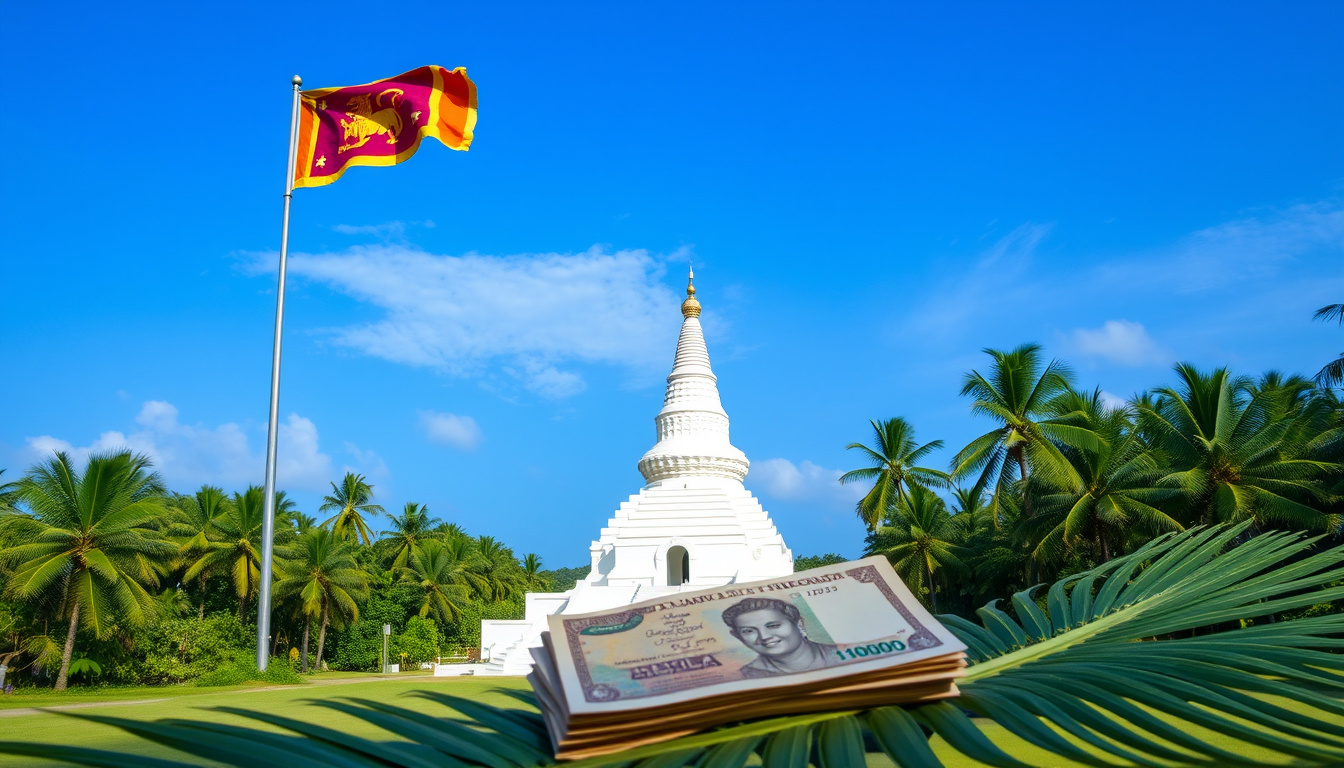
Sri Lanka, officially the Democratic Socialist Republic of Sri Lanka, is an island nation in the Indian Ocean, located south of India. The country has a unique dual‑capital arrangement: Sri Jayawardenepura Kotte serves as the legislative capital, while Colombo functions as the executive and judicial centre and remains the largest city and commercial hub. With a population of approximately 22 million, Sri Lanka is known for its rich cultural heritage, diverse ethnic groups, and a history that spans ancient kingdoms, colonial rule, and a recent civil war.
The island’s strategic position along ancient trade routes has shaped its multicultural society. Sinhala and Tamil are the official languages, and English is widely understood. Buddhism is the predominant faith, but the constitution recognises no official religion. Cricket dominates the sporting landscape, and the cuisine – centred on rice, curry, coconut, and spices – is celebrated worldwide.
This article presents a fact‑based snapshot of the country’s capital, languages, religion, currency, time zone, geography, famous food, cricket culture, and key destinations such as Kandy and the national parks, along with a look at the Sri Lankan Moor community.
What is the capital of Sri Lanka?
Sri Lanka’s legislative capital is Sri Jayawardenepura Kotte, a suburb of Colombo where the parliament sits. Colombo, however, remains the executive and judicial capital and the country’s largest city and commercial centre. The two cities are close enough that they are often treated as a single metropolitan area.
| Attribute | Value |
|---|---|
| Capital | Sri Jayawardenepura Kotte (administrative), Colombo (commercial) |
| Official Languages | Sinhala, Tamil |
| Currency | Sri Lankan Rupee (LKR) |
| Population | Approx. 22 million |
- Sri Lanka is a multi‑ethnic island nation with Sinhalese (74%) and Tamil (15%) as the largest groups.
- Cricket is the most popular sport and a source of national pride, with the national team winning the 1996 World Cup.
- The country experienced a severe economic crisis in 2022‑2023, leading to widespread protests and a shift in political leadership.
- Tourism is a key industry, with attractions ranging from ancient cities (Kandy) to wildlife parks (Yala, Wilpattu).
- The Sri Lankan rupee (LKR) is the official currency, and the time zone is UTC+5:30.
| Attribute | Value |
|---|---|
| Official Name | Democratic Socialist Republic of Sri Lanka |
| Capital | Sri Jayawardenepura Kotte (administrative) |
| Largest City | Colombo |
| Official Languages | Sinhala, Tamil |
| Recognized Languages | English (as a link language) |
| Ethnic Groups | Sinhalese (74%), Tamil (15%), Moor (9%), others |
| Religions | Buddhism (70%), Hinduism (13%), Islam (10%), Christianity (7%) |
| Area | 65,610 km² (25,332 sq mi) |
| Population | ~22 million (2024 est.) |
| Currency | Sri Lankan Rupee (LKR) |
| Time Zone | UTC+5:30 (Sri Lanka Standard Time) |
| Calling Code | +94 |
| Internet TLD | .lk |
The time zone is Sri Lanka Standard Time (UTC+5:30), and the country uses the Sri Lankan rupee (LKR). Geographically, Sri Lanka is an island in the Indian Ocean, separated from the Indian subcontinent by the Gulf of Mannar and the Palk Strait. Britannica notes that the island’s location made it a vital stop on ancient maritime trade routes.
What languages are spoken in Sri Lanka?
Sinhala and Tamil are the two official languages, reflecting the country’s two largest ethnic groups. English serves as a link language, widely used in government, business, and education, especially in urban areas.
What is the main religion in Sri Lanka?
According to Britannica, Sri Lanka has no official religion. The 2012 census shows Buddhism as the majority faith (70%), followed by Hinduism (13%), Islam (10%), and Christianity (7%). Religious diversity is a hallmark of the society, with places of worship for all four faiths found across the island.
The figures above are from the 2012 census; recent changes may be minor but are not precisely updated. The constitution guarantees freedom of religion.
Who are the Sri Lankan Moors?
The Sri Lankan Moors are a distinct ethnic group, making up about 7% of the population according to CountryReports. They are predominantly Muslim, with historical roots in Arab and South Asian trade networks that operated along the Indian Ocean centuries ago. The term “Moor” is historical and sometimes debated, but it remains a standard classification in official demographics.
What is Sri Lanka famous for?
Sri Lanka’s global reputation rests on its ancient Buddhist heritage, stunning landscapes, and warm hospitality. The country is also famous for its tea, spices, and gemstones, but two aspects stand out in popular culture: cricket and food.
What is Sri Lanka cricket?
Cricket is the most popular sport in Sri Lanka and a major source of national pride. The national team won the ICC Cricket World Cup in 1996, and players like Muttiah Muralitharan and Sanath Jayasuriya are legends of the game. The sport unites the country across ethnic and linguistic lines. For more on cricket legends from the region, read about Imran Khan Pakistani – Cricket Legend, Ex-PM, Jailed Leader.
Sri Lanka has produced world‑class cricketers and regularly hosts international matches. The 1996 World Cup victory remains a defining moment in the nation’s sporting history.
What is the best food in Sri Lanka?
Sri Lankan cuisine is built around rice and curry, with an abundance of coconut, spices, and seafood. Signature dishes include hoppers (bowl‑shaped pancakes), kottu roti (chopped flatbread with vegetables and meat), and string hoppers. The use of spices such as cinnamon, cardamom, and cloves reflects the country’s historical role in the spice trade. Street food is vibrant, and each region has its own specialties.
What are the top national parks in Sri Lanka?
Sri Lanka is known for its protected areas and wildlife parks, though the provided research does not list specific parks. Widely recognised parks include Yala National Park, Wilpattu National Park, and Udawalawe National Park, all famous for elephant and leopard sightings. The country’s biodiversity is a major draw for eco‑tourists.
What is Kandy known for?
Kandy is widely regarded as Sri Lanka’s cultural capital. EBSCO notes that Kandy is considered the cultural heart of the country. Historically, it was the last royal capital of the pre‑colonial Sinhalese kingdom before British rule. The city is home to the Temple of the Tooth (Sri Dalada Maligawa), which houses a relic of the Buddha and is a major pilgrimage site. The annual Esala Perahera festival, featuring dancers, drummers, and decorated elephants, is one of the most spectacular cultural events in Asia.
National park boundaries and numbers can change over time. The most famous parks are Yala, Wilpattu, and Udawalawe, but visitors should check current information before planning a trip.
For a broader perspective on geography and the ocean that surrounds Sri Lanka, see the article on Sea Salinity – Global Map and Why Some Seas Are Saltier.
Key events in Sri Lanka’s history
- c. 2500 BCE – Indigenous settlement; early kingdoms arise.
- 1505‑1658 – Portuguese colonial rule begins.
- 1658‑1796 – Dutch colonization.
- 1796‑1948 – British colonial era (Ceylon).
- 1948 – Independence from British rule.
- 1972 – Republic declared; name changed to Sri Lanka.
- 1983‑2009 – Sri Lankan Civil War.
- 2019 – Easter bombings.
- 2022‑2023 – Economic crisis, protests, President resigns.
- 2024 – Presidential election and new government.
What is often misunderstood about Sri Lanka?
| Established information | Information that remains unclear |
|---|---|
| The administrative capital is Sri Jayawardenepura Kotte; Colombo is the commercial capital. | Many people mistakenly believe Colombo is the sole capital. |
| Religious demographics are from the 2012 census. | Recent changes may be minor but not precisely updated. |
| The Sri Lankan Moors are a distinct ethnic group of mainly Muslim faith. | The term “Moor” is historical and sometimes debated. |
| National parks boundaries and numbers can change. | The most famous are Yala, Wilpattu, and Udawalawe, but the exact list may vary. |
What is the broader context of Sri Lanka’s cultural and economic landscape?
Sri Lanka’s history is marked by ancient kingdoms, colonial rule by Portugal, the Netherlands, and Britain, and a 26‑year civil war (1983‑2009) that ended with a government victory. The legacy of the war still influences politics and ethnic relations. Culturally, the coexistence of Buddhism, Hinduism, Islam, and Christianity creates a rich tapestry of festivals and traditions. Economically, the country relies heavily on tourism, tea exports, and remittances. The 2022‑2023 economic crisis, triggered by foreign debt and poor policy, led to an IMF bailout and ongoing recovery efforts. Strategically, Sri Lanka’s location in the Indian Ocean makes it a point of interest for India and China, both of which have invested in infrastructure projects.
What authoritative sources provide information about Sri Lanka?
“Sri Lanka’s population is 22 million. About 74% of the population are Sinhalese, 15% are Tamil, and 9% are Moor.”
Wikipedia
“Sri Lanka is an island country in the Indian Ocean…”
Britannica
“Sri Lanka country profile – recent economic and political events.”
BBC News
Additional authoritative sources include the official tourism site, the CIA World Factbook, and Lonely Planet.
What is the outlook for Sri Lanka?
The country’s recovery depends on the success of the IMF program, debt restructuring, and a revival of tourism. Political stability under the new government, along with efforts toward national reconciliation, will shape the future. Sustainable tourism and wildlife conservation initiatives are expected to grow, and cricket development continues through youth programs and upcoming ICC events. The island’s strategic location will keep it relevant in regional geopolitics.
FAQ
What is the official name of Sri Lanka?
The official name is the Democratic Socialist Republic of Sri Lanka.
What is the largest city in Sri Lanka?
The largest city is Colombo, which also serves as the executive and judicial capital.
What is the currency of Sri Lanka?
The currency is the Sri Lankan rupee (LKR).
What is the time zone in Sri Lanka?
Sri Lanka uses Sri Lanka Standard Time, UTC+5:30.
What is the calling code for Sri Lanka?
The international calling code is +94.
What is the internet TLD for Sri Lanka?
The top-level domain is .lk.
What is the area of Sri Lanka?
Sri Lanka covers an area of 65,610 km² (25,332 sq mi).
What is the population of Sri Lanka?
The population is approximately 22 million (2024 estimate).
What is the main religion in Sri Lanka?
Buddhism is the majority religion (70%), but there is no official state religion.
What is Kandy famous for?
Kandy is the cultural capital, home to the Temple of the Tooth and the annual Esala Perahera festival.

Olivia Hartley is Business & Economy Correspondent at DailyCity.co.uk, reporting on the city economy, property, retail, hospitality and employment.