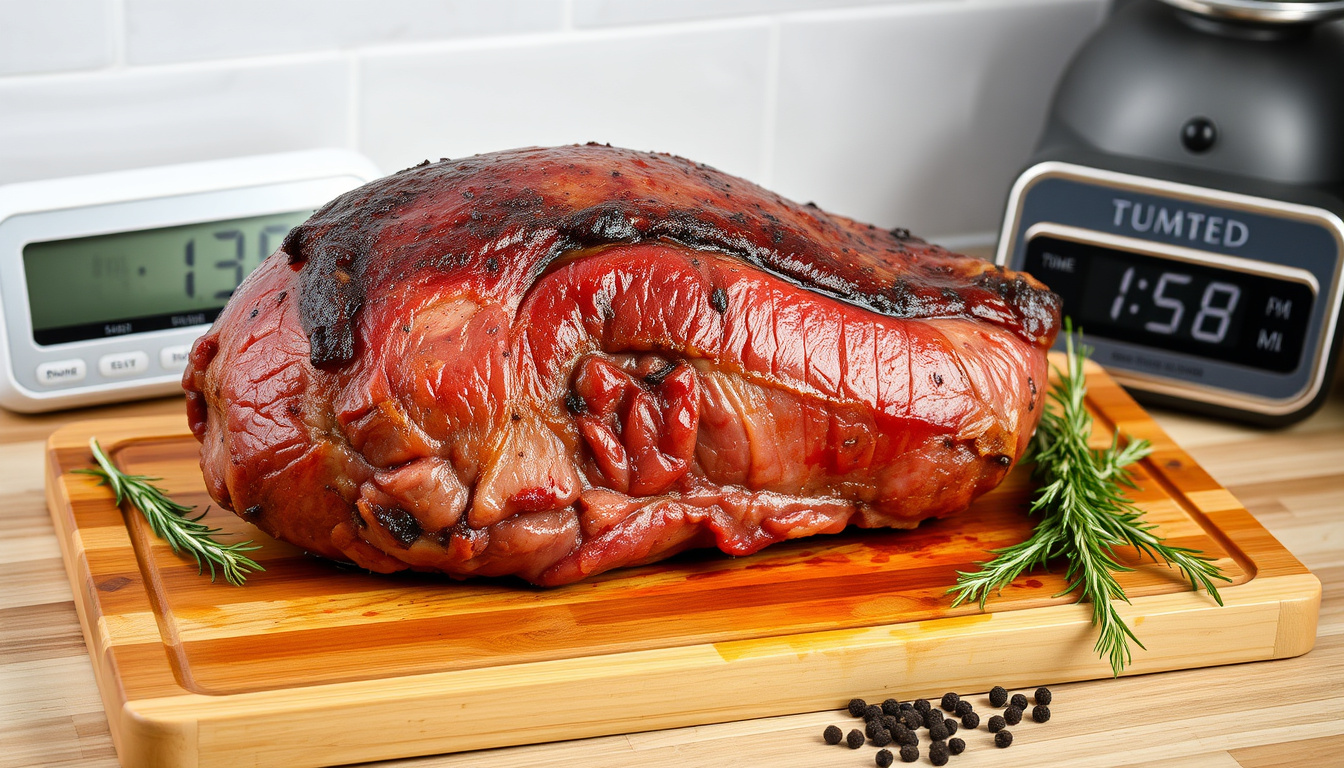
Calculating the perfect roast beef time doesn’t have to be guesswork. Whether working in kilograms or pounds, targeting rare or well-done, the finish depends on a handful of manageable variables. The most reliable approach combines a trusted time calculator with an accurate digital thermometer, but understanding the underlying math helps avoid overcooked or undercooked results.
How Long Do You Cook Roast Beef Per Kg?
| Calculation Base | Per kg (metric) OR per lb (imperial) |
| Temperature Range | 160°C–220°C (320°F–425°F) |
| Doneness Check | Internal temp: 52°C (rare) – 71°C (well done) |
| Resting Rule | Minimum 15–20 minutes before carving |
Key Insights for Metric Cooking
- Most UK sources use 40 min/kg at 180°C for medium doneness.
- BBC Good Food recommends 40 minutes per kg or 20 minutes per lb for the most accurate results.
- Rate of heat penetration is not strictly linear for very large roasts above 3 kg.
- Carryover cooking adds 2–5°C; therefore, meat should be removed before the target temp is reached.
- Oven calibration varies, so a standalone oven thermometer provides a more reliable reading.
- Fan ovens typically require a 10°C reduction in temperature.
Roast Beef Cooking Time Snapshot (180°C / 350°F)
| Weight | Cooking Time (180°C / 350°F) | Internal Temp (removed) | Rest |
|---|---|---|---|
| 1 kg (2.2 lb) | 40 min (medium) | 55°C / 130°F | 15 min |
| 1.5 kg (3.3 lb) | 60 min (medium) | 55°C / 130°F | 15–20 min |
| 2 kg (4.4 lb) | 1 hr 20 min (medium) | 55°C / 130°F | 20 min |
| Slow roast 2 kg | 3–4 hrs at 140°C | 55°C / 130°F | 15 min |
What Are the Roast Times for Beef Per Pound (lb)?
How Many Minutes Per Pound for Roast Beef?
The standard rate for a medium-rare finish is 20–25 minutes per pound at 325°F (163°C). A 3-pound roast, for example, requires roughly 60–75 minutes. The target pull temperature is 135–140°F (57–60°C), which allows for carryover cooking during the rest.
Cooking Times by Cut and Weight
Different cuts behave differently in the oven. Sirloin takes about 20–25 min/lb at 325°F, while prime rib, with its higher fat content, cooks faster at 15–17 min/lb. Chuck used for pot roast requires 30–40 min/lb at the same temperature. For detailed time tables by specific cut, the Certified Angus Beef time tables provide reliable benchmarks.
Standard roasting temperature is 325°F (163°C). For fan ovens, reduce the temperature by 10°C. Cooking below 325°F is considered slow roasting and requires significantly more time. Oven calibration often varies, so an independent oven thermometer is a worthwhile investment for consistent results.
How to Slow Roast Beef: Time and Temperature Guide
Low and Slow Roast Beef Cooking Time
Slow roasting typically takes 30–35 minutes per pound at 250°F (120°C). The gentler heat allows connective tissue to break down more gradually, which produces a more tender result, especially for tougher cuts.
What Temperature for Slow Roast Beef?
The minimum safe slow-cooking temperature is around 200°F (93°C). Never cook beef below 325°F unless deliberately slow roasting. Lower temperatures produce more tender results due to gentler cooking, but the trade-off is significantly longer total time.
Resting allows residual heat to distribute evenly and completes carryover cooking, raising the final temperature by 5–10°F (2–5°C). This is why you should remove the roast from the oven when it is 5°F below your target doneness temperature.
How Does the BBC Roast Beef Calculator Work?
How to Use the BBC Interactive Roasting Calculator
The BBC Food Roast Calculator allows you to select your meat type from a drop-down menu, input the weight, and receive calculated timings and temperatures. It covers beef, lamb, venison, pork, and poultry. The tool emphasizes using a digital cooking thermometer for accurate doneness assessment rather than relying solely on time calculations.
Similarly, the BBC Good Food Roast Timer provides an interactive interface with temperature guidelines for multiple meats. Both resources recommend checking the internal temperature 30 minutes before the estimated completion time to avoid overcooking.
What Is the Cooking Time for Topside Beef?
Topside is a lean cut from the hindquarters and follows the standard general guidelines. Use the standard 20–25 minutes per pound calculation and target medium-rare at 135–140°F (57–60°C). Check the temperature 30 minutes before the estimated completion time, as the lean nature of topside makes it prone to drying out if overcooked.
For more precision with specific cuts, the Tesco Cooking Calculator allows you to select your exact meat type and weight to get a recommended cooking duration.
A Step-by-Step Roast Beef Timeline
- 0 min: Remove beef from fridge 30 min before cooking to bring it closer to room temperature.
- 30 min: Preheat oven to correct temperature (standard 180°C / 350°F or slow 120°C / 250°F).
- 45 min: Season beef generously and place in a roasting pan.
- 60 min: Begin cooking based on the calculated time from your chosen method.
- Cooking end: Check internal temp with a probe thermometer inserted into the thickest part, away from bone.
- +15–20 min: Rest meat loosely covered with foil to allow carryover cooking.
- +35 min: Carve against the grain and serve.
Why Does Roast Beef Cooking Time Vary So Much?
| Established Information | Information That Remains Unclear or Variable |
|---|---|
| Cooking time increases with weight. | Bone-in roasts cook slower than boneless (up to 20% longer). |
| Higher oven temperature equals faster cooking. | Actual oven temperature may vary by +/- 10°C. |
| Internal temperature is the most reliable doneness indicator. | Thin vs thick cuts alter required time despite same weight. |
| Resting raises final temperature by 5–10°F. | Convection (fan) ovens cook faster than conventional by ~10%. |
| USDA recommends minimum 145°F (63°C) with a 3-minute rest. | Joint shape affects time, and irregular shapes may cook differently than calculated times suggest. |
Trusting the dial alone can lead to disappointment. An oven set to 180°C might actually be running at 170°C or 190°C. Using a standalone oven thermometer is the only way to confirm the actual temperature your roast is cooking at.
What Makes a Good Roast Beef Cooking Time Calculator?
The market for online roasting calculators is dominated by simple interactive tools from major publishers like BBC, Tesco, and Stourhead. While these tools provide quick answers, most lack deep editorial context about why times differ by cut or method. No single result previously provided a full hybrid resource that combines a tool, a doneness chart, slow roast guidance, and an FAQ. Users searching for this information are in the planning stage and desire accuracy to avoid undercooking or overcooking their meat.
Which Sources Provide Reliable Roast Beef Cooking Times?
Multiple reputable sources offer free roasting calculators and guidelines. The BBC Good Food Roast Timer and BBC Food Roast Calculator are considered highly authoritative due to their editorial oversight and testing. The USDA Beef Temperature Guide provides official food safety temperature minimums, while the UK Food Standards Agency outlines safe cooking practices for beef. These sources together cover both the culinary best practices and the regulatory safety standards.
What Is the Best Way to Ensure Perfectly Cooked Roast Beef?
The most reliable method combines a trusted time calculation with a digital meat thermometer. Account for carryover cooking by removing the roast 5°F below your target temperature, and always rest the meat for at least 15 minutes before carving. For more detail on assessing readiness without a digital display, see how to check doneness without a thermometer.
Frequently Asked Questions
Can I cook roast beef without a thermometer?
Yes, use a skewer or knife to pierce the meat and inspect the juices. Pale gold and clear juices indicate desired doneness, while pink or red juices suggest undercooking.
What is the difference between fast roast and slow roast?
Fast roasting uses temperatures around 180°C (350°F) and takes 20-25 min/lb. Slow roasting uses 120°C (250°F) and takes 30-35 min/lb, producing more tender results.
How long can roast beef rest before carving?
Small joints should rest for at least 10 minutes, while larger roasts require 20–30 minutes. Resting allows juices to redistribute and completes carryover cooking.
Should I sear my roast beef before roasting?
Searing adds flavor through the Maillard reaction but also adds approximately 15 minutes to the total cooking time. It is optional for most standard roasts.
Do I need to baste roast beef while cooking?
Basting is not essential for cooking, but it can add moisture and flavor to the surface. Opening the oven frequently to baste can lower the oven temperature.
How long to cook a roast beef at 350°F?
At 350°F, use 20–25 minutes per pound for medium-rare (135°F internal). A 3-pound roast takes about 60–75 minutes at this temperature.
What internal temperature for medium-rare roast beef?
For medium-rare, target an internal temperature of 135°F (57°C) when removed from the oven. The temperature will rise to about 140°F (60°C) during resting.
How do I calculate roast beef cooking time without a calculator?
Use the standard rule: 40 minutes per kg or 20 minutes per lb at 180°C for medium. Adjust up or down by 5 minutes per kg for rare or well-done.
Does bone-in affect cooking time?
Yes, bone-in roasts can take up to 20% longer to cook because the bone conducts heat and slows penetration into the meat.
What is carryover cooking?
Carryover cooking is the continued rise in internal temperature after the meat is removed from the oven. It typically adds 5–10°F (2–5°C) during resting.

Sophie Kendall is Culture & Events Editor at DailyCity.co.uk, covering restaurants, nightlife, theatre, exhibitions, festivals and city life.