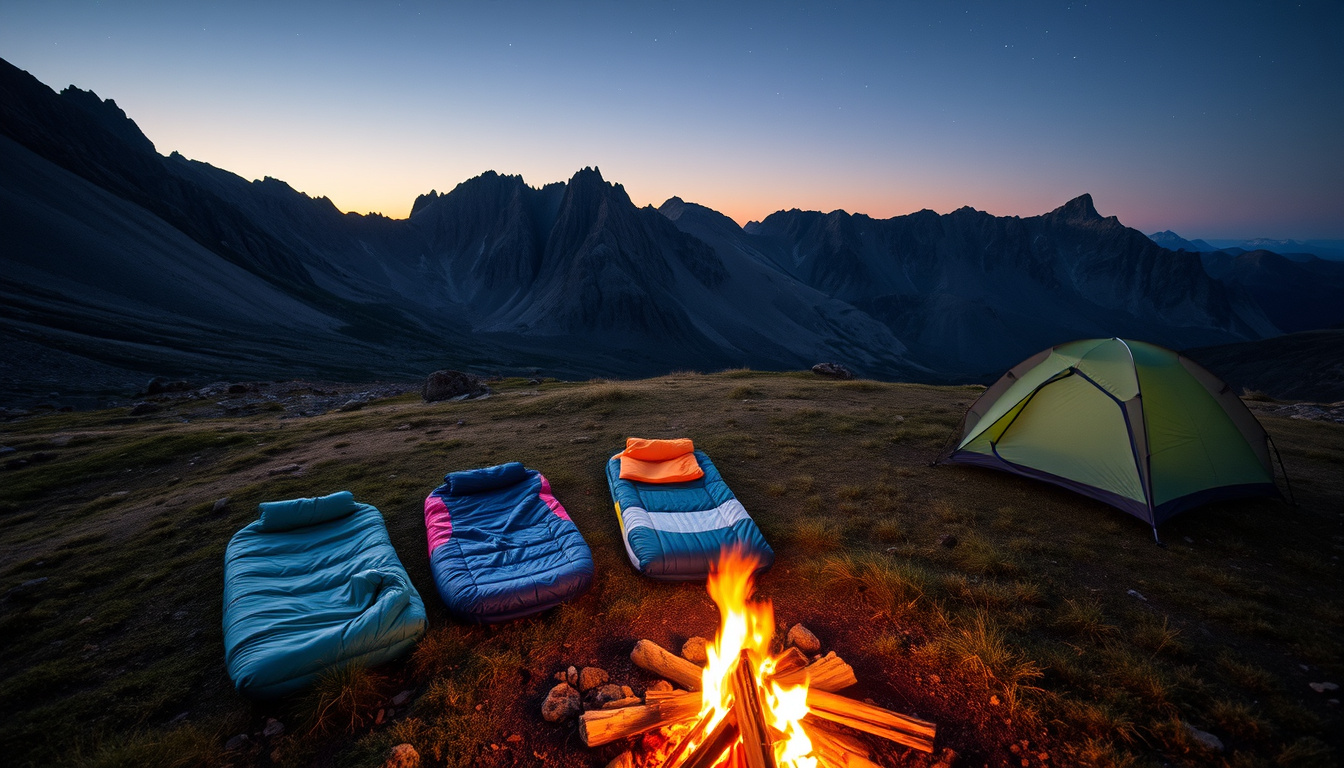
Choosing a sleeping bag can feel overwhelming, with technical terms like EN ratings, fill power, and season classifications. The right bag depends on where you plan to camp, the time of year, and your personal sleeping style.
For most UK campers, a 3-season bag with a comfort rating around -5°C offers the best balance of warmth and weight. Winter mountaineers and backpackers, however, will need specialised gear. This guide breaks down the key decisions so you can confidently select the best sleeping bag for your next adventure.
Which Sleeping Bag Is Best for 4-Season Camping?
A 4-season sleeping bag is built for winter, alpine conditions, and extreme cold. These bags typically carry a comfort rating of -15°C or lower. They are heavier and bulkier than 3-season alternatives, making them overkill for milder weather but essential when temperatures drop well below freezing.
Overview Grid: Key User Needs
Understand EN/ISO temperature ratings and choose between 1-2, 3, and 4 season bags.
Down vs synthetic: weight, packability, and moisture resistance.
Mummy vs rectangular, fit for tall adults, kids, babies, and double bags.
Cleaning methods and storage tips to maximise lifespan.
Key Insights for Winter Camping
- For UK camping, a 3-season bag with a comfort limit around -5°C is the most versatile choice for most people.
- Synthetic bags perform better in damp conditions; down offers superior weight and compressibility.
- Double sleeping bags often have lower warmth ratings due to shared body heat space.
- Baby sleeping bags must follow British Safety Standards (BS EN 16780).
- Price does not always equal warmth — always check the comfort rating, not just the survival limit.
Quick Facts at a Glance
| Type | Season | Comfort Temp | Fill | Weight Range | Best For |
|---|---|---|---|---|---|
| Summer bag | 1 season | 10°C+ | Synthetic/Down | <1 kg | Indoor / hostel |
| 3-season bag | 2-3 season | -5 to 0°C | Synthetic/Down | 1-1.5 kg | General camping |
| Winter bag | 4 season | -15 to -5°C | Down (high fill) | 1.5-2 kg | Mountain / winter |
| Ultralight bag | Summer/3-season | 0-5°C | Down | < 800 g | Backpacking |
How Do I Choose the Right Sleeping Bag for My Needs?
Selecting the correct bag starts with understanding the environment you will face. The biggest trade-off is between warmth and weight. A winter expedition bag can weigh over 2 kg, while an ultralight summer quilt may be under 500 grams.
Down vs Synthetic: Which Fill Is Right?
Down insulation offers a superior warmth-to-weight ratio and compresses more easily. It lasts longer if cared for properly. However, down loses its insulating properties when wet. Modern treatments like Infinium help with moisture resistance but do not make down fully waterproof.
Synthetic fill performs better when damp, dries faster, and is cheaper. The Marmot Trestles Elite Eco 20 is a highly regarded synthetic option. For wet climates or budget-conscious campers, synthetic is often the smarter choice.
Understanding Temperature Ratings
Temperature ratings follow either EN 13537 or the newer ISO 23537 standard. These tests provide three key numbers: the comfort rating, the limit rating, and the extreme rating. The comfort rating tells you the lowest temperature at which an average person can sleep without feeling cold. The limit rating is for survival and not a comfortable sleep target.
Real-world warmth also depends on your sleeping pad. A pad with a low R-value will let cold seep through from the ground, making any bag feel colder. Always match your bag’s insulation with an appropriate pad.
For most UK weather, a 3-season bag with a comfort rating between 0°C and -5°C is sufficient. Adding a liner can extend its range by a few degrees for early spring or late autumn trips.
Temperature Ranges in Practice: Comfort vs Limit
Bags labelled “4-season” often claim extreme ratings that sound impressive but are misleading. A bag with a limit rating of -23°C (like the Rab Andes Infinium 800) is suitable for serious expedition use, not for a standard UK winter. The therm-a-Rest Parsec 0F, rated to -10°C, offers a more realistic choice for cold winter camping without unnecessary bulk.
Ultralight Sleeping Bags
Ultralight bags prioritise minimal weight, using high-fill-power down and minimalist designs. The Zenbivy Ultralight Bed is a top contender, while the Feathered Friends Swallow UL 20 offers a premium blend of warmth and low weight. These bags are ideal for backpackers who count every gram but still need comfort at moderate temperatures.
What Size Sleeping Bag Do I Need for an Adult or Baby?
Size for Tall Adults
Standard sleeping bags typically fit people up to 183 cm (6 feet). Taller adults need “long” or “extra long” versions, which usually measure 210-215 cm in length. The width also matters — some mummy bags are narrow, which can feel restrictive for broader shoulders.
Baby Sleeping Bag Safety
Baby sleeping bags must comply with British Safety Standard BS EN 16780. The NHS recommends using a well-fitting, sleeved baby sleeping bag instead of loose bedding to reduce the risk of SIDS. Always choose the correct tog rating for the room temperature and ensure the bag is the right size for the baby’s weight.
Double Sleeping Bags for Couples
Double sleeping bags are convenient for couples, but they have lower warmth ratings because body heat disperses across a larger area. Many users find them comfortable for summer but insufficient for cold nights. An alternative is to zip two single bags together, which gives each person their own insulation.
Children’s sleeping bags are sized by height rather than age. A bag that is too large can be cold and unsafe, especially for younger children. Look for dedicated kids’ models or small adult bags for older children.
Best Brands and Budget Options: Decathlon, Sea to Summit & More
Top Recommendations by Category (2026)
| Category | Recommended Sleeping Bag | Temperature Rating | Price (UK) | Weight | Key Feature |
|---|---|---|---|---|---|
| Best 4-Season Down (UK) | Simond Makalu II | -23°C (approx.) | £800 (Rab Andes) | 1.36 kg | Best 4-season down |
| Best 4-Season Overall | Rab Andes Infinium 800 | -23°C / -10°F | £800 | 1.36 kg | Lowest temp rating for price |
| Best Value (3-Season) | Exped Terra 15 | 15°F / -9°C | $200 | N/A | Excellent value, reliable |
| Best Budget (Under £150) | Snugpak Softie Exp. 5 | -15°C / 5°F | £150 | 2.3 kg | Extreme warmth, budget |
| Best Ultralight | Zenbivy Ultralight Bed | N/A | N/A | Ultra-light | Best ultralight down |
| Best Synthetic | Marmot Trestles Elite Eco 20 | 20°F / -6°C | $189 | N/A | Best synthetic option |
| Best Comfort | Zenbivy Light Bed | N/A | $340+ | N/A | Best for comfort |
| Best 3-Season Down | Simond MT900 (5°C) | 5°C / 41°F | N/A | N/A | Best 3-season down |
Brands Overview
Rab is well-regarded for high-quality down bags like the Andes 800 and Mythic, excellent for extreme cold. Sea to Summit offers the Spark Pro -9 as a strong 4-season option. Simond’s Makalu II is recognised as the top 4-season down bag for the UK, while the MT900 is a popular 3-season choice.
Zenbivy specialises in comfort-oriented designs with its Ultralight and Light Beds. OEX’s Leviathan EV 900 provides solid budget down performance at a low price. Snugpak’s Softie Expansion 5 delivers extreme warmth under £150, making it a good choice for cold-weather camping on a tight budget.
A higher price does not always guarantee a warmer bag. Always check the comfort temperature rating rather than the extreme rating. The OEX Leviathan EV 900, for example, offers a very low temperature rating for its cost point.
Evolution of Sleeping Bag Technology
- Pre-1900s: Early campers used wool blankets and animal skins for insulation.
- 1900s-1930s: The first down-filled sleeping bags appeared, designed for mountaineering.
- 1960s: Synthetic fills like Hollofil and Polarguard were introduced, offering wet-weather alternatives.
- 1990s: EN 13537 standard established for consistent temperature testing.
- 2000s: Ultralight designs using high-fill-power down (800+ fill) revolutionised backpacking.
- 2020s: Water-resistant down treatments and performance synthetic blends become widespread.
What Do We Know for Certain About Sleeping Bags?
| Established Information | What Remains Unclear |
|---|---|
| Temperature ratings are tested per EN 13537 or ISO 23537 standards. | Real-world warmth varies by personal metabolism, tent type, and sleeping pad. |
| Down insulation loses loft when wet; synthetic retains warmth when damp. | Seasonal classifications are marketing terms — always check the comfort rating. |
| Baby sleeping bags reduce SIDS risk when used correctly (NHS advice). | Brand-specific models change yearly; online reviews may become outdated quickly. |
How Shape Affects Warmth and Comfort
Mummy-shaped bags are the most thermally efficient because they minimise internal air space. Semi-rectangular bags offer more room but lose heat faster. Rectangular bags are spacious but suited only for warm-weather camping. Hooded designs add significant warmth, especially for side sleepers. A bag without a hood can be paired with a separate beanie or balaclava.
The shape also influences pack size. Mummy bags pack smaller than rectangular ones, an important factor for backpackers. If you sleep on your back and don’t mind a snug fit, a mummy bag is usually the best choice.
Sources and Expert Consensus
Real-world warmth varies by personal metabolism, tent, and sleeping pad — always test your gear before a big trip.
Outdoor industry experts (e.g., TGO magazine reviews)
Baby sleeping bags reduce SIDS risk when used correctly according to NHS advice on safe sleeping.
NHS advice on safe sleeping for babies
Summary: Your Next Step
The best sleeping bag for you depends on where and when you camp. Measure your height and sleeping style before buying. Pair your bag with an appropriate sleeping pad. Check current best-sellers and seasonal sales for the best value. For more detailed comparisons, explore our Sleeping bags buying guide.
Frequently Asked Questions
Can I wash a down sleeping bag?
Yes, but use a front-loader with down-specific cleaner and low heat drying.
What size sleeping bag should I get for a 6’5″ male?
Look for ‘long’ or ‘extra long’ models; typical length 210-215 cm.
How often should I replace my sleeping bag?
Every 5-10 years depending on use and loft retention.
Is a 4 season sleeping bag too hot for summer?
Yes, you’ll likely overheat. Use a summer bag or open the zipper.
What is the difference between a sleeping bag and a quilt?
Quilts are lighter, footless, and often used by ultralight backpackers.
What is the best Decathlon sleeping bag under £50?
Decathlon offers several budget synthetic options. Check their website for current models and reviews.
Can you use a summer sleeping bag in winter?
Not safely. A summer bag lacks insulation for freezing temperatures. Add a thermal liner for mild winter nights.
Are down sleeping bags safe for babies?
Only if the bag meets BS EN 16780. Always follow NHS safe sleep guidelines.

Sophie Kendall is Culture & Events Editor at DailyCity.co.uk, covering restaurants, nightlife, theatre, exhibitions, festivals and city life.