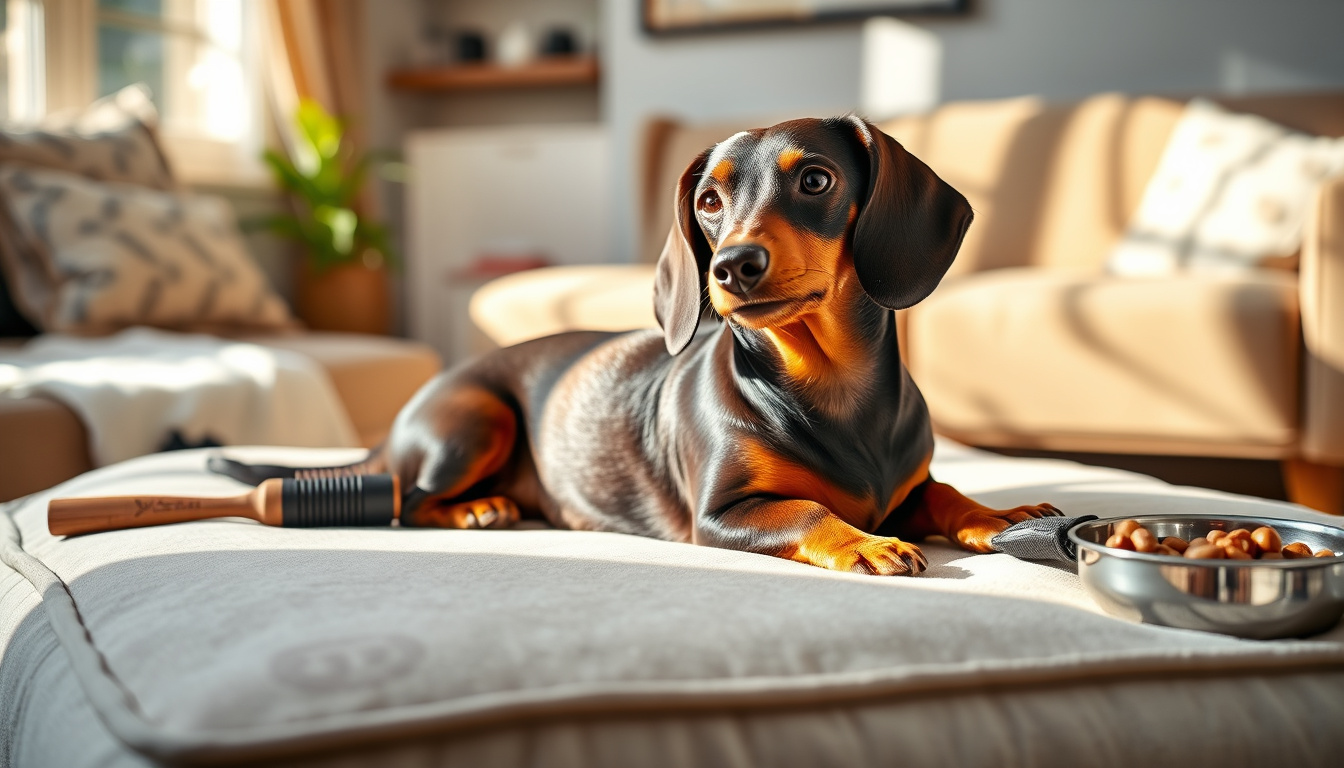
The Mini Dachshund has become one of the most sought-after small breeds in the UK, prized for its compact size, bold personality, and distinctive silhouette. Originally bred in Germany to hunt badgers, this miniature version of the standard Dachshund now thrives in city apartments and country homes alike. But before bringing one home, prospective owners need to understand the breed’s specific needs, costs, and health considerations.
This guide covers everything from where to find puppies and what you’ll pay, to the three coat types, key health risks, and training tips. Whether you’re a first-time owner or adding to a family, the information below will help you decide if a Mini Dachshund is the right fit.
| Mini Dachshund at a Glance | |
|---|---|
| Size | Miniature: under 12 lbs, 5–7 inches tall |
| Coat Types | Smooth, Long, Wire (plus colours like dapple, black & tan, red) |
| Lifespan | 12–16 years |
| Temperament | Loyal, curious, sometimes stubborn |
- Mini Dachshunds are one of the most popular small breeds in the UK, especially for apartment living.
- Their three coat types require different grooming routines – smooth coats are low maintenance, long coats need daily brushing.
- Back problems (IVDD) are a major health concern – prevention through weight management and avoiding jumping is key.
- Prices vary widely: £500–£2,000+ depending on coat, pedigree, and breeder reputation.
- First-time owners often underestimate their stubbornness – early training and socialization are critical.
| Mini Dachshund Fast Facts | |
|---|---|
| Origin | Germany (badger hunter) |
| Weight | Under 12 lbs (miniature), 16–32 lbs (standard) |
| Coat Colors | Red, black & tan, chocolate, dapple, brindle |
| Exercise Needs | Moderate – 30 min daily walks |
| Common Health Issues | IVDD, obesity, dental problems |
| Good with Children | Better with older, respectful children |
| Barking | High – can be vocal |
Where to Find Mini Dachshund Puppies for Sale
Finding a well-bred Mini Dachshund requires research. Reputable breeders are the safest route, while rescue organisations offer an alternative. The breed’s popularity has led to increased demand, making it important to verify the source carefully. Breeder listings on sites like Pets4Homes show current availability, but always verify Kennel Club registration and health clearances. The Royal Kennel Club provides the official breed standard and can help identify reputable breeders.
How Much Does a Mini Dachshund Cost?
The purchase price is only the beginning. A Mini Dachshund from a reputable breeder typically costs between $500 and $1,500, according to Lemonade Pet Insurance. This usually includes initial health checks, vaccinations, early socialisation, and pedigree papers. Adoption from a shelter or rescue runs $50–$300 and often covers basic vet care and spay/neuter.
Initial and Ongoing Costs
First-year veterinary care adds $300–$500, essential supplies (crate, bed, leash) $100–$300, and training classes $100–$200. Monthly expenses for food, insurance, and routine care can reach £50–£100. The breed’s predisposition to back problems means pet insurance is strongly recommended.
Exact prices vary by region, breeder reputation, and coat type. Long-haired and wire-haired varieties often cost more than smooth. Dapple colouring can also increase the price.
What Are the Different Coat Types of Mini Dachshunds?
The breed comes in three distinct coat varieties, each with its own grooming demands. Understanding these differences is essential for long-term care.
Smooth Coat
The smooth coat is short, shiny, and sleek. Weekly brushing removes loose hair. Because it is thin, owners are advised to provide a sweater in cold weather. Shedding is minimal.
Long-Haired Coat
Soft, silky, and flowing, the long-haired version requires brushing two to three times per week. Daily combing is recommended to prevent matting, especially around the ears and chest feathering.
Wire-Haired Coat
Rough and coarse with characteristic beard and eyebrows, the wire coat needs weekly brushing plus hand-stripping two to three times per year. Machine clipping damages the texture and should be avoided.
All coat types require routine ear cleaning – Dachshunds produce more wax than average dogs – along with regular teeth brushing and nail trimming.
What Is the Difference Between Miniature and Standard Dachshunds?
The key difference is size. The American Kennel Club defines a Miniature Dachshund as weighing 11 pounds or less at 12 months of age, while standards weigh 16–32 pounds. Miniatures stand 5–6 inches tall; standards are larger.
Which Is Better for Apartments?
The Mini Dachshund is generally better suited to apartment living due to its smaller size and lower exercise needs – 30–45 minutes of daily activity. However, both varieties can adapt to compact spaces with proper training.
Tweenies
Dogs weighing 12–16 pounds are informally called “Tweenies” and are not considered pure Miniatures by breed standards. Prospective buyers should confirm weight guarantees with breeders.
Regardless of size, all Dachshunds are prone to intervertebral disc disease. Strict weight management and preventing jumps on and off furniture are critical to reducing risk.
History of the Mini Dachshund
- 15th century: Dachshund ancestors used for hunting badgers in Germany.
- 1870s: Breed refined and standardised; miniature version developed for smaller prey.
- 1885: Dachshund recognised by the American Kennel Club.
- 1900s: Popularity spreads across Europe and North America.
- 2023: Mini Dachshund ranks among top 10 most popular breeds in the UK.
What We Know About Mini Dachshunds and What’s Still Uncertain
| Well Established | Still Uncertain |
|---|---|
| Mini Dachshunds are predisposed to intervertebral disc disease (IVDD). | Exact price range fluctuates by region, breeder, and demand. |
| They come in three coat varieties (smooth, long, wire). | Long-term effects of selective breeding on health are still being studied. |
| Lifespan averages 12–16 years with proper care. | Some anecdotal claims about temperament differences between coat types are not scientifically proven. |
Why Mini Dachshund Popularity Is Rising
The Mini Dachshund’s compact size, expressive personality, and moderate exercise needs make it ideal for urban living. Social media trends have amplified its appeal, but the breed’s stubbornness and health concerns require informed ownership. Recent UK data shows a 40% increase in Google searches for “Mini Dachshund puppies for sale” since 2020, driven by pandemic pet adoption. However, the rise in popularity also raises concerns about unethical breeding, making breeder vetting more important than ever.
Expert Sources and Quotations
The following sources provided authoritative information for this guide:
- Royal Kennel Club – Official breed standard for Miniature Smooth Haired Dachshund
- Bella & Duke – Veterinary-backed nutrition guide for Dachshunds
- The Dog’s Way – Professional behaviourist insights on training
- American Kennel Club – Dachshund breed information and history
Next Steps for Potential Owners
Before committing, research breeders thoroughly, check Kennel Club registration, and prepare your home with ramps to protect your dog’s spine. Budget for ongoing costs and choose a coat type that matches your grooming commitment. Early training and socialisation will make the transition smoother. For more on outdoor activities with your new companion, see our guide on Horseback Riding in the UK – A Beginner’s Guide to Costs and Locations.
Frequently Asked Questions
Are Mini Dachshunds good with children?
They can be, but due to their delicate backs, they are best suited for homes with older, gentle children.
Do Mini Dachshunds bark a lot?
Yes, they are known for being vocal. Early training can help manage excessive barking.
How to groom a Mini Dachshund?
Smooth coats need occasional brushing; long coats require daily brushing and regular trims; wire coats need hand-stripping every few months.
What is the best food for a Mini Dachshund?
A high-quality, low-fat diet is recommended to prevent obesity. Look for food with real meat, no fillers, and appropriate calcium levels for bone health.
Are Mini Dachshunds easy to potty train?
They can be stubborn, so consistency and positive reinforcement are key. Crate training often helps.

Daniel Mercer is Urban Affairs Editor at DailyCity.co.uk, covering councils, City Hall, planning, transport and infrastructure across London and major UK cities.