Martin Luther King Jr. remains one of the most widely studied figures of the 20th century. A Baptist minister and civil-rights leader, he built a movement around the principle that justice could be achieved through nonviolent resistance. His leadership during the Montgomery Bus Boycott, his iconic “I Have a Dream” speech, and his steadfast moral clarity transformed American society and inspired human-rights movements around the world.
Born Michael King Jr. in Atlanta, Georgia, he grew up witnessing the harsh realities of racial segregation. This early encounter with injustice shaped the course of his life and his deep commitment to peaceful protest. King’s influence extended far beyond the American South, earning him the Nobel Peace Prize in 1964 and a permanent place in global history.
The following resource provides a comprehensive overview of his life, his core beliefs, his major writings, and the federal holiday established in his honor. All information is drawn from primary sources and institutional archives to ensure accuracy and depth.
Who Was Martin Luther King Jr.?
Key Insights
- King became the youngest Nobel Peace Prize laureate in 1964 at age 35.
- He helped organize the Montgomery bus boycott, a landmark protest that launched his national prominence.
- His “I Have a Dream” speech remains one of the most quoted speeches in American history.
- The federal holiday honoring him is observed on the third Monday of January each year.
- His assassination in 1968 transformed him into a lasting symbol of the civil rights movement.
Martin Luther King Jr. Snapshot Facts
| Field | Details |
|---|---|
| Full name | Martin Luther King Jr. (born Michael King Jr.) |
| Born | January 15, 1929, Atlanta, Georgia, USA |
| Died | April 4, 1968, Memphis, Tennessee, USA |
| Cause of death | Assassination (gunshot wound) |
| Role | Baptist minister and civil rights leader |
| Notable speech | “I Have a Dream” (August 28, 1963) |
| Award | Nobel Peace Prize (1964) |
| Federal holiday | Martin Luther King Jr. Day, third Monday in January |
When Was Martin Luther King Born and Died?
Martin Luther King Jr. was born on January 15, 1929, in Atlanta, Georgia, into a deeply religious family connected to Black Baptist traditions and social justice. His father, Martin Luther King Sr., was pastor of Ebenezer Baptist Church, and his mother was Alberta Williams King.
What Shaped His Early Life?
King encountered racial segregation early, including the loss of white childhood playmates after they began attending segregated schools. This experience left a lasting impression and informed his later commitment to racial equality. He married Coretta Scott on June 18, 1953, and together they had four children: Yolanda Denise, Martin Luther King III, Dexter Scott, and Bernice Albertine.
How Did His Education Influence His Path?
He earned a sociology degree from Morehouse College in 1948 and later studied theology at Crozer Theological Seminary. He received a doctorate from Boston University in 1955, where his studies helped shape his theological approach to social change.
King’s activism was deeply rooted in a combination of Christian theology and the nonviolent philosophy of Mahatma Gandhi. He believed that unearned suffering could be redemptive and that love—expressed through nonviolent direct action—was the most powerful weapon against oppression.
What Was Martin Luther King’s Most Famous Speech?
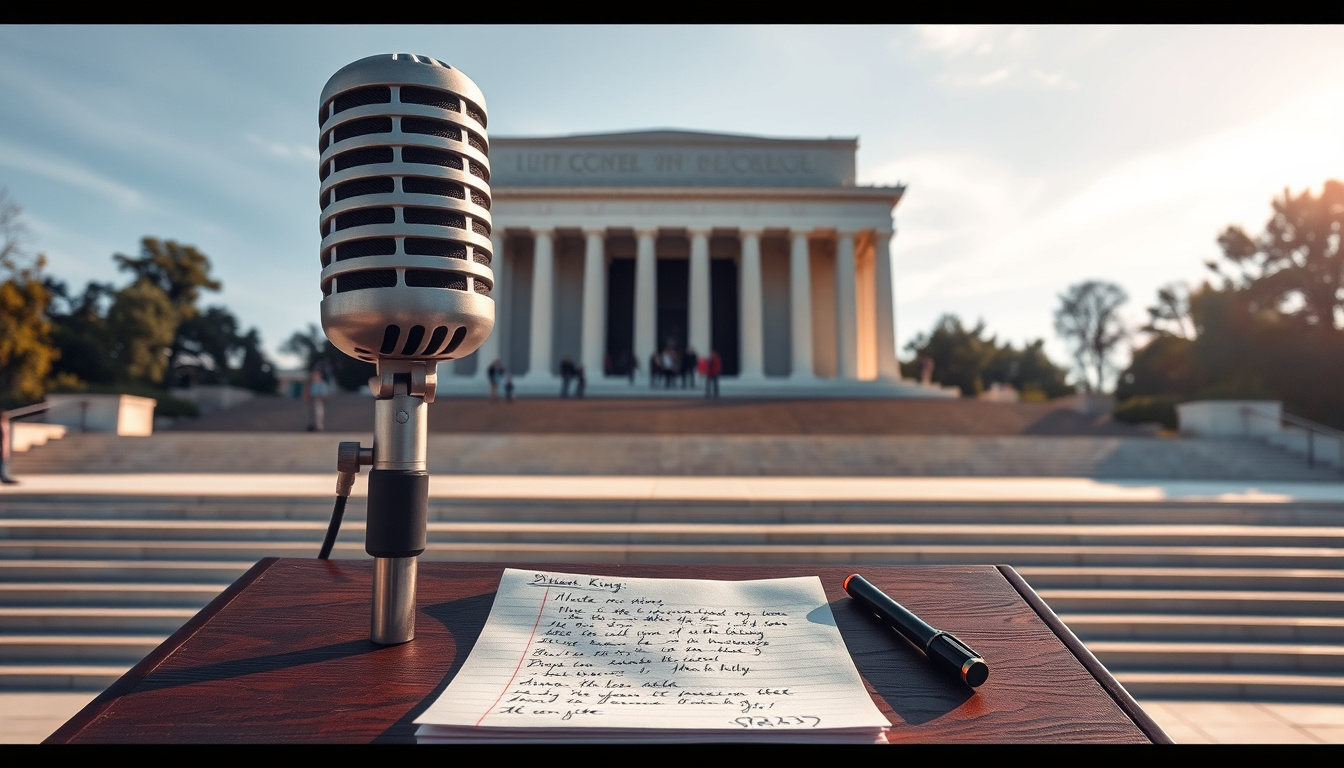
King delivered the “I Have a Dream” speech on August 28, 1963, during the March on Washington for Jobs and Freedom, from the steps of the Lincoln Memorial. Approximately 250,000 people attended the demonstration.
The Speech’s Core Message
The speech linked the nation’s founding ideals with the continuing reality of racial injustice. Its central vision was an America in which equality would be judged not by race but by character and citizenship. A famous passage expresses his hope that his children would live in a nation free from racial judgment.
Lasting Impact
The speech helped make King the most recognizable public voice of the American civil-rights movement and remains one of the most influential speeches in U.S. history. It solidified the March on Washington as a pivotal moment in the struggle for racial equality.
What Are the Most Famous Martin Luther King Quotes?
While many quotes are widely circulated, shorter versions are often edited. Speech writers and scholars recommend verifying quotations against King’s recorded sermons and published books, which provide the necessary context for his words.
Numerous phrases attributed to King on social media are either paraphrased or completely fabricated. For the most reliable source of his words, refer directly to the archives at the King Institute.
Frequently attributed King quotations include a mix of lines from his speeches, sermons, and letters:
- “I have a dream that my four little children will one day live in a nation where they will not be judged by the color of their skin but by the content of their character.”
- “The time is always right to do what is right.”
- “Injustice anywhere is a threat to justice everywhere.”
- “Darkness cannot drive out darkness; only light can do that. Hate cannot drive out hate; only love can do that.”
- “Our lives begin to end the day we become silent about things that matter.”
- “Faith is taking the first step even when you don’t see the whole staircase.”
- “The arc of the moral universe is long, but it bends toward justice.”
What Books Did Martin Luther King Write?
King was a prolific writer whose works range from theological sermons to strategic accounts of the civil rights movement. His major books include:
- Stride Toward Freedom: The Montgomery Story (1958) — an account of the Montgomery Bus Boycott and his philosophy of nonviolent resistance.
- The Measure of the Man (1958) — a short theological and philosophical work.
- Strength to Love (1963) — a collection of sermons emphasizing love, faith, courage, and nonviolence.
- Why We Can’t Wait (1964) — an explanation of the Birmingham Campaign and the urgency of civil-rights reform.
- Where Do We Go from Here: Chaos or Community? (1967) — a discussion of economic justice, Black Power, racism, and the future of the movement.
- The Trumpet of Conscience (1968) — based on lectures addressing war, racism, poverty, and moral responsibility.
- A Testament of Hope: The Essential Writings and Speeches (1986, posthumous) — a major collection of King’s writings and speeches.
His most influential longer work is the “Letter from Birmingham Jail,” written in 1963 while imprisoned for participating in civil-rights demonstrations. The letter argues that people have a moral responsibility to resist unjust laws and criticizes calls for African Americans to postpone direct action.
What Key Events Shaped His Life and Legacy?
- 1929: Martin Luther King Jr. was born in Atlanta, Georgia.
- 1955: Helped lead the Montgomery bus boycott.
- 1957: Helped found the Southern Christian Leadership Conference (SCLC).
- 1963: Delivered the “I Have a Dream” speech during the March on Washington for Jobs and Freedom.
- 1964: Awarded the Nobel Peace Prize.
- 1965: Led civil rights marches, including the Selma-to-Montgomery march for voting rights.
- 1968: Assassinated in Memphis, Tennessee, on April 4.
- 1983: Martin Luther King Jr. Day was signed into law as a U.S. federal holiday.
What Is Certain and What Remains Unclear About His Story?
Most of the key facts about Martin Luther King Jr.’s life are well-established by historical records. However, some areas continue to generate discussion among researchers and the public.
Established Facts
- Martin Luther King Jr. was born on January 15, 1929.
- He died on April 4, 1968.
- He delivered the “I Have a Dream” speech on August 28, 1963.
- He was awarded the Nobel Peace Prize in 1964.
- Martin Luther King Jr. Day is a U.S. federal holiday.
Remains Unclear or Disputed
- James Earl Ray was convicted of King’s assassination, but public conspiracy theories persist; the legal conviction remains the official outcome.
- Some popular quotes are loosely paraphrased or misattributed; exact wording should be verified with the King Institute or published speeches.
What Historical Context Defined Martin Luther King’s Work?
King operated in the post-Brown v. Board of Education era, a time of intense backlash to the desegregation of schools. The system of legal segregation, known as Jim Crow, was deeply entrenched across the Southern United States, and disenfranchisement of Black voters was widespread.
His philosophy of nonviolent civil disobedience was heavily influenced by Mahatma Gandhi’s campaigns in India and his own Christian faith. This approach was implemented through carefully organized boycotts, marches, and sit-ins that drew national attention to racial violence and legal inequality.
The cultural landscape of the mid-20th century saw the rise of numerous iconic Black artists and public figures who shared King’s Georgia roots and shaped the world he worked to change. Little Richard – A Complete Biography of the Rock Pioneer offers a look at another major figure from this era.
Where Can You Find His Most Important Speeches and Writings?
“I have a dream that my four little children will one day live in a nation where they will not be judged by the color of their skin but by the content of their character.”
— Martin Luther King Jr., “I Have a Dream” speech, March on Washington, August 28, 1963
“Injustice anywhere is a threat to justice everywhere.”
— Martin Luther King Jr., Letter from Birmingham Jail, 1963
The King Institute at Stanford University maintains the most comprehensive archive of King’s sermons, speeches, and writings. The Nobel Prize official biography provides a reliable factual overview of his life and work. The National Archives holds key records related to the civil rights movement and the legislation King helped inspire.
What Is the Lasting Legacy of Martin Luther King Jr.?
King’s legacy is enshrined in the landmark civil rights legislation he helped inspire, including the Civil Rights Act of 1964, the Voting Rights Act of 1965, and the Fair Housing Act of 1968. His commitment to nonviolence continues to influence social justice movements worldwide. Modern filmmakers and artists continue to explore his legacy; Spike Lee – Biography, Iconic Films and Net Worth provides context on a director whose work frequently grapples with the same themes King championed. Every third Monday in January, Martin Luther King Jr. Day serves as a national day of service and reflection on the ongoing pursuit of racial equality.
Frequently Asked Questions
What does the search query “Martin Luther King in English” mean?
It is commonly used as a search query for an English-language biography or explanation of Martin Luther King Jr.’s life and importance.
Why is Martin Luther King Jr. Day observed in January?
The holiday is observed on the third Monday of January each year, close to King’s birthday on January 15.
How old was Martin Luther King when he died?
He was 39 years old at the time of his assassination on April 4, 1968.
Where was Martin Luther King assassinated?
He was assassinated while standing on the balcony of the Lorraine Motel in Memphis, Tennessee.
What was the Poor People’s Campaign?
The Poor People’s Campaign was a 1968 movement King was organizing to demand economic justice for poor Americans when he was killed.
Did Martin Luther King win any other major awards besides the Nobel Peace Prize?
He received numerous honors, but the Nobel Peace Prize in 1964 is his most internationally recognized award.
What is the Southern Christian Leadership Conference (SCLC)?
The SCLC is a civil rights organization founded in 1957 by King and other activists to coordinate nonviolent campaigns against segregation and racial inequality.
Who was Coretta Scott King?
Coretta Scott King was King’s wife and a prominent civil rights activist in her own right, advocating for equality and peace after his death.

Sophie Kendall is Culture & Events Editor at DailyCity.co.uk, covering restaurants, nightlife, theatre, exhibitions, festivals and city life.