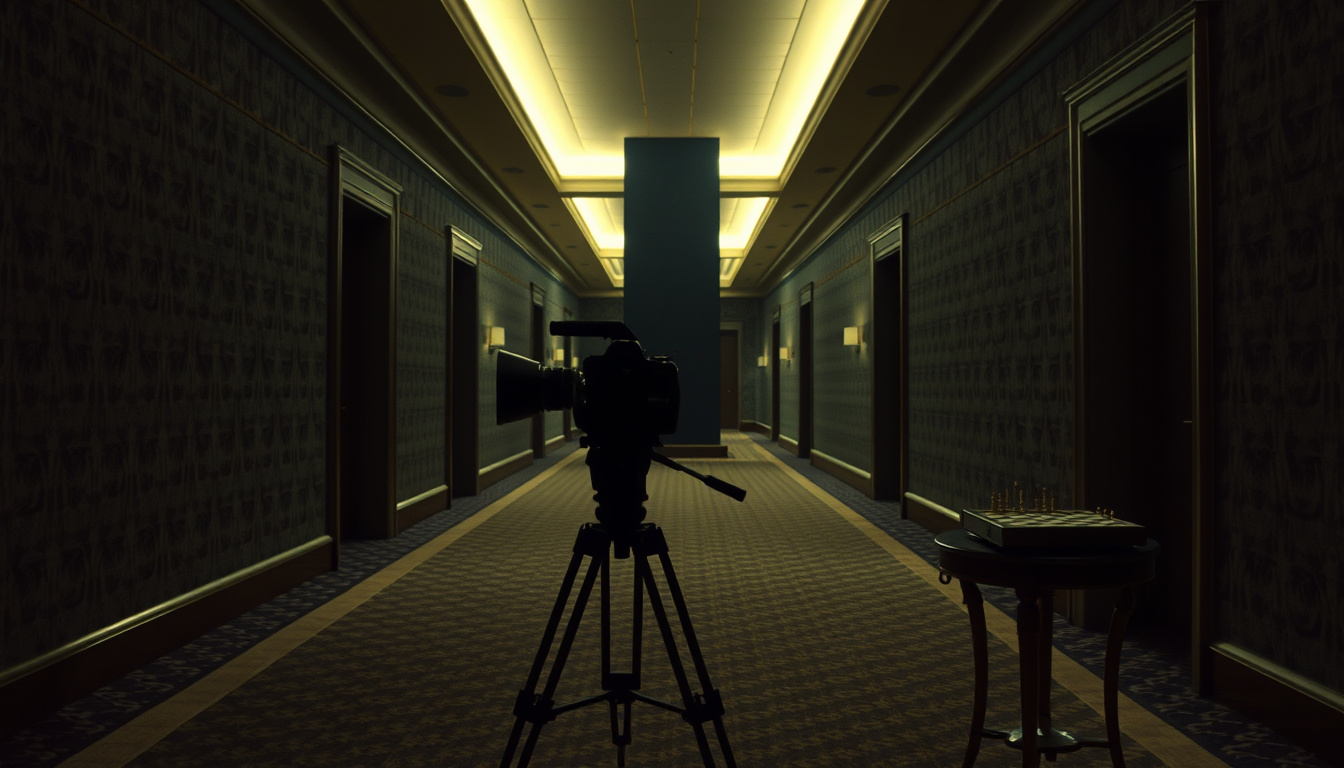
Stanley Kubrick was an American filmmaker whose career spanned 13 feature films and a body of work that established him as one of cinema’s most influential directors. Born in New York City on July 26, 1928, he began as a photographer for Look magazine before moving into filmmaking in the 1950s. He died in England on March 7, 1999, after suffering a heart attack in his sleep at his home in Childwickbury Manor, Hertfordshire.
Kubrick made his first major Hollywood film, The Killing (1956), followed by Paths of Glory (1957) and Spartacus (1960). He later moved to England, where he produced most of his major works and exercised unusually close control over writing, production design, editing, and cinematography. His meticulous approach and highly controlled visual composition became hallmarks of his style.
From the psychological horror of The Shining to the metaphysical science fiction of 2001: A Space Odyssey, Kubrick’s films continue to be studied, debated, and celebrated. His work spans multiple genres, yet nearly every entry in his filmography is regarded as a classic.
What Are the Best Stanley Kubrick Movies? (Ranked)
Regarded as one of the greatest and most influential directors in cinema history.
A small but highly influential filmography spanning 1953 to 1999.
From horror (The Shining) to sci-fi (2001) to war (Full Metal Jacket).
His life and work, especially Eyes Wide Shut, remain subjects of intense debate.
Key Insights
- Kubrick directed only 13 feature films, yet nearly every one is considered a genre classic.
- His death in 1999 came just days after completing the final cut of Eyes Wide Shut, fueling conspiracy theories.
- He was known for his perfectionism, often requiring dozens of takes for a single scene.
- His unrealized Napoleon film is one of the most famous “what-ifs” in cinema history.
- Dr. Strangelove is repeatedly singled out as one of his greatest works and is listed by Rotten Tomatoes as one of his highest-rated films.
- 2001: A Space Odyssey is widely described as one of the greatest and most influential films ever made.
- A Clockwork Orange and The Shining remain major signature films, though they were controversial on release.
Stanley Kubrick — Snapshot Facts
| Detail | Information |
|---|---|
| Born | July 26, 1928, New York City, U.S. |
| Died | March 7, 1999, Harpenden, England |
| Occupation | Film Director, Screenwriter, Producer |
| Years Active | 1951–1999 |
| Notable Films | 2001: A Space Odyssey, A Clockwork Orange, The Shining, Full Metal Jacket, Eyes Wide Shut |
| Awards | Academy Award for Best Visual Effects (2001), BAFTA Fellowship, Golden Lion (Venice) |
The following ranked list is a synthesis of repeated critical praise and Rotten Tomatoes score patterns, rather than a single official list. Dr. Strangelove leads as the highest-rated, followed closely by 2001: A Space Odyssey, Paths of Glory, and The Killing. A Clockwork Orange, The Shining, Full Metal Jacket, Barry Lyndon, and Eyes Wide Shut complete the ranking.
What Are All Stanley Kubrick Movies in Order? (Complete Filmography)
Kubrick’s filmography spans five decades, from his debut in 1953 to his final work released after his death in 1999. Each film demonstrates his evolving mastery of form and genre.
Early Works (1953–1956)
His first feature, Fear and Desire (1953), was a modest independent production. He followed it with Killer’s Kiss (1955), a noir thriller, and then The Killing (1956), a heist film that marked his first major Hollywood success. The Killing and Paths of Glory (1957) rank very highly on Rotten Tomatoes.
Hollywood Breakthrough (1960–1964)
Spartacus (1960) was his first big-budget epic. Lolita (1962) tackled controversial subject matter, and Dr. Strangelove or: How I Learned to Stop Worrying and Love the Bomb (1964) became a landmark satirical comedy. Britannica notes his “bravura handheld tracking shots” in Paths of Glory, foreshadowing the technical ambition of his later work.
Kubrick was known for a hands-on approach to production design, editing, and cinematography. 2001: A Space Odyssey used groundbreaking visual effects and was shot in Super Panavision 70, helping establish its monumental visual style. The film was also marked by Kubrick’s use of classical music, which became one of his signature stylistic choices.
Peak Period (1968–1980)
2001: A Space Odyssey (1968) is a metaphysical science-fiction epic and a landmark in effects-driven filmmaking. A Clockwork Orange (1971) was a controversial study of violence and social control; according to Wikipedia, it was the first picture to use the full potential of the Steadicam. Barry Lyndon (1975) followed, and then The Shining (1980) cemented his reputation in horror.
Later Films (1987–1999)
Full Metal Jacket (1987) examined the Vietnam War through Kubrick’s controlled visual lens. His final film, Eyes Wide Shut (1999), starring Tom Cruise and Nicole Kidman, was completed under unusually private production conditions and released after his death.
What Is the Meaning of Eyes Wide Shut? (Kubrick’s Final Masterpiece)
Eyes Wide Shut continues Kubrick’s controlled, psychologically charged visual style. The film follows a doctor who embarks on a night-long journey through New York City’s hidden corridors of power and desire. Its meaning has been debated extensively since its release.
Themes of Marriage and Power
At its core, the film examines the complexities of marriage, jealousy, and the boundaries between intimacy and secrecy. Kubrick layers these themes with a critique of elite privilege and ritualized power structures. The film’s dreamlike atmosphere and deliberate pacing reinforce its unsettling tone.
Controversy and Interpretation
Eyes Wide Shut sparked controversy for its explicit content and ambiguous narrative. Some viewers interpret the film as a confession or a veiled critique of Hollywood’s hidden networks, though scholars widely dismiss conspiracy theories as unsubstantiated. The film’s critical reception was more polarized than Kubrick’s classic peak works.
Kubrick died hours after delivering a print of Eyes Wide Shut to the studio. The film was released posthumously, which added to the mystique and speculation surrounding its content. The official cause of death was heart failure, and the conspiracy theories are not supported by credible evidence.
What Is the Symbolism in The Shining?
The Shining is widely identified as Kubrick’s horror film and one of his most famous uses of obsessive formal control. It is based on Stephen King’s novel, though Kubrick took significant liberties with the source material.
Psychological Horror and Isolation
The film’s central theme is the descent into madness fueled by isolation. The Overlook Hotel becomes a character in itself, its labyrinthine corridors and haunted history reflecting the protagonist’s unraveling psyche. Kubrick’s preference for multiple takes — Biography.com reports that he had Jack Nicholson shoot one scene 134 times — contributed to the film’s tense, unnerving atmosphere.
Symbolic Imagery
Kubrick fills The Shining with recurring visual motifs: the maze, the typewriter, the twin girls, and the river of blood. These images resist simple interpretation and have spawned countless theories. The film’s ending, which lingers on a photograph from 1921, suggests a cyclical or supernatural connection to the hotel’s past.
While the film is widely studied for its symbolism, Kubrick never provided a definitive explanation of its meanings. Interpretations range from indigenous genocide allegories to explorations of domestic violence. None of these readings have been confirmed by the director or his estate. For those interested in exploring more of his work, you can find details on Lady Gaga filmer. Lady Gaga filmer
What Was Stanley Kubrick’s Cause of Death?
Stanley Kubrick died on March 7, 1999, at his home in Childwickbury Manor, Hertfordshire, England. The reported cause was a heart attack; Biography.com states that he died in his sleep after suffering one. Britannica and other sources confirm the date and place of death.
Key Moments in Stanley Kubrick’s Life and Career
- 1928 — Born in New York City.
- 1953 — First feature film, Fear and Desire.
- 1960 — Directed Spartacus, his first big-budget epic.
- 1968 — Released 2001: A Space Odyssey, a cultural landmark.
- 1971 — Released A Clockwork Orange, which sparked controversy.
- 1980 — Released The Shining.
- 1987 — Released Full Metal Jacket.
- 1999 — Died of a heart attack six days after the European premiere of Eyes Wide Shut.
What Are the Theories and Rumors About Kubrick’s Death?
Some unsubstantiated rumors and conspiracy theories claim that Eyes Wide Shut functioned as a confession or even a suicide note. These theories are widely dismissed by scholars and lack credible evidentiary support. The official cause of death — heart failure — is well-documented by multiple authoritative sources.
Established Information
- Stanley Kubrick died of a heart attack at his home in England on March 7, 1999.
- His death occurred hours after he delivered a print of Eyes Wide Shut to the studio.
- Biography.com provides the specific cause: a heart attack in his sleep.
Information That Remains Unclear
- There are unsubstantiated rumors and conspiracy theories regarding the “true” meaning of Eyes Wide Shut and whether it was a confession or suicide note.
- These theories are widely dismissed by scholars and are not supported by credible evidence.
What Makes Stanley Kubrick Considered a Great Director?
Kubrick’s films are known for their formal perfection, dark themes, and ambiguous endings. He is especially associated with meticulous filmmaking, long takes, repeated takes, and highly controlled visual composition. Britannica notes his “bravura handheld tracking shots” in Paths of Glory, and A Clockwork Orange marked the first picture to use the full potential of the Steadicam, according to Wikipedia.
His influence is seen from directors like Christopher Nolan to the Wachowskis. Kubrick’s use of classical music in 2001: A Space Odyssey became a signature element, and 2001 is often treated as a landmark for visual storytelling because of its relatively sparse dialogue and emphasis on imagery, effects, and atmosphere.
The Shining remains a staple of psychological horror, while Eyes Wide Shut is increasingly re-evaluated as a masterful examination of marriage and power. His unrealized Napoleon film is one of the most famous “what-ifs” in cinema history.
What Do Fellow Directors and Critics Say About Kubrick?
Fellow filmmakers and critics have consistently praised Kubrick’s dedication and vision. Their words reflect the profound impact he had on cinema.
“Kubrick is a giant. He makes films for the ages.”
— Steven Spielberg (public interview)
“The truth about Stanley is that he was a recluse by choice, not by necessity.”
— Tom Cruise (interview on Kubrick)
Key sources for Kubrick’s life and work include Wikipedia, IMDb, The Kubrick Site (kubrick.life), BFI, and The Guardian. These archives provide the foundation for ongoing research and appreciation.
What Is Stanley Kubrick’s Lasting Legacy?
Kubrick’s body of work remains a touchstone for filmmakers and audiences alike. His films reward repeated viewing, and his influence continues to shape modern cinema. For those exploring his work further, the documentary Stanley Kubrick: A Life in Pictures and the book Kubrick: The Definitive Edition by Michel Ciment offer valuable insight. Fans may also appreciate learning about Oliver Reed, who starred in Barry Lyndon, or Peter Cushing, a classic British actor whose career overlapped with Kubrick’s era.
Frequently Asked Questions
What was Stanley Kubrick’s net worth?
At the time of his death, his net worth was estimated to be in the tens of millions, primarily from his film residuals and estate.
Was Stanley Kubrick in the military?
No. He was not accepted into the U.S. Army due to a medical condition (flat feet). He became a photographer for Look magazine.
Is there a Stanley Kubrick collection on Blu-ray?
Yes, Warner Bros. has released several “Stanley Kubrick: The Masterpiece Collection” box sets containing most of his films.
How many Oscars did Stanley Kubrick win?
He won one competitive Oscar: Best Visual Effects for 2001: A Space Odyssey. He also received a BAFTA Fellowship and a Golden Lion at Venice.
What was Kubrick’s first movie?
His first feature film was Fear and Desire (1953), an independent war drama.
Did Kubrick have children?
Yes. He had three daughters: Katharina, Anya, and Vivian, who appeared in some of his films.
Was Kubrick working on a Napoleon film?
Yes. He spent years developing a Napoleon Bonaparte biopic, but it was never produced due to budget and logistical challenges.
What is the best way to watch Kubrick’s films?
Most of his major films are available on Blu-ray in the “Masterpiece Collection” box set, and many stream on platforms like HBO Max and Criterion Channel.

Henry Morgan is Senior Reporter at DailyCity.co.uk, covering breaking news and general city stories across the UK.