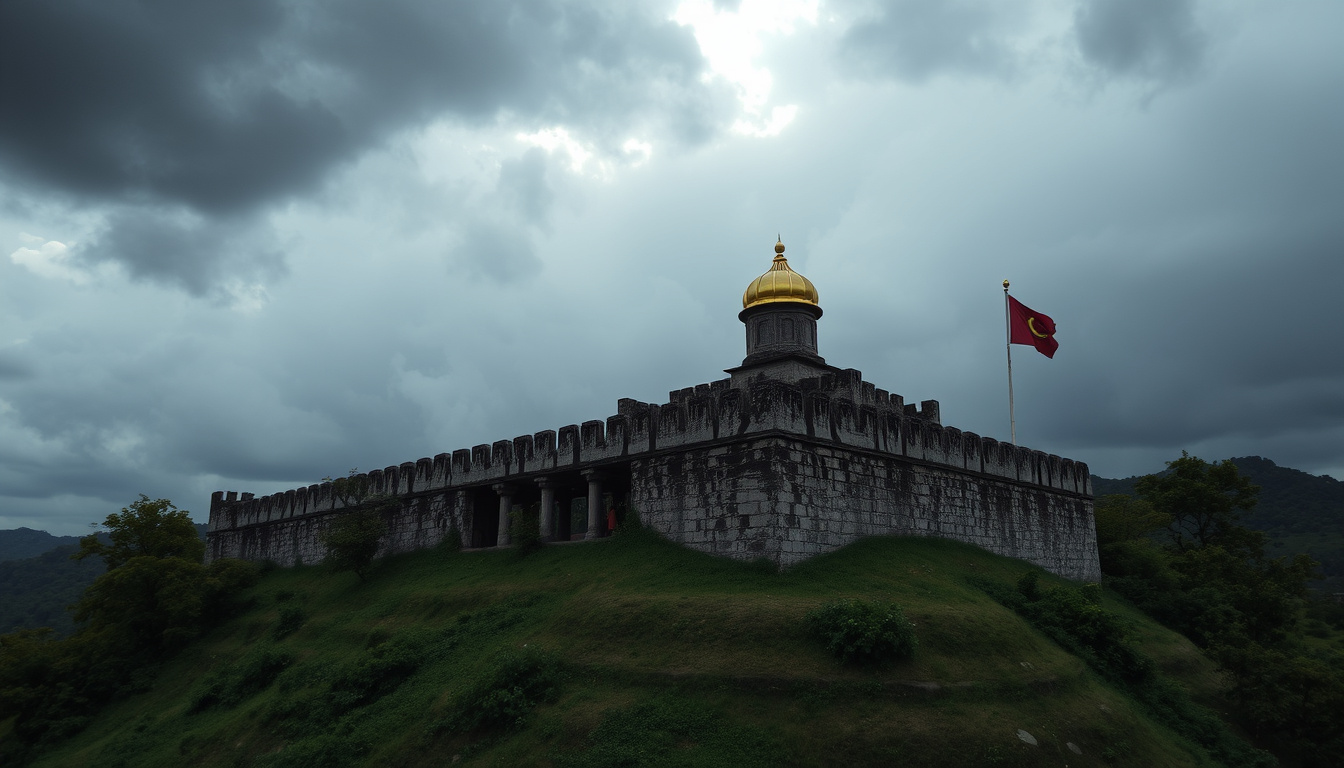
Tipu Sultan, the 18th-century ruler of Mysore, remains one of the most debated figures in Indian history. Known as the “Tiger of Mysore,” he is celebrated for his fierce resistance against British colonialism and criticized for his religious policies. This article separates historical facts from political narratives, exploring his real story, military innovations, and the controversies that still surround him.
Born Sultan Fateh Ali Sahab Tipu, he ruled the Kingdom of Mysore from 1782 until his death in 1799. His reign was marked by administrative reforms, military innovation, and a determined struggle to preserve his kingdom’s independence against the expanding British East India Company.
Today, Tipu Sultan is a figure of both admiration and deep division. Some view him as a pioneering anti-colonial leader, while others condemn his religious policies. Understanding his legacy requires separating documented facts from the political narratives that have shaped his image over two centuries.
What is the Real Story of Tipu Sultan? Historical Facts and Controversies
Title
Sultan of Mysore
Born & Died
20 November 1750 – 4 May 1799
Known For
Mysore Wars, military rockets, resistance to British
Controversy
Debated legacy: liberator vs. bigot
- Tipu Sultan pioneered the use of iron-cased rockets in warfare, influencing later European designs.
- He was the first ruler to use telegraphic technology (signal flags) on a large scale.
- His rule saw both cultural patronage (paintings, gardens) and forced conversions according to some historians.
- The Tipu Sultan restaurant in Birmingham (known as ‘Majestic Dining’) is named after him and popular for Indian cuisine.
- A TV series titled ‘Tipu Sultan’ aired on Indian television in the 1990s, sparking renewed interest.
| Fact | Detail |
|---|---|
| Full Name | Sultan Fateh Ali Sahab Tipu |
| Dynasty | Mysore Dynasty (Bahmani lineage) |
| Capital | Seringapatam (now Srirangapatna) |
| Major Battles | Second Anglo-Mysore War, Third Anglo-Mysore War, Fourth Anglo-Mysore War (1799) |
| Military Innovation | First use of iron-cased rockets (Mysorean rockets) |
| Alliances | Allied with the French against the British |
| Death | Killed in battle at Seringapatam in 1799 |
Tipu Sultan’s Early Life and Rise to Power
Tipu Sultan was born on either 20 November 1750 in Devanahalli, near present-day Bangalore, or on 1 December 1751, based on evidence reassessed in 2021. His father, Hyder Ali, was a military officer who rose to become the de facto ruler of Mysore. His mother was Fatima Fakhr-un-Nisa.
From a young age, Tipu was immersed in military life. He participated in his first battle at the age of 15 and soon commanded over 2,000 men. When Hyder Ali died in 1782, Tipu succeeded him as Sultan of Mysore, inheriting a kingdom already at war with the British.
The Mysore Wars and Tipu’s Military Innovations
Tipu Sultan’s military career is defined by the four Anglo-Mysore Wars fought between the Kingdom of Mysore and the British East India Company. He fought in all four, winning the second war but ultimately losing the fourth.
His most significant military contribution was the pioneering use of iron-cased rockets in warfare. These Mysorean rockets were more advanced than any rocket technology then known in Europe, and British accounts from the period describe their devastating effect on the battlefield. The British later studied and adapted this technology for their own military use.
Tipu also formed alliances with the French, who supplied him with military advisors and equipment. This strategic partnership made Mysore a significant threat to British ambitions in South India.
Controversies: Religious Policies and Legacy
The most contentious aspect of Tipu Sultan’s legacy concerns his treatment of religious communities. Right-wing groups and some critics label him a “religious bigot” who forcibly converted Hindus and persecuted Christians, specifically the Catholics of Mangalore and the Kodavas of Coorg.
Historians such as Brittlebank and Hasan argue that these narratives were largely fabricated by early British authors like James Kirkpatrick and Mark Wilks. These colonial writers, according to this view, had a clear bias against Tipu’s independence and sought to justify British military intervention in Mysore.
Other scholars suggest a more nuanced interpretation: that Tipu was a pragmatist and a tyrant motivated by the conventions of 18th-century kingship rather than religious zealotry. The evidence, they argue, points to a ruler who acted according to political necessity, not religious ideology.
Modern historians generally agree that Tipu Sultan’s portrayal as a religious fanatic is distorted by colonial propaganda and modern political agendas. His true legacy, according to this consensus, is that of a modernizing ruler, military pioneer, and anti-colonial resistance leader.
The Death of Tipu Sultan at Seringapatam
On 4 May 1799, Tipu Sultan died defending his fortress at Srirangapatna (Seringapatam) during the Fourth Anglo-Mysore War. He was heavily outnumbered by a coalition of the British East India Company, the Marathas, and the Nizam of Hyderabad.
His death marked the end of Mysore’s independence. The British restored the Wadiyar dynasty to a subordinate position, effectively bringing the kingdom under their control. Tipu’s body was discovered among a pile of defenders near the breached wall of the fortress.
What Books, Serials, and Photos Cover Tipu Sultan?
Recommended Books on Tipu Sultan
Several authoritative books provide detailed accounts of Tipu Sultan’s life and reign. Historian Anna Brittlebank has written extensively on his rule, offering a balanced perspective that challenges colonial-era distortions. Jean Boutier’s works also provide valuable insights into Mysore’s history.
For readers seeking a comprehensive overview, academic texts on the Anglo-Mysore Wars and the history of South India often include substantial sections on Tipu’s administration, military campaigns, and legacy. These works draw on primary sources such as the Tipu Sultan Papers held at the British Library.
The Tipu Sultan TV Series and Other Media
A television serial titled “Tipu Sultan” aired on Doordarshan, India’s public broadcaster, in the 1990s. The series dramatized his life and reign, contributing to a renewed public interest in his story. While no major new serial has been produced recently, his life has been featured in various documentaries and historical programs.
His story has also appeared in films and literary adaptations, though no single major motion picture has focused exclusively on his life in recent decades. The 1990s serial remains the most prominent visual portrayal of his reign.
Historical Portraits and Photographs of Tipu Sultan
No photographs of Tipu Sultan exist, as photography was not invented until decades after his death. However, several contemporary paintings and portraits survive, many of which are held in museum collections. The Royal Collection Trust holds a notable portrait, and the National Army Museum displays his war turban, a rare artifact from his personal armory.
These visual records, along with artifacts such as his sword and rocket launchers, provide the most direct connection to his appearance and material culture. High-resolution images of these items are available through museum websites.
Where is Tipu Sultan Restaurant and What Does It Offer?
Tipu Sultan Restaurant in Leicester: Location and Ambiance
The Tipu Sultan restaurant is located in Birmingham, UK, not Leicester. It operates under the name “Majestic Dining” and is a well-known Indian restaurant. There is no historical record connecting Tipu Sultan to a specific restaurant in Leicester, though the name may appear on local businesses in areas with South Asian heritage.
The Birmingham restaurant is themed around the historical figure, with decor and branding that reference his legacy. It has become a popular dining destination for those seeking Indian cuisine in a setting that evokes the grandeur of the Mysore court.
Tipu Sultan Menu: Dishes and Dining Experience
The menu at the Tipu Sultan restaurant features a range of traditional Indian dishes, including biryanis, curries, and tandoori specialties. The restaurant emphasizes authentic flavors and high-quality ingredients, with many dishes named after historical figures and regions from the Mysore era.
Diners can expect a full dining experience that includes starters, main courses, and desserts, with options for both vegetarian and non-vegetarian preferences. The restaurant’s website provides the most current menu and pricing information.
Tipu Sultan Road: History and Location
Tipu Sultan Road is a street name found in some UK cities with significant South Asian communities, such as Leicester. There is no documented historical connection between the road and the Sultan himself; it is a modern naming convention that honors his legacy.
The road is typically located in residential or commercial areas and serves as a local landmark. Its existence reflects the cultural influence of the South Asian diaspora in the United Kingdom.
The Tipu Sultan restaurant in Birmingham (known as ‘Majestic Dining’) is named after the historical figure but has no documented connection to him beyond the name. It is a themed restaurant popular for Indian cuisine.
Timeline of Tipu Sultan’s Life
- – Born in Devanahalli, present-day Karnataka.
- – First military experience alongside his father Hyder Ali in the First Mysore War.
- – Becomes Sultan after Hyder Ali’s death during the Second Anglo-Mysore War.
- – Signs the Treaty of Mangalore with the British.
- – Third Anglo-Mysore War begins; Tipu forced to cede territory in 1792.
- – Fourth Anglo-Mysore War; Tipu Sultan dies defending Seringapatam.
- – Indian TV serial ‘Tipu Sultan’ airs on Doordarshan.
- – Tipu Sultan restaurant opens in Birmingham, UK.
Certainty vs. Uncertainty in Tipu Sultan’s History
| Claim | Status |
|---|---|
| Tipu Sultan was a religious bigot who forced conversions. | Disputed – contemporary sources show both persecution and tolerance; scholarly consensus varies. |
| Tipu Sultan introduced the first rockets. | Well-established – iron-cased rockets used in Mysore are confirmed by British accounts and museum artifacts. |
| Tipu Sultan is a national hero in India. | Context-dependent – celebrated in some circles (especially Karnataka) but criticized in others. |
| The Tipu Sultan restaurant in Leicester is directly connected to the Sultan. | Uncertain – it is a themed restaurant; no documented connection beyond the name. |
Analysis: Tipu Sultan in 18th Century India
Tipu Sultan ruled Mysore during a period of intense colonial competition. His kingdom was one of the last major South Asian powers to resist British expansion before the 19th century. His use of rockets, French alliances, and administrative reforms made him a formidable opponent.
The controversies about his rule reflect broader historiographical debates about Muslim rulers in India and the impact of colonial narratives. Understanding Tipu Sultan requires examining both the documented facts of his reign and the political contexts in which his legacy has been interpreted.
His story is also connected to other historical figures who resisted established powers. For a deeper look at another figure who challenged authority, read about Guy Fawkes – The Gunpowder Plot, Death and Why We Celebrate.
Primary and Authoritative Sources
“Tipu Sultan was a prince of great courage and skill.”
Royal Collection Trust – Tipu, Sultan of Mysore
“The turban is a rare helmet belonging to one of India’s greatest warrior princes.”
National Army Museum – Tipu Sultan’s war turban
“Tipu Sultan is a figure of both admiration and controversy in Indian history.”
Wikipedia – Tipu Sultan (paraphrased)
What’s Next for Tipu Sultan Topics?
Upcoming academic publications on Mysorean rocket technology may shed new light on his military innovations. There is also potential for a new documentary or serial revival on streaming platforms. The Tipu Sultan restaurant brand may expand to other UK cities, and ongoing debates in Indian politics about statue installations and school curriculum content will likely keep his legacy in public discourse. For another biographical deep dive, explore Albert Einstein – Biography, IQ, Death and Lasting Legacy.
Frequently Asked Questions about Tipu Sultan
Is Tipu Sultan considered a national hero in India?
Views are mixed. Many in Karnataka and among some historians celebrate his resistance to British colonialism, while others criticize his religious policies.
What is the significance of Tipu Sultan’s tiger motif?
The tiger was his personal emblem, symbolizing strength and ferocity. Many artifacts, including his throne, feature tiger stripes.
How did Tipu Sultan die?
He was killed on 4 May 1799 while defending the fortress of Seringapatam against British forces during the Fourth Anglo-Mysore War.
What is Tipu Sultan Road?
A street named after Tipu Sultan, typically located in areas with South Asian heritage, such as in Leicester, UK.
Where can I watch the Tipu Sultan serial?
The 1990s Indian television serial ‘Tipu Sultan’ may be available on streaming platforms like YouTube or Doordarshan archives.

Sophie Kendall is Culture & Events Editor at DailyCity.co.uk, covering restaurants, nightlife, theatre, exhibitions, festivals and city life.