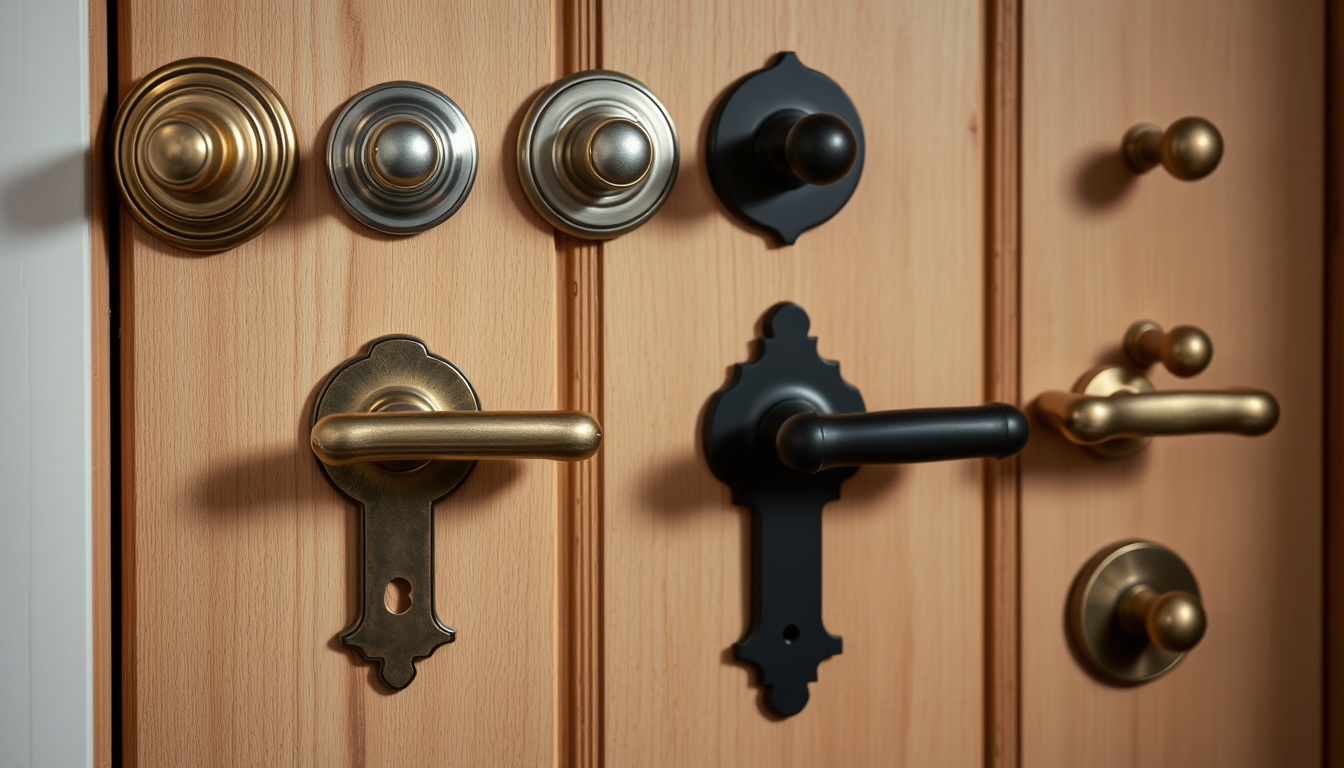
Choosing door handles seems straightforward until you face the aisle of options. Type, finish, and function each play a part. For most UK homes, the decision comes down to lever handles, door knobs, and pull handles, with the right choice depending on the door’s role and the look you want. The key is matching the handle to the door’s use, keeping finishes consistent, and checking latch or lock compatibility before you buy.
A door handle is more than a finishing touch. It is the most touched piece of hardware in a home. UK buying guides consistently advise starting with the type of handle, then the finish, then the function—passage, privacy, or keyed entry. Whether you are updating a single door or fitting out a whole house, the same logic applies.
What Are the Different Types of Door Handles?
Key insights
- Lever handles are the most practical option for everyday interior doors and are easier to operate than knobs.
- Lever-on-rose is a modern, contemporary style; lever-on-backplate reads more traditional and substantial.
- Passage handles are for doors that do not need locking, like many living room or hallway doors.
- Privacy handles are for bathrooms or bedrooms and pair with a lock or privacy latch.
- Keyed entry handles are for external or security-sensitive doors and use a keyed lock mechanism.
- Pull handles suit doors that do not have a latching mechanism, while flush pulls work for pocket and sliding systems.
Door handles: quick buying facts
| Fact | Detail |
|---|---|
| Standard fixing centres | 57mm (residential), 92mm (commercial), 127mm (heavy duty) |
| Lever rose | Circular base plate |
| Lever backplate | Rectangular or long bar base |
| External handles | Must be at least BS EN 1906 Grade 4 or higher for weather resistance |
| Fire doors | Require intumescent seals with door handles |
| Common materials | Zinc alloy (Zamak), stainless steel, brass |
| Popular finishes | Matte black, satin chrome, polished chrome, brass |
| Privacy lock | Bathroom handles use a turn/snib, not a keyed lock |
| Sprung vs unsprung | Affects whether the handle is installed vertically or horizontally |
| Durability | PVD-coated finishes offer high corrosion resistance |
Internal vs External Door Handles: What’s the Difference?
The main distinction between internal and external handles comes down to locking and weather resistance. Internal handles for bedrooms and bathrooms often use a privacy latch—a twist knob or snib rather than a key. External doors need keyed locks and handles built to withstand the elements. A handle rated for interior use may not hold up outdoors, and a handle without a lock cylinder will not secure a front or back door.
External handles must meet BS EN 1906 Grade 4 or higher for weather resistance. This standard classifies door hardware by durability and corrosion resistance. If you are replacing a handle on an external door, check that it meets this grade. For internal doors, the standard is less strict, but matching the handle to the latch type is still essential.
Can you use an internal door handle on an external door?
Technically, a handle might fit, but it is not recommended. Internal handles are not built to withstand rain, temperature changes, or UV exposure. They also lack the security features of a keyed external handle. For external doors, choose a handle that is specifically rated for exterior use and meets the relevant British Standard.
What is a bathroom lock door handle?
A bathroom handle typically uses a privacy lock—a turn or snib mechanism on the inside that locks the door without a key. This allows quick locking from inside and can be opened from outside with a coin or emergency release. It is different from a keyed lock, which is used for external doors or rooms needing higher security. Some bathroom handles come with the lock included, while others require a separate lock to be purchased and fitted.
A privacy lock (turn/snib) is standard for bathrooms and bedrooms. It locks from the inside without a key. Keyed locks are for external or security-sensitive doors.
Where to Buy Door Handles in the UK: Screwfix vs B&Q vs Specialists
UK buyers have two main routes: large retailers like Screwfix and B&Q, or specialist ironmongery sites like HandleKing and Handles4U. Each has strengths. Screwfix offers broad availability and competitive pricing, while specialists tend to carry more design variety and deeper product information. The quality of handles from these retailers can differ, especially in weight and finish durability.
Specialist retailers like HandleKing focus on design and range, while Screwfix leans towards value and practicality. B&Q sits in between, offering a mix of budget and mid-range options. When comparing, consider the handle’s material and finish, not just the price tag. A cheaper handle might look similar but could chip or wear faster.
Are door handles from Screwfix good quality?
Screwfix door handles are generally seen as good value for money, but their weight and feel may not match specialist brands. They are practical for straightforward replacements or projects where budget matters. For higher-traffic areas, a more durable finish might be worth the extra cost.
Does B&Q sell door handle spares?
B&Q carries a range of door handles and some spares, but availability varies by store and online. If you need a specific spare part, specialist ironmongers are often a better bet, as they stock more comprehensive lines.
Why buy from HandleKing or Handles4U?
These specialists offer a wider selection of styles, finishes, and materials. They also tend to provide more detailed product descriptions and technical advice. For large projects or when matching a specific design, their range is a clear advantage.
Keep the finish consistent across handles, hinges, and locks. Polished chrome, satin nickel, and matte black are versatile choices that work with most interior styles.
How to Choose the Right Finish and Style for Your Door Handles
The finish is the first thing people notice, and it sets the tone for the room. Matte black is a leading contemporary choice, working well in modern or industrial interiors and hiding fingerprints well. However, lower-quality versions may chip over time. Satin chrome and brushed nickel are versatile, softer-looking metallic finishes that resist fingerprints and suit busy family homes. Polished chrome is shiny and reflective but shows smudges and water marks more easily.
Brass finishes remain popular, especially satin brass, polished brass, and antique brass. Polished brass suits period interiors, while satin or brushed brass gives a warmer, more modern look. Stainless steel is widely recommended for durability, corrosion resistance, and easy cleaning, making it a strong option for practical or commercial settings. Oil-rubbed bronze and antique bronze appear in style-focused guides, often paired with classic or period-inspired interiors.
Are gold door handles still in fashion?
Gold handles are trending in 2025, particularly for luxury grey interiors. The term “gold” can mean polished brass or PVD gold; PVD is more durable. If you want the look without the upkeep, PVD gold is the practical choice. Gold pairs well with dark or black doors, where it adds warmth and contrast.
What is the most durable finish for a door handle?
PVD-coated finishes are repeatedly presented as a high-durability option. One guide describes PVD brass as vacuum-coated metal with strong corrosion resistance. Stainless steel and zinc alloy are also highlighted as corrosion-resistant and easy to clean. The best finish depends on the environment—not all finishes wear equally well in high-use or moisture-prone areas.
How to match door handles with room style?
- White or light grey doors: matte black, satin nickel, or chrome
- Oak or natural wood doors: antique brass, brushed bronze, or pewter
- Black or dark doors: polished chrome, satin brass, or gold
- Painted colours like navy or sage: brushed brass, matte black, or copper
- Glazed or glass-panel doors: minimalist chrome or stainless steel
The Evolution of Door Handle Design and Buying Journey
Door handles have changed with materials and design trends. The timeline shows how both style and function have shifted over time.
- 19th century: Brass mortice knob sets became standard in Victorian homes.
- Early 20th: Bakelite and Art Deco bakelite handles introduced new colours and shapes.
- 1970s: White plastic and polypropylene handles were common in new builds.
- 2000s: Polished chrome lever on backplate became the default for modern interiors.
- 2020s: Matte black, brass, gold, and minimalist rose designs lead the market.
What’s Certain and What’s Not in Door Handle Choices
Established information
- Door handles with “lock” may mean a latch only, not a deadlock. Buyers must check the cylinder type.
- External handles should meet BS EN 1906 Grade 4 or higher for weather resistance.
- Bathroom privacy handles use a turn/snib, not a keyed lock.
Information that remains unclear
- Gold handles can refer to polished brass or PVD gold; PVD is more durable, but the term is not always specific.
- Screwfix handles are typically good value, but may not match specialist weight and feel—this varies by product line.
- The best finish depends on the environment, and not all finishes wear equally in high-use or moisture-prone areas.
Standards and Credibility in Door Hardware
Credible sources for door handle standards include the British Door Hardware Federation and BS EN 1906:2012, which classifies door furniture by durability and corrosion resistance. Building Regulations Part K covers ironmongery safety. These standards provide a baseline for what to look for, especially when buying external handles or handles for fire doors.
The classification of door furniture under BS EN 1906 helps buyers understand durability and corrosion resistance.
BS EN 1906:2012
Summary: The Practical Path to the Right Door Handle
The right door handle balances type, function, and finish. Start with the door’s use—passage, privacy, or keyed entry—then choose a style that fits the room. Match the finish across all hardware, and check latch compatibility before buying. Consider kitchen cupboard hardware the same way; it follows the same rules of style and practicality. See the Kitchen Cupboard – Types, Sizes, Brands and Painting Tips guide for a related approach. For another buying perspective on home essentials, the Photo Frame – UK Guide to Sizes, Materials & Where to Buy follows a similar framework.
Do all door handles fit all doors?
No. You must match the handle type to the door’s backset, thickness, and hole pattern. A lever rose handle will not fit a door drilled for a backplate, and a knob may need a deeper backset than your door has. Always measure before buying.
Can I put a lock on any door handle?
Only those designed with a lock mechanism or latch tube. Standard passage handles do not accept locks—they are for doors that do not need locking. If you need a lock, choose a handle specifically made for locking, such as a privacy or keyed entry set.
How do I remove an old door handle?
Use a screwdriver to remove the fixing screws on the backplate or rose. Once the screws are out, the handle will pull apart from the spindle. If there is a grub screw, loosen that first. Keep the screws safe for reuse.
What is the most popular door handle finish?
Polished chrome and satin stainless steel remain the most popular finishes in the UK. Matte black and gold are rising in popularity, especially for modern interiors. Satin nickel is also a versatile choice that resists fingerprints.
What is the difference between sprung and unsprung handles?
Sprung handles have a spring mechanism that returns the lever to a horizontal position. Unsprung handles rely on the latch spring. The choice affects installation: sprung handles are often installed with the lever vertical, while unsprung handles need a specific orientation. Check the product details before fitting.
Can I use an internal door handle on an external door?
It is not recommended. Internal handles lack the weather resistance and security features of external-rated handles. External handles should meet BS EN 1906 Grade 4 or higher for corrosion and durability. Using an internal handle outside can lead to premature wear and reduced security.
How do I measure door handle centres?
Measure the distance between the centre of the handle spindle hole and the centre of the keyhole or lock cylinder. Common centres are 57mm for residential, 92mm for commercial, and 127mm for heavy-duty locks. This measurement is crucial for fitting a handle with a lock.
What is a privacy lock door handle?
A privacy lock handle is used on internal doors, typically bathrooms and bedrooms. It locks from the inside with a turn or snib, without a key. It can be opened from the outside with a coin or emergency release. It is not intended for security, just privacy.
Are gold door handles durable?
The durability depends on the finish. PVD gold is a vacuum-coated metal with strong corrosion resistance, making it more durable than polished brass. Polished brass can tarnish over time. For a gold look that lasts, PVD gold is the better option.
Do I need to replace the latch when changing door handles?
In many cases, yes. Interior design sources recommend fitting new latches at the same time as new handles to ensure the lever sits horizontally and works correctly. The latch must match the handle type—for example, a two-way action latch is needed for door knobs so they turn both clockwise and anticlockwise.

Daniel Mercer is Urban Affairs Editor at DailyCity.co.uk, covering councils, City Hall, planning, transport and infrastructure across London and major UK cities.