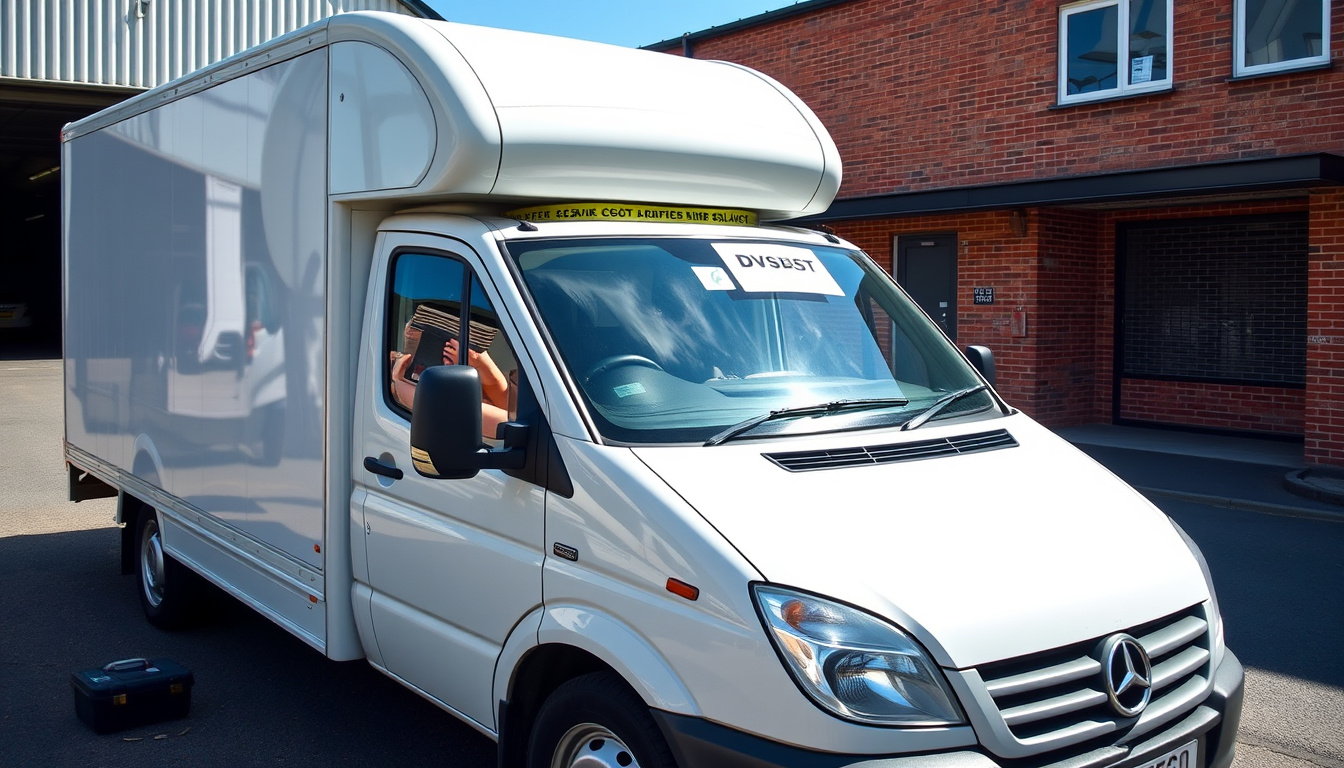
A Luton van, often referred to as a Luton box van, is a large commercial vehicle designed for transporting bulky or high-volume loads. Characterised by its distinctive box-shaped cargo area that extends over the cab, it is a common sight on UK roads, particularly for house removals, event logistics, and light commercial haulage. The body style, named after the town of Luton where it was popularised by local coachbuilders, offers a unique combination of volumetric capacity and manoeuvrability.
For businesses and individuals alike, understanding the specific dimensions, payload limits, and licence requirements is essential before hiring or purchasing. This guide breaks down the key specifications, compares hire and purchase options, and outlines the legal requirements for driving a Luton van in the UK, drawing on verified data from industry sources.
Luton van size
Standard Luton vans come in a range of sizes, but the most common variant on UK roads is the 3.5-tonne model. This size is popular because it can be driven on a standard Category B car licence, provided the vehicle’s Maximum Authorised Mass (MAM) does not exceed 3,500 kg.
Length 4.5–6.0m, Width 2.1–2.4m, Height 2.2–2.8m
3.5–7.5 tonnes (depending on licence requirements)
18–35 m³
£60–£150 per day (excl. VAT)
Key insights
- Luton vans are the preferred choice for house removals and bulk deliveries due to their large cubic capacity and box-shaped cargo area.
- Most Luton vans on the UK market have a maximum gross weight of 3.5 tonnes, allowing drivers with a standard Category B licence to operate them (subject to vehicle weight).
- The addition of a tail lift significantly increases versatility but adds roughly 200–300 kg to the tare weight, reducing payload.
- Used Luton vans typically range from £5,000 to £25,000 depending on age, mileage, and brand; newer models offer better fuel efficiency and safety features.
- Hiring a Luton van with a tail lift is recommended for heavy or palletised loads; many rental companies require a higher deposit or additional training.
Detailed specifications & dimensions
Note: Payload is significantly reduced on larger models if fitted with a tail lift, often dropping to under 3 tonnes for 7.5-tonne vehicles. For exact dimensions, always verify with the specific hire company, as sizes vary between manufacturers (e.g., Ford Transit, VW Crafter) and body builders.
Luton van hire
Hiring a Luton van is a flexible solution for short-term projects, house moves, or seasonal business peaks. The market is dominated by national providers like Enterprise and local independent depots, offering a wide range of vehicles from basic box vans to fully equipped models with tail lifts.
What to look for in a hire agreement
Check the rental terms carefully, especially regarding mileage limits, fuel policy, and insurance excess. For Luton vans with a tail lift, some operators require a specific checkout process to demonstrate safe operation. The passenger capacity is typically three (driver + two).
Tail lift considerations
A tail lift is essential for heavy or awkward items, making loading and unloading safe and efficient. The platform size is typically around 1.6m x 0.85m, with wider platforms up to 2.1m available on some models . However, the tail lift adds significant weight, consuming a portion of the vehicle’s payload capacity.
Always check the VIN plate for the exact Maximum Authorised Mass (MAM) before hiring. Exceeding 3.5 tonnes without the correct licence is illegal. A standard Category B licence is sufficient for most 3.5-tonne Luton vans, but larger models over 3.5 tonnes require a C1 licence .
Luton vans for sale
Purchasing a Luton van is a significant investment, often driven by regular usage requirements. The market includes both new vehicles from major manufacturers and a substantial used segment that offers more accessible entry points.
New vs. used market
New Luton vans benefit from manufacturer warranties, better fuel efficiency, and the latest safety assists. Used Luton vans, available through marketplaces like AA Cars, depreciate more slowly than cars but can incur higher maintenance costs, particularly for the tail lift mechanism.
Popular manufacturers
Major chassis providers include Ford, Volkswagen, Mercedes-Benz, Iveco, Renault, and Citroën. The choice of base vehicle affects the driving experience, reliability, and running costs. For example, the Volkswagen Crafter Luton is noted for its comfortable cab and uprated suspension.
Used Luton vans typically range from £5,000 to £25,000 depending on age, mileage, and brand. The advertised payload (e.g., 1,000kg) includes passengers and fuel, so the usable load capacity is often lower at 900–1,200 kg.
The long-term reliability of electric Luton vans for heavy loads is still being proven. Factor this into purchasing decisions if considering models like the Maxus eDeliver 9 or Mercedes eSprinter, which are entering the market but have limited track records for heavy commercial use.
Evolution of the Luton Van
The Luton van has a distinct history rooted in British coachbuilding. Its development reflects broader trends in commercial vehicle design and regulation.
- 1940s–1950s: Early box vans built on truck chassis; Luton coachbuilders develop raised roof and over-cab storage.
- 1960s–1970s: Standardised designs; Bedford, Ford, and Morris produce factory Luton versions.
- 1980s–1990s: Introduction of diesel engines and improved aerodynamics; tail lifts become common.
- 2000s–2010s: Euro emission standards push cleaner engines; telematics and safety assists added.
- 2020–present: Electric Luton vans (e.g., Maxus eDeliver 9, Mercedes eSprinter) entering the market.
What’s Clear and What’s Not About Luton Vans
When researching Luton vans, certain facts are well established, while other details depend heavily on the specific vehicle and context.
| Established Information | Information That Remains Unclear |
|---|---|
| Luton vans are defined by their box-shaped cargo area that extends over the cab. | Exact payload figures depend on the specific chassis, body build, and optional equipment; always check the vehicle’s plate. |
| Dimensions vary by manufacturer and model, but typical load heights range from 2.2–2.8m. | Hire costs fluctuate by season, location, and rental duration; no single price benchmark applies nationwide. |
| A standard Category B licence allows driving a Luton van up to 3.5 tonnes GVW. | The long-term reliability of electric Luton vans for heavy loads is still being proven. |
| Tail lifts are add-on options that reduce payload capacity. | — |
How to Choose the Right Luton Van for Your Needs
Selecting the right Luton van requires a clear assessment of your specific requirements. Start by measuring the largest items you plan to transport to determine the necessary load volume.
Assess your load volume and weight
For house moves, a standard Luton (18–25 m³) is usually sufficient. For palletised goods, confirm the internal width (typically 2.4m) and payload (1,000–1,500 kg).
Driving licence considerations
If the van’s GVW exceeds 3.5 tonnes, you need a Category C1 licence. Many modern Luton vans are built to stay under 3.5t, but tail lifts, additional fuel, or heavy bodywork can push them over. Always check the VIN plate. For a detailed look at a popular base vehicle, see our guide on Ford Transit Custom – Which Trim & Engine to Choose in 2025.
Hire vs. buy
Hiring is best for short-term or occasional use. Buying is cost-effective if you need the van regularly. A used Luton van depreciates more slowly than a car, but maintenance costs (especially for tail lifts) can be significant.
Tail lift or no tail lift?
A tail lift is essential for heavy or awkward items. It adds convenience but reduces payload by 200–300 kg and increases hire cost by £20–£40 per day. Ensure you have proper training to operate it safely.
Expert Sources and Official References
The following insights are drawn from verified industry sources and official documentation.
“The Luton van is well known for its versatility as a removal/medium range haulage vehicle, ideal for collecting building materials, flags, or weighty boxes.”
– Enterprise Rent-A-Car – Luton Van with Tail-Lift Hire page
“A Luton van (often called a Luton box van) is a large commercial vehicle built for transporting bulky or high-volume loads.”
– Van Broker UK – Luton Vans: A Complete Guide for UK Businesses
“The Crafter Luton makes light work of long shifts thanks to its comfortable cab, uprated suspension and advanced load restraints.”
– Volkswagen Vans UK – Crafter Luton Van page
What’s Next for Luton Vans
The Luton van market is adapting to regulatory and environmental changes. Monitor the rollout of electric Luton vans from major manufacturers, expected to increase through 2025–2026. ULEZ and Clean Air Zone expansions may affect Luton van operations in cities, so check local regulations before hiring or buying. New safety regulations (e.g., mandatory side-scanning sensors) could change specification requirements for new models.
Frequently Asked Questions About Luton Vans
Do I need a special licence to drive a Luton van?
If the van’s gross vehicle weight (GVW) is 3.5 tonnes or less, a standard Category B car licence is sufficient. Many Luton vans are designed to stay under this limit, but always check the vehicle’s plate. Over 3.5 tonnes requires a Category C1 licence (or C1+E for trailers).
What is the difference between a Luton van and a box van?
The terms are often used interchangeably. However, a Luton van specifically refers to a box van with a raised roof that extends over the cab, providing additional storage space. A standard box van may have a flat roof and no over-cab compartment.
Can I drive a Luton van on a motorway?
Yes, Luton vans are legal on UK motorways as long as they meet the same roadworthiness requirements as other vehicles. Note that speed limits for vans (usually 60 mph on dual carriageways, 70 mph on motorways) apply.
How much does it cost to insure a Luton van?
Insurance costs vary widely based on the van’s value, your driving history, and intended use (personal vs. business). Typical premiums for a used Luton van range from £600–£1,500 per year. Hiring companies often include basic insurance in the rental rate.
What is the maximum load height of a Luton van?
Internal load height typically ranges from 2.2 m to 2.8 m, depending on the model and whether it has a tail lift (which may reduce internal height slightly). Always verify with the specific vehicle’s specifications.

Henry Morgan is Senior Reporter at DailyCity.co.uk, covering breaking news and general city stories across the UK.