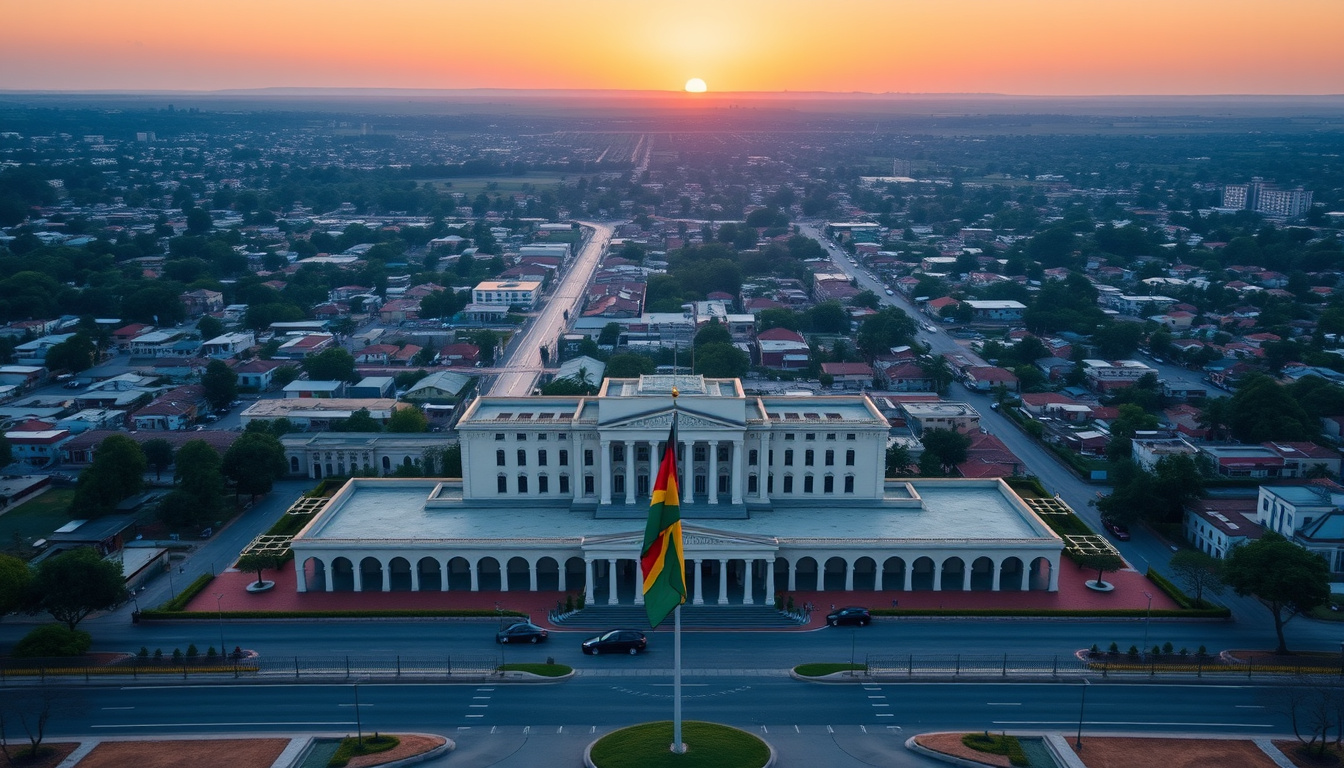
Burkina Faso, a landlocked nation in West Africa, has become a focal point of geopolitical instability, humanitarian struggle, and resilience. With a population of roughly 23.3 million and a capital anchored in the historic city of Ouagadougou, the country faces a severe Islamist insurgency that began in 2015, a series of military coups, and deep economic challenges despite being Africa’s largest cotton producer. International travel advisories for 2025 uniformly warn of high risk from terrorism and political turmoil.
The country, originally known as the Republic of Upper Volta, was renamed Burkina Faso in 1984 by former president Thomas Sankara. It has since experienced repeated political upheavals, most recently in 2022 and 2024, when the military seized control. Interim President Ibrahim Traoré has led the government since September 2022, but the path to stability remains uncertain.
Understanding Burkina Faso today requires looking at its geography, governance, demographics, and the intertwined crises that shape daily life for millions.
What is the capital of Burkina Faso?
Key insights
- Burkina Faso has experienced a surge in Islamist violence since 2015, leading to multiple coups and a humanitarian crisis.
- The country remains one of the poorest in the world despite being Africa’s largest cotton producer.
- Nearly 60% of the population is under 25, with high youth unemployment fueling political instability.
- International travel advisories strongly caution against non-essential travel due to terrorism and kidnapping risks.
- Ouagadougou, founded around 1050 CE, served as the capital of the historic Mossi kingdom of Wagadugu.
- The city is home to about 2.42 million people (2019 census) and covers an area of 520 km² at an elevation of 305 m.
- Notable landmarks include the Grand Mosque, the National Museum, and the University of Ouagadougou (founded 1969).
| Fact | Detail |
|---|---|
| Official Name | Burkina Faso |
| Capital | Ouagadougou |
| Population (2025 est.) | 23.5 million |
| Area | 274,200 sq km (landlocked) |
| President | Ibrahim Traoré (interim) |
| Official Language | French |
| Major Religions | Islam (~60%), Christianity (~30%), Indigenous (~10%) |
| Currency | West African CFA franc (XOF) |
| GDP per capita (2024) | ~$850 (World Bank estimate) |
| Human Development Index | Low (184th out of 191, 2022) |
Who is the President of Burkina Faso and what caused the recent coups?
Ibrahim Traoré is the current interim president, having taken power in a coup in September 2022. That coup was the second within a year, following a January 2022 takeover led by Lieutenant Colonel Paul-Henri Sandaogo Damiba. The military’s grip was further solidified by another coup in January 2024, according to Wikipedia.
Who led the 2022 coup in Burkina Faso?
The January 2022 coup was led by Lieutenant Colonel Paul-Henri Sandaogo Damiba, who ousted the elected president Roch Marc Christian Kaboré. Damiba’s rule lasted only nine months before he was himself overthrown by Traoré in September 2022.
How many coups has Burkina Faso experienced?
Burkina Faso has seen multiple coups since independence. The first occurred in 1966, followed by the 1983 revolution that brought Thomas Sankara to power, the 2014 uprising that ousted Blaise Compaoré, and the two coups in 2022. The January 2024 event further consolidated military control.
Burkina Faso was originally named the Republic of Upper Volta (1958–1984). Renamed by Thomas Sankara, the country’s political history has been marked by repeated military takeovers, often justified by leaders as necessary to combat corruption and insecurity.
What is the population, religion, and people of Burkina Faso?
The country’s estimated population in 2024 was approximately 23,286,000, according to Wikipedia. About 69 languages are spoken, with Mooré the most widely used (about half the population).
What is the main religion in Burkina Faso?
Burkina Faso is a multi-religious nation. Islam is the majority religion, practiced by roughly 60% of the population. Christianity accounts for about 30%, and indigenous beliefs make up the remaining 10%. The capital, Ouagadougou, features large churches and mosques, reflecting this coexistence.
What are the people of Burkina Faso called?
People from Burkina Faso are called Burkinabé (singular and plural).
Approximately 60 languages are indigenous to the country. The linguistic diversity mirrors the ethnic mosaic, with the Mossi being the largest ethnic group.
What is Burkina Faso known for economically?
Cotton is the country’s most significant economic product. Burkina Faso is Africa’s largest cotton producer, and local workshops like the Copromof workshop in Ouagadougou process it into textiles and lingerie for French labels, as noted by Wikipedia.
Is Burkina Faso a poor country?
Yes. Despite its cotton wealth, Burkina Faso remains one of the poorest countries in the world. The 2025 GDP (nominal) is estimated at $27.06 billion, with a per capita GDP of $2,980, according to World Bank data. The Human Development Index ranked it 184th out of 191 countries in 2022.
What are the main exports of Burkina Faso?
Besides cotton, major products include textiles, carbonated beverages, matches, and footwear. The economy remains heavily dependent on agriculture and raw material exports.
Nearly 60% of the population is under 25, and youth unemployment is high, contributing to social instability and recruitment by armed groups.
What is the timeline of key events in Burkina Faso?
- 1960: Independence from France as Upper Volta.
- 1984: Renamed Burkina Faso under President Thomas Sankara.
- 2014: Uprising ousts President Blaise Compaoré after 27 years in power.
- 2015: Failed coup; transitional government leads to elections.
- 2022 (Jan): Coup led by Lieutenant Colonel Paul-Henri Sandaogo Damiba.
- 2022 (Sep): Second coup; Ibrahim Traoré becomes interim president.
- 2023–2025: Ongoing Islamist insurgency; thousands of civilians killed (HRW report 2025).
- 2025 (Dec): UK FCDO updates travel advice, warns of high threat.
What is known and uncertain about Burkina Faso’s situation?
| Established information | Information that remains unclear |
|---|---|
| Burkina Faso is a landlocked country in West Africa. | The exact number of civilian casualties in the insurgency varies between sources (HRW, government, NGOs). |
| Ouagadougou is the capital. | The timeline for a return to democratic rule is unclear. |
| The country has experienced two coups in 2022. | Travel safety levels may change rapidly; always consult official advisories. |
| Ibrahim Traoré is the current interim president (as of early 2025). | Population figures differ slightly depending on UN, World Bank, or national census data. |
| Islam is the majority religion. | — |
What is the broader context of the crisis?
Burkina Faso’s complex crisis combines a jihadist insurgency that began in August 2015, part of the broader Sahel insurgency, with political instability from repeated coups and deep poverty. The spillover of violence from Mali and Niger, weak state institutions, military infighting, economic stagnation, and high youth unemployment are key drivers. The role of foreign powers, including France and Russia (via Wagner/PMC), adds another layer of complexity.
According to Human Rights Watch, government forces have been fighting Islamist armed groups for more than a decade, with at least 1,800 civilians killed between 2023 and 2025. The international community has condemned human rights abuses by both militant groups and government forces.
Without sustained international engagement and inclusive governance, the security and humanitarian situation is likely to worsen in the short term.
What do authoritative sources report?
“In Burkina Faso, government forces have been fighting Islamist armed groups for more than a decade… killing of at least 1,800 civilians between 2023 and 2025.”
— Human Rights Watch (hrw.org)
“Burkina Faso has suffered from recurring droughts and military coups. A former French colony, it gained independence as Upper Volta in 1960.”
— BBC News (bbc.co.uk)
“Burkina Faso is the largest producer of cotton in Africa. But despite its manufacturing success, Burkina Faso is one of the poorest countries in the world.”
— Mission Together (missiontogether.org.uk)
What should we watch for in Burkina Faso’s future?
The coming months will be critical. Monitor for new coup attempts or transitional elections expected in 2025–2026. Watch for updates from human rights organizations on civilian casualties and government abuses. For those planning any travel, check official advisories such as UK Government travel advice before making plans. Sports fans can follow the national football team, known as the Stallions, in qualifying matches. For more on travel in Africa, see the Mountain Kilimanjaro – Essential Facts and Climbing Guide.
Frequently asked questions
What is Burkina Faso FC?
Burkina Faso FC is likely a search query referring to the Burkina Faso national football team, also known as the Stallions, or possibly a local club. The team has participated in the Africa Cup of Nations, with a best finish of second place in 2013.
What are the people of Burkina Faso called?
People from Burkina Faso are called Burkinabé (singular and plural).
What is the main religion in Burkina Faso?
Islam is the majority religion, practiced by about 60% of the population, followed by Christianity (30%) and indigenous beliefs (10%).
Is Burkina Faso a country?
Yes, Burkina Faso is a sovereign nation in West Africa, landlocked and bordered by Mali, Niger, Benin, Togo, Ghana, and Ivory Coast.
What is the capital of Burkina Faso?
The capital is Ouagadougou.
Is Burkina Faso safe to visit?
Travel to Burkina Faso is highly discouraged for 2025 due to the ongoing terrorist threat, armed insurgency, and political instability. The capital has a history of fatal attacks on hotels and restaurants. International advisories label the country as high risk for kidnapping and terrorism.
What is the human rights situation in Burkina Faso?
Human Rights Watch reports at least 1,800 civilians killed between 2023 and 2025 by both Islamist armed groups and government forces. Abuses have been condemned by the international community.
What is the latest news about Burkina Faso?
As of 2025, the country remains under military rule, with ongoing insurgency and humanitarian crisis. The UK FCDO updated travel advice in December 2025 warning of a high threat. For current events, follow reputable news sources.
What is Burkina Faso known for economically?
Burkina Faso is Africa’s largest cotton producer. Other exports include textiles, carbonated beverages, matches, and footwear. Despite this, it remains one of the poorest countries in the world.
What is the GDP of Burkina Faso?
The 2025 GDP (nominal) is estimated at $27.06 billion, with a per capita GDP of $2,980, according to the World Bank.

Rebecca Haines is Managing Editor at DailyCity.co.uk, running the daily news list and covering UK and world stories with a city lens.